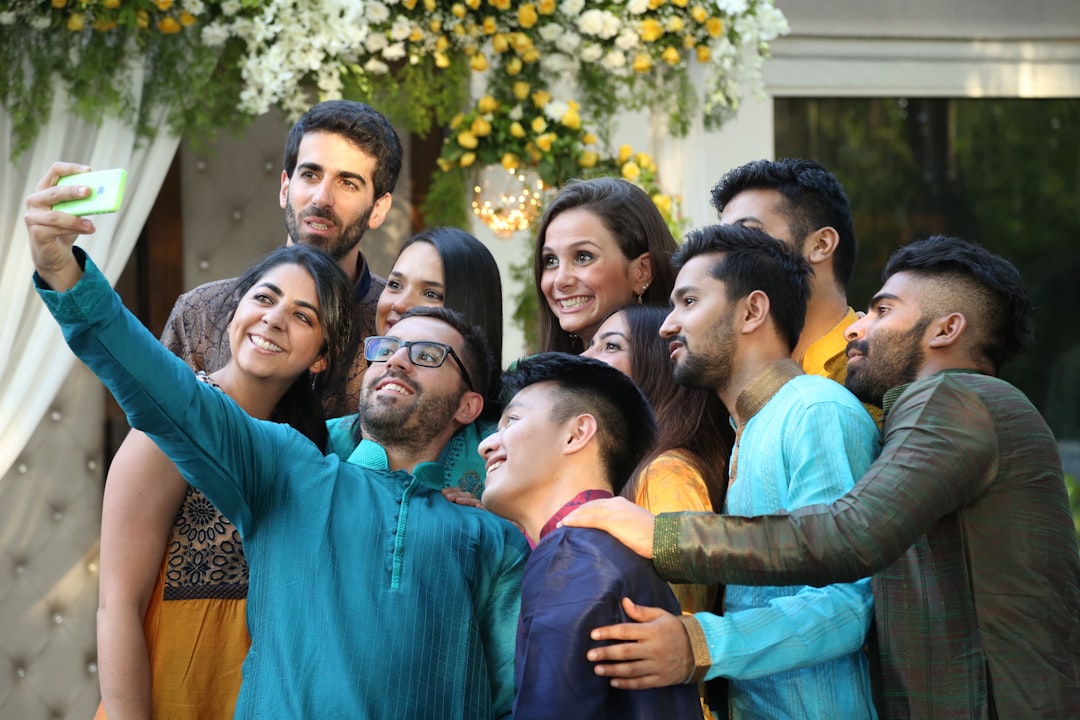
Photo by Gyan Shahane on Unsplash
Last Saturday, 28-year-old Maya Chen spent three hours in her parents' attic digging through storage bins. She wasn't looking for old photo albums or childhood mementos. She was hunting for her mother's clothes from the '90s—specifically, those polyester tracksuits and oversized blazers that had been buried under boxes of tax returns and holiday decorations.
"My mom was horrified when I pulled out a hot pink Juicy Couture tracksuit," Maya laughed, scrolling through the photos she'd taken to post on TikTok. "She said it was the most embarrassing thing she'd ever worn. But my followers absolutely lost it. Within 48 hours, I had 50,000 likes."
Maya isn't alone. Across the country, young people are raiding their parents' closets like archaeological treasure hunters, searching for the exact pieces their parents desperately want to forget. What was once considered style suicide—low-rise jeans, oversized polos, pleated khakis, anything with excessive bedazzling—is now being reframed as the ultimate form of authentic, irreplaceable fashion.
The Anti-Trend That's Actually a Trend
This phenomenon sits at an interesting intersection of nostalgia, irony, and genuine cultural commentary. Unlike typical vintage fashion, which usually celebrates the "good" pieces from previous decades, this movement specifically targets the embarrassing bits—the fashion moments people would rather forget ever existed.
It started, predictably, on TikTok. But it's spread to Instagram Reels, YouTube, and even infiltrated mainstream fashion discourse. Thrift stores report increased foot traffic of Gen Z customers explicitly looking for "dad core" and "mom-core" pieces. Brooklyn Industries, a vintage consignment shop in Williamsburg, says their sales of 2000s-era graphic tees and low-rise cargo pants have tripled in the past 18 months.
"What's fascinating is that these kids genuinely think these pieces are cool," says fashion historian Dr. Patricia Okonkwo, who specializes in contemporary youth culture. "It's not entirely ironic. There's real appreciation for the authenticity. These aren't reproductions or "inspired by" pieces—they're the actual, flawed originals."
The mechanics of this trend reveal something important about how Gen Z relates to fashion. They grew up watching their parents apologize for their fashion choices. Every family gathering included jokes about the ridiculous things people wore in the '90s and 2000s. So now, there's something transgressive and delicious about reclaiming those exact pieces—not despite the embarrassment, but sometimes because of it.
When Authenticity Beats Aesthetics
Interestingly, this trend runs counter to the polished perfectionism of recent years. The Bizarre Rise of 'Quiet Luxury' Fashion: How Expensive Boredom Became the Ultimate Status Symbol showed us that wealth and status used to hide behind minimalism and restraint. But the parental wardrobe raid trend is the opposite—it's about wearing something that screams "I don't care if this looks silly." And somehow, that's more status-worthy than owning a $3,000 Loro Piana sweater.
Take 22-year-old Devon Martinez, who runs a TikTok account called @MomClosetArchaeology. His most viral video—15 million views—features him wearing his mother's vintage Bebe tracksuit from 2003 to a coffee shop. The comments were overwhelmingly positive. People weren't making fun of him; they were asking where they could find similar pieces.
"The beautiful thing about these clothes is that nobody's making them anymore," Devon explains. "You can't go to Urban Outfitters and buy a knockoff low-rise cargo pant. You can't order a screen-printed 'Sexy Librarian' baby tee from ASOS. These are singular pieces with real history."
This desire for singularity matters. In an era of fast fashion and Instagram influencers in identical outfits, wearing your parent's embarrassing wardrobe choices becomes a form of rebellion. It's the fashion equivalent of refusing to participate in the carefully curated image economy.
The Generational Power Play
There's also something psychologically interesting happening here. Young people are essentially saying: "Your worst fashion moments are our best moments." It's a gentle, funny way of asserting generational power. It's them declaring that they're culturally in charge now—they get to decide what's cool, and what they've decided is cool is literally the stuff your parents thought was humiliating.
Parents are responding in unexpected ways. Some are horrified (as Maya's mom was initially). But others are delighted. Facebook groups have sprung up with titles like "Sell Your Cringey '90s Clothes to Cool Gen Z Kids" and "Your Embarrassing Wardrobe Has Monetary Value." Some parents are actively digging through boxes and selling to their kids' friends.
Sarah Kim, a 52-year-old from Seattle, recently sold her entire collection of 2000s clubwear to her daughter's friend group for $400. "I was thrilled to get rid of it," she says. "But I'm also kind of honored? Like, my bad fashion choices are now considered valuable? That's weirdly validating."
What This Says About Us Now
This trend reveals how post-irony our culture has become. We're past the point of "sincerely enjoying something ironic." Instead, we're genuinely enjoying things specifically because they were previously considered cringe. The cringe is the appeal.
It also suggests something about how younger generations are processing the world. When your parents' worst fashion moments become your fashion gold standard, you're engaging in a form of cultural healing. You're saying, "Your insecurities weren't necessary. These pieces were fine. Actually, they were great."
Fashion consultant and trend forecaster Marcus Webb predicts this won't fade quickly. "We're going to see increasingly specific appeals to 'ugly' or 'embarrassing' pieces," he says. "What happens when kids start raiding their grandparents' closets for mall fashion from the 1980s? We might just find out that every decade's fashion is cool once it's old enough and weird enough."
So next time your mom brings up that horrible outfit she wore in your fifth-grade class photo? Don't laugh at her. Your kids might want to borrow it in about ten years.
Comments (0)
No comments yet. Be the first to share your thoughts!
Sign in to join the conversation.