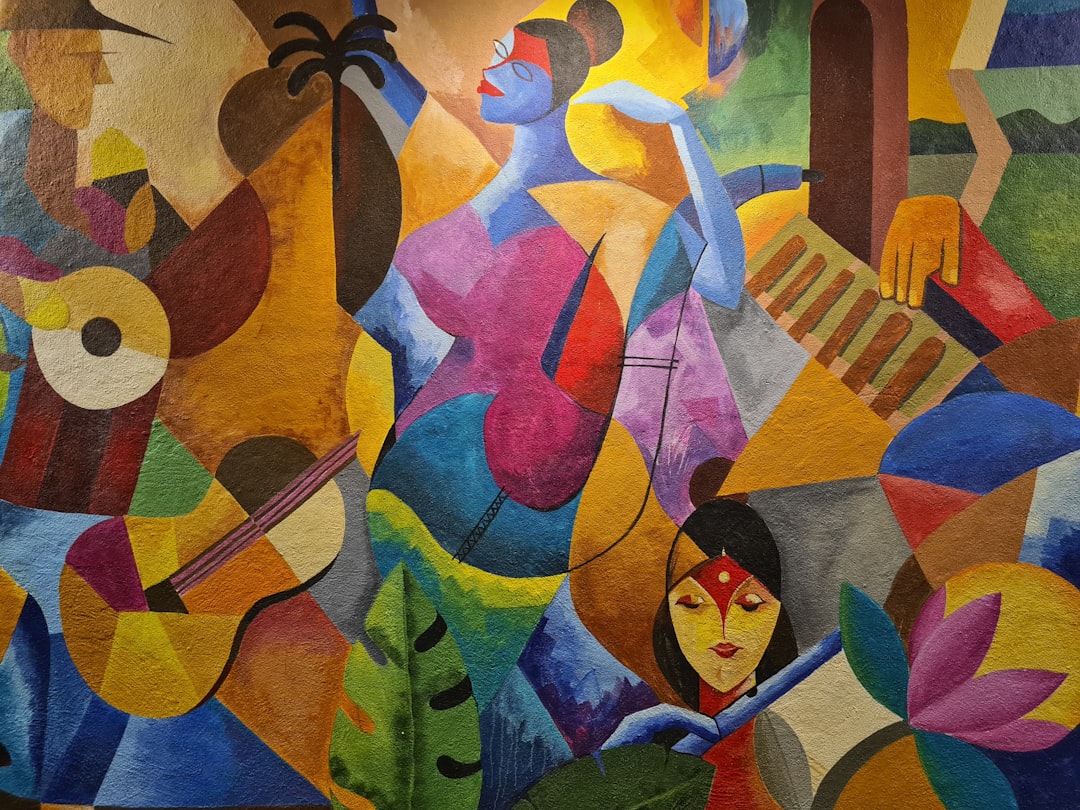
Photo by Mayur Deshpande on Unsplash
My grandmother had exactly three coffee table books. She kept them on a low wooden table in her living room, arranged at precise angles, and would rearrange them seasonally like some people change out throw pillows. One was about Impressionist paintings, another documented European architecture, and the third was a glossy photography collection of the American Southwest. Visitors would inevitably pick one up during conversation, flip through it absently, and comment on an image or two. It was a small ritual of shared discovery.
That coffee table book—that specific object and the culture around it—is almost entirely gone now. And we should probably talk about what that means.
The Reign of the Coffee Table Book
For roughly four decades, the coffee table book occupied a peculiar cultural space. It wasn't quite art, wasn't quite literature, and definitely wasn't meant to be read cover-to-cover. Publishers figured this out around the 1960s and leaned hard into the formula: beautiful photography, minimal text, expensive paper, and a price tag that made it feel like a legitimate cultural investment.
The coffee table book peaked in the 1990s and early 2000s. Walk into any home, hotel lobby, or doctor's office and you'd find them stacked horizontally, their spines turned outward to show off photogenic covers. Taschen published massive volumes on everything from fashion to architecture. Phaidon created encyclopedic visual guides to design and photography. These weren't cheap purchases—a decent coffee table book could run $50 to $150, sometimes more. Yet people bought them steadily.
There was a genuine logic to this. Pre-smartphone, before endless digital imagery lived in our pockets, physical books of curated photography offered something meaningful. They were conversations starters. Status symbols, sure, but also genuine windows into aesthetics, places, and cultures. A coffee table book about Japanese textile design or Brazilian street art functioned as a curator's perspective, condensed into a beautiful object you could hold and share.
How the Algorithm Ate the Coffee Table
Then something shifted. Not suddenly, but inexorably.
Instagram launched in 2010 and changed everything about how we consume visual culture. Why buy a $80 book of carefully selected architectural photography when you could scroll endlessly through photos of buildings, curated by the users you follow, free? Why invest in a volume of fashion photography when TikTok shows you styling videos, real-time trends, and immediate feedback?
The economics started to collapse too. Publishing data from 2023 shows that the coffee table book category, which once represented a meaningful chunk of trade publishing revenue, now barely registers. Independent bookstores report that these books gather dust. A Barnes & Noble employee I spoke with mentioned they've cut their coffee table book section by nearly 60% in the past five years. "People just aren't buying them anymore," she said simply.
Publishers tried to adapt. They made them "instagrammable"—ultra-glossy, with trending aesthetics. Some pivoted toward niche topics, banking on passionate communities. But the fundamental problem remains: we get infinite, personalized visual content now. Why commission a professional photographer to shoot a book of French vineyards when you can follow fifty Instagram accounts of winemakers posting daily vineyard content?
The Unsettling Quiet of Frictionless Access
Here's what troubles me about this shift, and I think it should trouble you too.
A coffee table book required intention. You had to decide it was worth the money. You had to make space for it on a table or shelf. You had to decide to pick it up and look at it. There was friction—good friction—in the process. That friction created meaning.
Now we have infinite, frictionless access to visual content, algorithmically served based on what we've already looked at. The curation happens behind closed doors. We're fed more of what we already like, which feels good but narrows rather than expands our worldview.
A visitor to your home in 1995 might pick up your coffee table book about Japanese gardens and discover a lifelong passion. That required serendipity. Physical objects in shared spaces created genuine accidents of discovery. Your algorithm, by contrast, is designed specifically to prevent such accidents. It knows you, and it shows you more of you.
There's also something about the tactile experience that's quietly lost. Coffee table books had weight, texture, a particular smell of quality paper and binding glue. They aged beautifully. A photograph on a screen doesn't age—it just disappears when the app updates or the server goes down.
What Might Come Next
The coffee table book isn't completely extinct. There's a small but genuine revival happening among design-conscious people and a few niche communities. Luxury brands still publish them. Some independent publishers, like Aperture Foundation, continue making serious photobooks that attract devoted collectors. And there's been a minor uptick among people consciously rejecting digital-first lives—the same crowd who brought back vinyl records, though probably at 5% the scale.
But the mainstream coffee table book? It's functionally dead. And that matters because it's part of a larger shift in how we experience culture and knowledge. We've optimized everything for efficiency and personalization, which sounds good until you realize we've also eliminated many of the mechanisms through which people encounter genuinely new ideas.
If you're interested in how culture and tradition adapt to modern life, you might find this article about how people are preserving their family recipes relevant—it's another example of how physical, human-scaled objects and practices are being transformed by digital technology and generational change.
The coffee table book's disappearance is small in the grand scheme of culture. But it's a useful reminder that the objects we live with shape how we think, what we discover, and who we become. When we optimize those objects away in pursuit of convenience, we should probably pause and ask what else is disappearing with them.
Comments (0)
No comments yet. Be the first to share your thoughts!
Sign in to join the conversation.