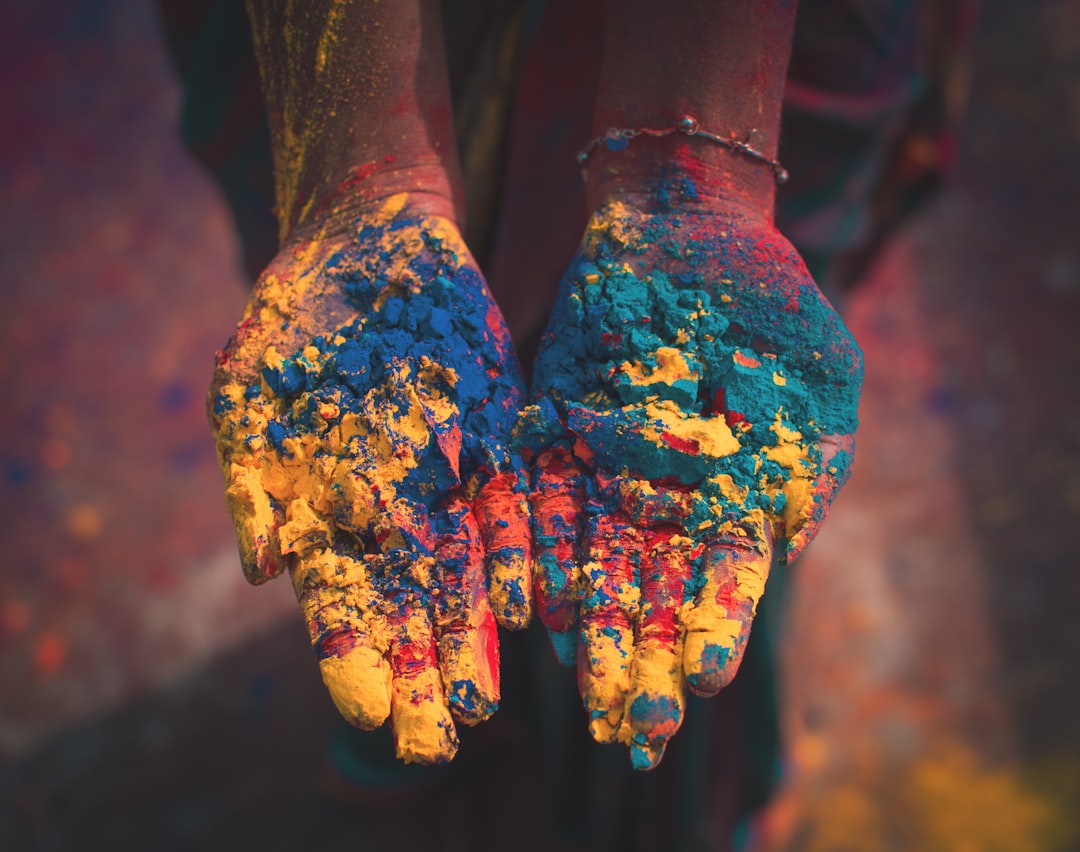
Photo by Debashis RC Biswas on Unsplash
Sarah spent her entire Friday night hunched over a 1,000-piece puzzle of Monet's Water Lilies, her phone ignored on the couch. Her roommate thought she'd lost it. Then her roommate sat down to "just help for five minutes" and didn't leave until 2 AM. This scene is playing out in millions of households right now, and it's part of a cultural moment that nobody saw coming: the great puzzle renaissance of the 2020s.
We're not just talking about jigsaw puzzles, though those are experiencing a genuine boom. According to the Toy Industry Association, jigsaw puzzle sales jumped 293% during 2020 and have stayed elevated ever since. But the puzzle phenomenon extends far beyond cardboard boxes. Wordle exploded into the cultural consciousness seemingly overnight, accumulating 300 million guesses in its first month after going viral. Sudoku apps clock billions of downloads. Chess has become cool again, thanks partly to The Queen's Gambit but also because regular people actually want to spend their evenings thinking about knight moves.
What's happening here? Why are we collectively retreating into activities that require focus, patience, and the kind of sustained attention that our phones have spent the last decade trying to destroy?
The Pandemic Planted the Seeds, But Something Else Is Growing
Yes, the pandemic accelerated puzzle culture. When everything shut down in 2020, people needed something to do besides scroll Twitter and contemplate their mortality. Puzzle manufacturers couldn't keep products on shelves. But here's the interesting part: it didn't stop when lockdowns ended. The surge didn't flatten. Instead, it evolved.
"People discovered something they'd forgotten," says Dr. Rachel Kim, a cognitive psychologist who studies how people engage with leisure activities. "Puzzles provide immediate feedback. You put a piece in or you don't. There's no ambiguity, no algorithm deciding what you should see next, no infinite scroll." In a world where our attention is constantly monetized and fragmented, puzzles offer something almost radical: completion.
Wordle's explosion in 2022 proved this wasn't just pandemic nostalgia. Here was a free, deliberately simple word puzzle with a one-game-per-day limit—almost aggressive in its refusal to be addictive in the traditional tech sense. You couldn't play it for six hours straight if you wanted to. And people absolutely loved this constraint. When The New York Times acquired Wordle, there was genuine concern it would be ruined, not because the game would change, but because people feared capitalist incentives would corrupt its simplicity.
The fact that we collectively felt relief when Wordle remained free tells you something important about what we're actually hungry for: experiences that aren't trying to extract something from us.
Puzzles as a Statement Against Chaos
There's a philosophical element to puzzle culture that goes deeper than boredom relief. Our external world feels increasingly chaotic and unsolvable. Climate change, political polarization, economic uncertainty—these aren't puzzles with answers. They're wicked problems that resist solution. Puzzles, by contrast, have a guaranteed resolution. Every piece fits somewhere. The box always gets finished.
"There's genuine psychological comfort in that," explains Dr. Michael Torres, a therapist specializing in anxiety disorders. "When someone sits down with a jigsaw puzzle, they're engaging in an activity where they have complete control over the outcome. There's no social judgment, no performance pressure, no algorithm. Just you, the pieces, and the inevitable victory."
This helps explain the rise of "puzzle meditation"—the growing movement of people who treat puzzles as a form of mindfulness practice. Unlike traditional meditation, which requires you to empty your mind, puzzle meditation gives your brain something specific to focus on. It's engagement without distraction. Flow state, but structured.
Consider the popularity of slow, intentional hobbies and analog activities more broadly. We're seeing a cultural correction—a pushback against the relentless acceleration of digital life. Puzzles aren't just activities. They're statements. They're saying: I choose to spend my time on something that can't be optimized, gamified, or monetized in the traditional sense.
The Unexpected Social Revolution
Here's what's genuinely surprising: puzzles have become social. Not in the forced, extroverted way that Instagram influencers intended. In actual, genuine ways.
Puzzle swap groups have formed in cities across North America and Europe. Reddit's r/Jigsawpuzzles has 200,000 members actively discussing piece counts, difficulty levels, and the most satisfying jigsaw experiences. There's a subreddit dedicated to rating puzzle quality. People are having real conversations about cardboard.
Wordle specifically created a new social ritual: the morning reveal. People screenshot their results and share them with friends, creating a daily conversation starter that's the same for everyone but unique in difficulty. It's asynchronous, low-pressure socializing. You're not competing with your friends; you're sharing an experience with them.
Families who haven't had screen-free time together in years are now gathering around kitchen tables to work on jigsaws. Couples are discovering they can sit silently together for hours, working on the same puzzle, without it feeling lonely. There's something about collaborative puzzle-solving that brings out our better selves.
What This Says About Who We're Becoming
The puzzle boom reveals something about contemporary culture: we're exhausted. Not just physically tired, but mentally fatigued by constant stimulation and the demand to always be "on." Puzzles offer permission to be bored in a productive way. To move slowly. To enjoy completion without requiring external validation.
There's also something quietly revolutionary about choosing an activity that doesn't generate data about you, can't be algorithmically personalized, and has no monetization mechanism beyond the initial purchase. In choosing puzzles, we're choosing a form of entertainment that's almost antagonistic to the business model of contemporary tech culture.
Whether puzzle culture will sustain its current momentum is an open question. Maybe it'll fade when the next novel distraction arrives. But something deeper has shifted. We've remembered that some of the most valuable parts of life—focus, patience, tangible completion, genuine social connection—can't be downloaded. They require cardboard, silence, and time.
And honestly? That's a puzzle worth solving.
Comments (0)
No comments yet. Be the first to share your thoughts!
Sign in to join the conversation.