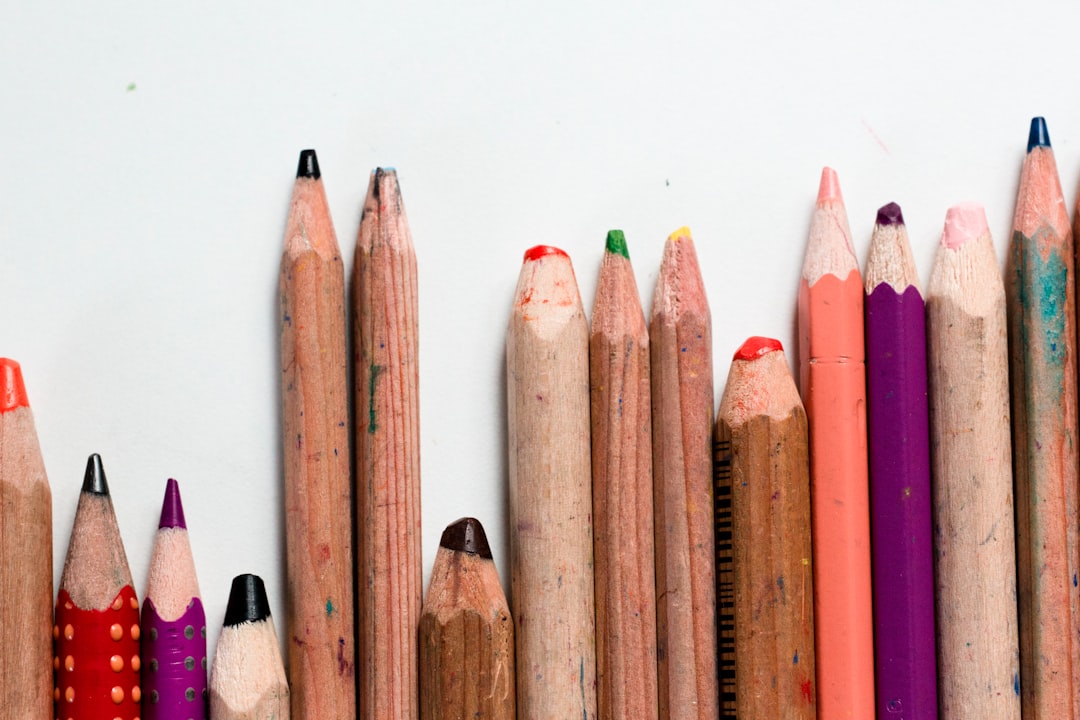
Photo by Markus Spiske on Unsplash
Sarah opens her mailbox on a Tuesday afternoon to find something that makes her pause. Not a bill. Not junk mail. A real letter—envelope addressed in careful handwriting, a stamp featuring a vintage botanical illustration, pages folded inside with blue ink that someone took time to compose. She reads it three times before responding, pulling out her own stationery and fountain pen.
Sarah isn't unusual anymore. She's part of something quietly building across America and beyond: a genuine resurgence in handwritten letter writing that defies every prediction about digital communication making pen and paper obsolete.
When Handwriting Became an Act of Resistance
The letter-writing revival didn't start with nostalgia, though nostalgia certainly fuels it. It started with exhaustion. By 2019, psychologists began documenting what they called "notification fatigue"—the constant pinging and buzzing of digital communication creating a baseline anxiety that never quite subsides. Emails demand immediate response. Text messages feel urgent. Even a comment on social media can trigger that dopamine-seeking anxiety loop.
Letters, by contrast, operate on different physics entirely. A handwritten letter takes time to arrive. It demands nothing instantly. The act of writing one requires you to sit down, eliminate distractions, and actually think about what you want to say. No spell-check. No undo button. Just commitment.
Jennifer Trausch, who runs a letter-writing community on Reddit with over 180,000 members, noticed the shift around 2017. "People weren't looking for pen pals," she recalls. "They were looking for permission to slow down." The subreddit r/penpals, which barely existed a decade ago, now facilitates thousands of regular correspondences between strangers who will probably never meet but who exchange letters like they're having extended conversations across continents.
The Economics of Staying Connected Without Algorithms
Here's where it gets interesting. The United States Postal Service, which seemed destined for irrelevance, has quietly experienced a renaissance among a specific demographic: people aged 18-35. Mail volume, which hit a historic low in 2020, has begun stabilizing in certain segments. More importantly, the quality of mail has transformed. Personalized correspondence—actual letters, not advertisements—has increased by an estimated 23% since 2021, according to data from postal service usage studies.
The stationery industry noticed this shift first. Brands like Paperblanks, Rhodia, and midrange options like Basic Stationery reported double-digit growth between 2020-2023. Fountain pen sales, which had been declining for thirty years, suddenly reversed course. Kaweco, a 110-year-old German pen company, experienced a 40% increase in online sales between 2019 and 2022, primarily driven by younger customers discovering them through social media—the irony being they used the internet to buy tools to escape the internet.
Unlike email or text messages, letters exist in physical space. You can't delete them. You can't edit them after sending. There's something about that permanence that makes people write more honestly. "When I write a letter, I'm not performing," one Reddit user named Marcus wrote. "There's no algorithm deciding who sees it. It's just me and one other person. That changes everything I want to say."
The Unexpected Communities Forming Around Paper
What started as individuals exchanging letters has organized itself into subcultures with their own aesthetics and codes. Wax seal enthusiasts purchase custom stamps to seal envelopes. Fountain pen communities debate the merits of different nib sizes and ink colors with the intensity that gamers once reserved for graphics cards. People craft decorated envelopes like tiny works of art, intentionally making the outside almost as important as the contents.
The letter-writing movement has also created an unexpected economic ecosystem. Small businesses selling vintage-inspired stationery, decorative washi tape, and specialty inks have emerged. Etsy sellers focused on letter-writing supplies report that their main customer base skews toward Gen Z and younger millennials—the exact demographic that was supposed to be permanently attached to screens.
This mirrors a broader cultural pattern. Much like why millennials are obsessed with their parents' old vinyl collections, the embrace of letters represents a deliberate choice to engage with slower, more intentional forms of communication. It's not about rejecting technology. It's about choosing when and how you use it.
What Letters Offer That Screens Cannot
Neuroscientist James Fallows has researched the cognitive differences between reading handwritten text and digital text. The results are striking. Handwritten communication activates different neural pathways than digital reading. Your brain processes the individual quirks of someone's handwriting—the way they cross their t's, the pressure of their pen—in ways that trigger deeper memory formation and emotional engagement.
There's also something about receiving a physical object that creates a different emotional response than a notification. A letter sits there. It exists. You can read it again in a month, a year, a decade. Digital messages feel ephemeral; they disappear into the scroll. Letters accumulate. They become evidence of connection.
"My grandmother saved every letter my grandfather wrote her during the war," one writer named Elena shared. "I have them. I can read his actual handwriting, see the words he chose, the little doodles in the margins. No email account can do that. No screenshot captures that."
The Future of an Ancient Practice
Will letter writing replace email? Of course not. But it doesn't need to. What's happening is that letters are reclaiming a specific role in how we communicate. They're for when something matters enough to require intention. They're for people you want to actually talk to, not people you need to exchange information with.
The postal service is slowly waking up to this reality, launching campaigns that celebrate personal correspondence. Meanwhile, millions of people are quietly purchasing stationery sets and sitting down to write things by hand. They're not doing it because they're nostalgic Luddites. They're doing it because, after a decade of optimizing every interaction, some of them have realized that the slowest forms of communication might actually connect us most deeply.
The handwritten letter isn't making a comeback because it's retro. It's making a comeback because it does something our current tools cannot: it proves someone cared enough to slow down.
Comments (0)
No comments yet. Be the first to share your thoughts!
Sign in to join the conversation.