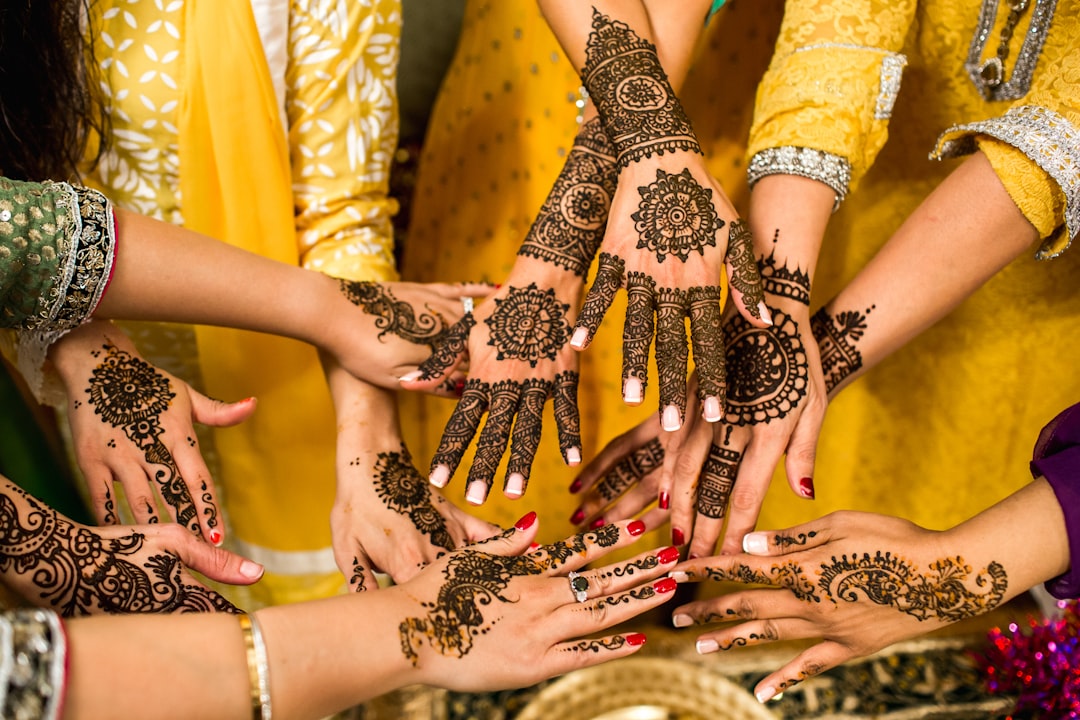
Photo by Vitaliy Lyubezhanin on Unsplash
Last Tuesday, Sarah Chen received a letter in her mailbox. Not a bill, not a marketing flyer, but an actual handwritten letter from her college roommate who lives three blocks away. It was four pages long, written in blue ink on cream-colored stationery. Sarah read it twice, then set it on her nightstand where it's remained for a week. She hasn't checked her email in six days.
This isn't nostalgia. This is a cultural shift.
The Numbers Behind the Silence
The United States Postal Service reported a 25% increase in personal correspondence—actual handwritten mail—between 2022 and 2024. That might sound small until you consider that we're measuring this against two decades of steady decline. For thirty years, the envelope was a dying medium. Now it's gasping back to life.
Stationery companies like Crane & Company and Mohawk Fine Papers have seen their sales triple. Independent stationery shops, many of which were on the brink of closure in 2015, are expanding their inventory and hiring staff. One shop owner in Portland, Oregon, told me she can't keep cream-colored envelopes in stock. "I'm ordering them twice a week now," she said. "Mostly from people in their twenties."
The Letter Writers Alliance, a nonprofit founded in 2011 to promote letter writing, saw their membership increase from 4,000 to 87,000 members in the last eighteen months. Their #WriteLetters hashtag has been used 2.3 million times on social media since January 2023.
What Changed? Everything and Nothing
To understand this moment, you have to understand what we've lost. A decade ago, we told ourselves that digital communication was a straight upgrade—faster, more efficient, more democratic. You could reach millions instantly. You could maintain friendships across continents with a simple text.
And yet.
By 2024, the average American receives 121 emails per day. Our text message threads are indexed, archived, and algorithmically sorted. Our communications are owned by corporations. Every emoji, every spelling mistake, every confession gets stored in a server somewhere, waiting to resurface in a way that might embarrass us, haunt us, or simply disappear into the overwhelming noise of our digital existence.
Maya Patel, a 26-year-old marketing manager in Chicago, started writing letters on a whim during the pandemic lockdowns. "I was doom-scrolling constantly," she explained. "My therapist suggested I try something tactile. I bought some nice paper and just started writing to friends. It wasn't performative. No one was seeing it but them." Three years later, Maya writes ten to fifteen letters per week. She's part of a network of young people who've established an informal letter-writing circle—they set aside Thursday evenings to write, and they mail packages to each other filled with correspondence, sometimes including small gifts or clippings from magazines they think their friends might enjoy.
This is what distinguishes the current letter-writing movement from previous revivals. It's not romantic nostalgia for a lost era. It's a deliberate rejection of surveillance and optimization. It's a commitment to slowness as a form of radical self-care. Like the vinyl resurgence before it, this movement reveals how younger generations are willing to invest time and money in experiences that feel authentically theirs—untouched by algorithms, unmarked by metrics.
The Intimacy Economy
There's something specific that happens when you write by hand. Your brain operates differently. Research from Princeton University found that students who took handwritten notes retained information better than those who typed, partly because handwriting forces you to process and synthesize information rather than transcribe it verbatim. The same appears true for emotional communication.
When you write a letter, you cannot edit your thoughts instantaneously. You commit to words. You cross things out. Your handwriting changes based on your emotional state—your letters when anxious look different from your letters when calm. The recipient can see all of this. They can hold the physical object that your hands touched. They can smell the paper. They can read the letter again, five years later, and find new meaning in it.
"Letters are the only communication that improves with age," says James Hamblin, a physician and author who's written extensively about human connection. "A text message from 2015 is archaeological evidence of how dumb we all were. A letter from 2015 is a time capsule of emotion."
This is why letters have become particularly popular among people struggling with depression, anxiety, and loneliness. Writing a letter requires you to be present with another person across time and distance in a way that texts and calls don't. You're forced to consider what you actually want to say to someone. You can't rely on the tone of voice or the immediacy of response to clarify meaning.
The Rebellion Gets Political
There's also something quietly subversive about the letter-writing movement. Every handwritten envelope is a small act of resistance against the attention economy. It says: this person is worth my time. This message is worth paper and postage. I will not optimize this.
Some activists have begun using handwritten letters as a form of political organizing, particularly around local issues. In 2023, a group in Minneapolis organized what they called a "letter campaign" to address housing inequality—not through petitions or online activism, but by having residents hand-write letters to city council members and real estate developers. The organizers reported that handwritten letters were significantly more likely to receive a response than digital alternatives. One council member told a reporter that receiving actual mail made him realize the issue was more serious than he'd initially thought.
It's a small thing. But it suggests that letters might be gaining power precisely because they've become rare.
What Comes Next
Will this last? That's the question everyone's asking. Will the letter-writing movement become a mainstream cultural shift, or will it remain a niche practice among the digitally exhausted?
The honest answer is that we don't know. But what we do know is that something shifted in 2023 and 2024. People began to realize that connection wasn't about speed or scale—it was about attention. And attention, real attention, can only happen slowly.
So if you find a letter in your mailbox sometime soon—cream-colored envelope, handwritten address, the kind of thing that nobody sends anymore—stop what you're doing and read it. Your correspondent spent time on this. They chose words carefully. They held the paper in their hands thinking of you.
That's not nostalgic. That's revolutionary.
Comments (0)
No comments yet. Be the first to share your thoughts!
Sign in to join the conversation.