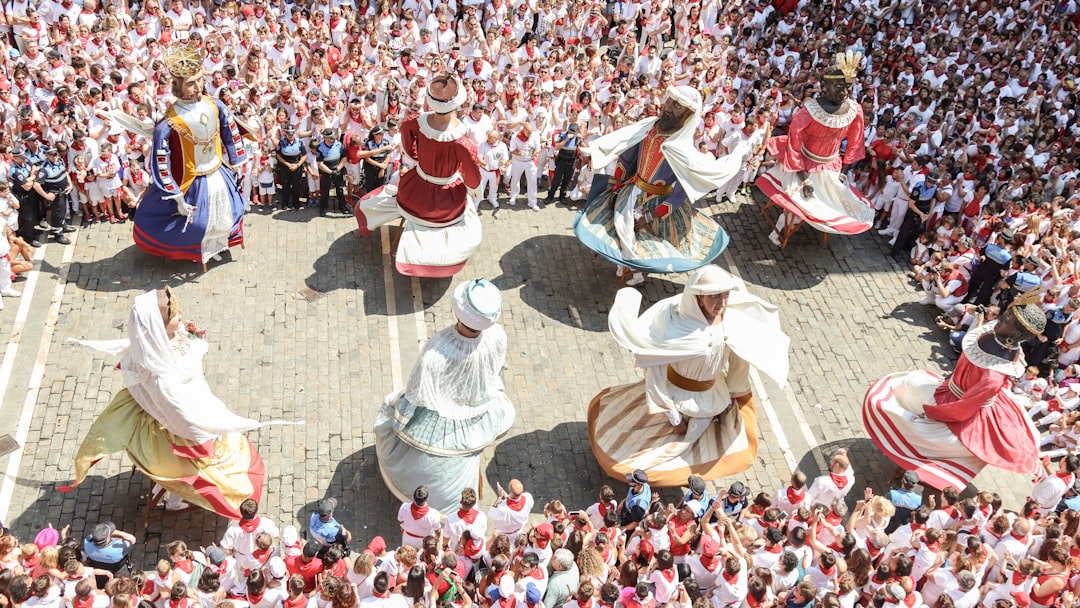
Photo by San Fermin Pamplona - Navarra on Unsplash
If you'd told someone ten years ago that tickling would become a legitimate competitive pursuit with sponsorships and world rankings, they probably would've laughed. Literally. But here we are in 2024, watching grown adults train rigorously for tickling championships, studying technique videos at 2 AM, and debating the merits of different grip styles on Reddit forums with the intensity usually reserved for chess grandmasters.
The Competitive Tickling League (CTL), founded in 2019 by former street performer Marcus Chen, now boasts over 47,000 registered competitors across twelve countries. What began as Chen's quirky YouTube series—where he'd challenge friends to tickle-offs in his garage—has somehow morphed into a phenomenon that draws thousands of spectators to live events and millions of viewers to streaming broadcasts. The 2023 World Tickling Championship in Denver, Colorado attracted 8,400 in-person attendees and was watched by 2.3 million people online.
From Carnival Curiosity to Serious Sport
The history of tickling as entertainment stretches back centuries. Medieval courts employed official ticklers, and Victorian circuses featured elaborate tickling acts as crowd-pleasing attractions. But sometime around the 1970s, the practice faded from popular consciousness, relegated to children's birthday parties and the occasional novelty act.
Then came Marcus Chen's viral moment. In March 2019, a three-minute clip of him and his friend Derek engaged in an absurdly intense tickling match hit TikTok and garnered 14 million views within two weeks. The comments section exploded. People didn't just find it funny—they wanted rules. They wanted structure. They wanted to know who would win in a fair, regulated competition.
Chen, then working as a marketing consultant, recognized something he hadn't expected: people were genuinely fascinated by the question of tickling mastery. Could it actually be a skill? Could technique matter more than natural sensitivity? These questions haunted the comment sections and eventually convinced Chen to take the whole thing seriously.
The Anatomy of a Tickling Champion
What makes a great competitive tickler? That's the question that separates casual observers from true enthusiasts. The sport has developed its own technical vocabulary and strategic depth that would surprise anyone who hasn't paid attention.
There are five official disciplines in the CTL: Speed Tickling (rapid-fire technique), Endurance Tickling (maintaining consistent intensity for extended periods), Precision Tickling (hitting specific sensitive zones), Psychological Tickling (reading your opponent's resistance patterns), and the crowd-favorite, Freestyle Tickling (a combination of all skills in an improvised style).
Reigning champion Svetlana Petrov, a 34-year-old former physical therapist from Russia, trains eight hours daily. Her regimen includes cardio, hand dexterity exercises, and actual tickling practice on willing volunteers (who, yes, are paid). In interviews, she speaks about tickling with the seriousness of an Olympic athlete discussing their sport. "People think this is a joke," she told ESPN in 2023. "They don't understand that understanding human physiology, reaction time, and psychological resilience is just as important here as in any other competitive field."
The science backs her up, somewhat. Dr. Patricia Walsh, a neuroscientist at UC Berkeley who's become oddly fascinated by the CTL, has published preliminary research suggesting that elite ticklers do show measurable differences in proprioceptive awareness and fine motor control compared to untrained populations. Nothing revolutionary, but enough to suggest there's actual skill involved.
The Community That Built Itself
What's truly fascinating isn't the sport itself—it's the community that's grown around it. The CTL subreddit has 156,000 members who engage in heated debates about technique, share training tips, and occasionally get into genuinely bitter arguments about rule interpretations. There are sponsorships now. Energy drink brands have partnered with competitors. One tickler, a charismatic Australian named Jake "The Tickle King" Morrison, has 1.2 million TikTok followers and earns substantial income through brand deals and appearances.
The fan communities are equally invested. There are ticket scalpers for major competitions. Fan art. Fan fiction, which gets weird enough that I'll spare you the details. Some dedicated followers attend multiple events per year, traveling across countries to watch their favorite competitors battle it out.
There's also an understandable skepticism from traditional sports organizations and mainstream media. Many journalists approach CTL coverage with barely concealed smirks, treating it as a curiosity rather than a legitimate competitive pursuit. This dismissal only seems to strengthen the community's resolve. They're not trying to be respectable. They're having fun while taking their chosen activity seriously, which is a stance increasingly rare in our culture.
Why This Matters Beyond the Absurdity
On the surface, competitive tickling is ridiculous. But it represents something more interesting about contemporary culture. We're witnessing the democratization of achievement and community-building. Chen didn't pitch this to major networks or sports organizations. He simply shared something on social media, and people collectively decided to build an entire structure around it.
It echoes similar grassroots movements—like the explosive growth of esports from basement gaming to billion-dollar industry, or how competitive eating transformed from county fair curiosity into ESPN coverage. The internet allows subcultures to find critical mass without needing traditional gatekeepers' approval.
The CTL also mirrors the unexpected revival of dinner party culture among millennials in one important way: it's fundamentally about people choosing shared experiences and community connection over passive consumption. Whether you're gathering for a tickling tournament or hosting an elaborate dinner party, the underlying impulse is similar. We want to participate, compete, and belong to something specific enough to feel genuine.
Whether competitive tickling becomes a genuinely established sport or remains a beautifully absurd niche community, it's already accomplished something important. It's proven that communities can spontaneously organize around virtually anything if the energy and interest align. In an era when cynicism and irony dominate, there's something refreshingly sincere about thousands of people dedicating serious effort to something as inherently silly as competitive tickling.
And really, isn't that the most culturally valuable outcome? Not the sport itself, but the reminder that we can still collectively agree to care about weird, wonderful, utterly pointless things together. In a fragmented media landscape, that shared absurdity might be the most meaningful culture we've got.
Comments (0)
No comments yet. Be the first to share your thoughts!
Sign in to join the conversation.