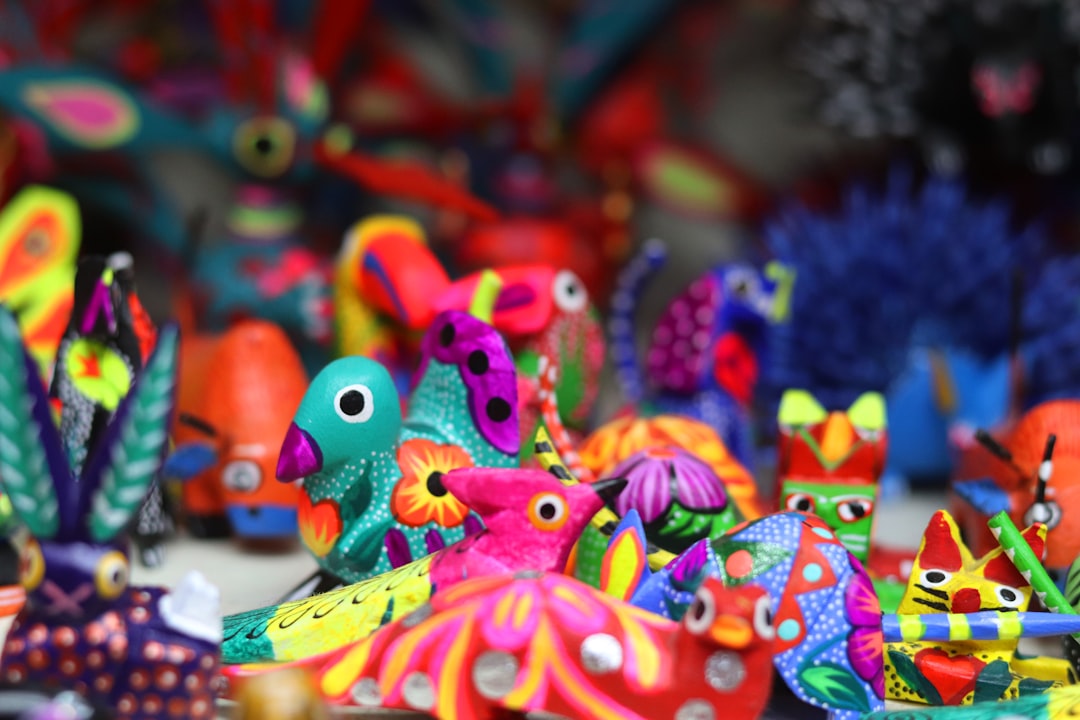
Photo by analuisa gamboa on Unsplash
Last summer, 24-year-old Maya Chen spent three weeks learning to knit from her grandmother in Taiwan. She returned to Brooklyn with two half-finished sweaters, approximately zero social media content, and a discovery that would reshape her entire relationship with productivity: time could be something you savored instead of maximized.
Today, Maya runs a thriving Discord community called "Quiet Hands" with 47,000 members who share photos of their needlework, sourdough fails, gardening plans, and handbound journals. None of them are monetizing it. Most aren't even posting it to Instagram. They're just... making things slowly, together, in the margins of their overscheduled lives.
This isn't nostalgia. This is a cultural earthquake.
The Accidental Rebellion Against Optimization
There's a particular exhaustion that comes from being told your entire life should be content. That your breakfast should be photographed, your workout quantified, your passion monetized into a side hustle. By 2023, the relentless optimization culture that had dominated the 2010s was showing massive cracks, particularly among people under 30.
Enter: basically everything your grandmother did for fun.
The statistics are wild. According to the Craft and Hobby Association, knitting needle sales jumped 40% between 2020 and 2023, with the largest growth in the 18-24 age demographic. Yarn shops that were closing in 2015 now have waiting lists. The hashtag #slowliving has 3.8 million posts on TikTok—a platform literally designed for speed.
But here's what separates this from previous "craft revivals": the explicit rejection of the productivity angle. When millennials discovered knitting ten years ago, many immediately turned it into Etsy shops and Instagram aesthetics. This generation? They're actively hostile to that framing. The most popular posts in slow culture spaces include screenshots of people declining to monetize their hobbies, rejecting brand partnership offers, and choosing obscurity over influence.
"I think we watched our older siblings turn literally everything into a personal brand and realized that sounds like hell," one 22-year-old told me via email. She preferred to remain anonymous, which felt very on-brand.
The Grandmother as Cultural Philosopher
What's remarkable is how the grandmother figure has shifted in cultural mythology. For decades, traditional women's crafts were dismissed as "grandma hobbies"—quaint, antiquated, boring. Millennial culture was obsessed with disruption, innovation, founding startups, moving fast and breaking things.
Gen Z looked at that memo and said: what if grandma was actually onto something?
The appeal isn't purely aesthetic, though there's certainly something powerful about choosing to make something beautiful with your hands when the default is to consume it with your eyes. It's philosophical. When you hand-embroider a piece of fabric, you're making a statement: my time has value that cannot be quantified. My work doesn't need to be productive or profitable to matter. I am not my output.
This is genuinely radical in a culture that has spent decades trying to monetize every human skill and hobby. Your ability to make things—especially things that will never be sold—becomes a small act of resistance. A refusal.
Interestingly, this extends beyond traditionally feminine crafts. Woodworking, bookbinding, fermentation, and bread-making have all experienced similar surges. What they share isn't gender—it's a commitment to craft over convenience, process over product.
The Loneliness Economics Nobody's Talking About
But let's be honest: some of this is about loneliness too.
Communities built around shared, offline activities offer something that algorithm-driven social media cannot: genuine presence. When you're in a knitting circle, no one is performing for an audience. You're not competing for likes. You're not building a brand. You're just existing, making things, talking about the weird stuff that happened during your week.
The pandemic accelerated this dramatically. Lockdowns forced a reckoning: what do we actually want from our leisure time? And for many young people, the answer was: actual human connection, not infinite scroll, not content creation, not another form of work disguised as play.
There's also an economic component that deserves mention. While hobbies like knitting have some startup costs, they're genuinely cheap compared to most entertainment and social activities. A ball of yarn costs $3. You can make beautiful things for years with a $20 investment. Compare that to the endless subscription spiral that characterizes digital entertainment, and the appeal becomes obvious.
What This Movement Actually Means
The rise of slow culture among Gen Z isn't a rejection of technology—most of these communities primarily exist online, coordinating meetups through Discord and Instagram DMs. It's a rejection of a specific *relationship* with technology: one where every moment must be optimized, monetized, or documented.
It's also worth noting that this movement has real accessibility and privilege dimensions. You need time and space and often some money to engage in these hobbies. Not everyone has that. But the fact that young people are choosing to create communities around these things—and specifically choosing *not* to monetize them—suggests a genuine value shift.
What they're saying is: we want to build culture differently. We want to slow down. We want to make things that don't go viral. We want to gather in circles, not feeds. We want to be bored sometimes. We want to fail at projects without documenting the journey.
They want, essentially, to be human in a way that isn't optimized for external consumption.
Maya's Quiet Hands server doesn't have a monetization strategy. There are no ads. No one's trying to sell anything. They're just showing each other their mistakes, their progress, their half-finished projects. They're finding community in the margins. And apparently, that's exactly what we needed.
Comments (0)
No comments yet. Be the first to share your thoughts!
Sign in to join the conversation.