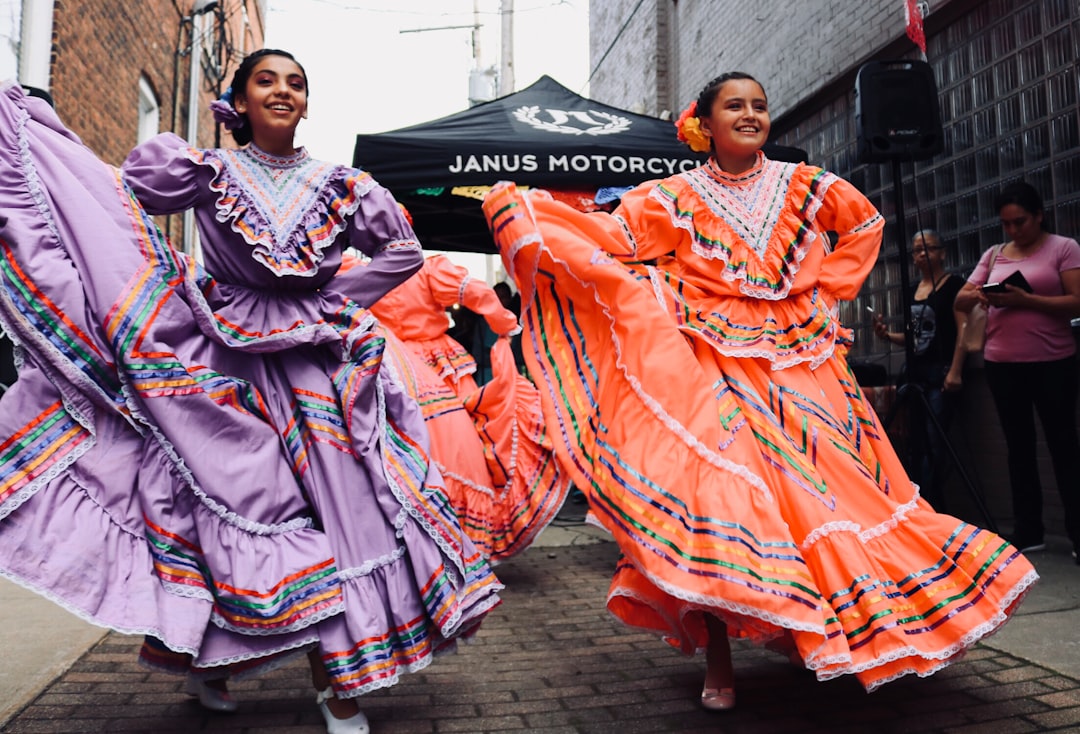
Photo by sydney Rae on Unsplash
My grandmother still keeps thank-you notes in a shoebox on her dresser, organized by date and sender. She considers them artifacts of respect, tiny paper monuments to good manners. Last month, when I sent her a birthday gift—a cashmere scarf I'd researched for weeks—she waited. Days passed. Finally, a text arrived: "Love the scarf! So soft!" Followed immediately by a selfie of her wearing it.
No handwritten note. No formal acknowledgment. Just a casual, warm text message with photographic evidence of her appreciation. Ten years ago, I might have felt mildly offended on behalf of etiquette itself. Today, I found it perfectly reasonable. And apparently, I'm not alone.
The Great Unraveling of a Tradition
The thank-you note has been dying a slow death for years, but recent social research suggests it's not actually dead—it's transforming. A 2023 survey by Emily Post Institute found that 68% of Americans between 25 and 40 now consider a text message or call an acceptable substitute for a handwritten thank-you note, compared to just 18% in 2005. That's a seismic shift in what constitutes "proper" gratitude.
What's fascinating isn't that thank-you notes are disappearing entirely. It's that their absence no longer feels like a breach of contract between generations. We're witnessing the moment when a cultural standard quietly loses its moral weight.
The etiquette world, traditionally the enforcers of these standards, seems genuinely confused about what to do. Advice columnists continue to recommend handwritten notes with the fervor of people defending a sinking island. Major etiquette guides have begun adding caveats: "While a handwritten note is preferred..." The word "preferred" doing a lot of work there, softening expectations with the linguistic equivalent of a shoulder shrug.
Why Millennials Killed It (And Honestly, That Makes Sense)
The generational explanation here is almost too obvious, but it's worth stating plainly: Millennials grew up with email, text messaging, and eventually social media. For this cohort, immediate communication isn't rude—it's normal. Sending your grandmother a thank-you text within hours of opening her gift feels significantly more appreciative than sending a handwritten note two weeks later. The gratitude hits while the moment is still warm.
There's also the matter of performance. Handwritten thank-you notes exist, in part, as proof of good manners. They're written for an audience—you're demonstrating to the gift-giver (and to anyone who might see the note) that you know which fork to use socially speaking. A text message has no such pretense. When my friend Amy texts back, "This book is amazing, thank you SO much!" three hours after I've given it to her, I feel her enthusiasm more than I would reading her careful script on monogrammed stationery two weeks hence.
The shift also reflects genuine changes in how we live. Millennials and Gen Z are more likely to live far from extended family. A handwritten note once served as a physical touchpoint when distance was real. Now we're always connected. My cousin sees my life update in real-time on Instagram. She doesn't need a note to know I'm grateful; she can sense it in my response time, my emoji usage, my decision to tag her in something relevant.
The Real Cost of Convenience
But here's where the story gets complicated, because something genuine is being lost beneath the convenience.
There's archaeological evidence in a handwritten thank-you note that something mattered enough to slow down for. The physical act of writing—finding paper, locating a pen, forming words by hand, addressing an envelope, finding a stamp—demands a kind of presence that a text simply doesn't require. When you sit down to write, you're making a declaration: "I'm going to stop scrolling for fifteen minutes and think about you specifically."
A thank-you text can be sent while you're waiting for coffee, half-watching a show, thinking about three other things. It takes thirty seconds. This isn't necessarily insincere, but it is, by definition, less intentional.
Several older adults I spoke with expressed something similar, though most were careful about it. Helen, 67, put it this way: "I'm not saying my grandchildren don't appreciate gifts. They absolutely do. But I'll never know how long they thought about me while writing a thank you. With a text, I know the answer is forty-five seconds maximum."
The research here is mixed. Studies on handwriting suggest that the physical act of writing does something neurologically different than typing—it creates stronger memory formation and emotional engagement. Whether that matters for thank-you notes specifically is harder to prove. But the psychological intuition isn't baseless. Something does shift when you slow down.
The Middle Ground Nobody's Actually Using
What's strange is that we haven't really found a middle path. The etiquette world keeps insisting on handwritten notes, younger people keep sending texts, and nobody's actually thrilled with either option. Meanwhile, there's a vast, underutilized middle ground between a formal letter and a casual text: a handwritten card with one genuine paragraph. Not formal. Not performative. Just slow enough to matter, modern enough to feel natural.
The most thoughtful thank-you correspondence I've received in the past decade came from my friend Marcus, who sent me a postcard—literally just a postcard—from vacation saying, "Thinking of you and thanking you." It took him five minutes. It meant more than any formal letter could have.
For those interested in understanding how communication itself is evolving across different mediums, The Great Vinyl Return: Why Millennials Are Spinning Records in Their Apartments Again offers an interesting parallel—how older mediums still hold cultural weight even as we rush toward efficiency.
What Comes Next
The thank-you note isn't going extinct. It's just being repositioned. For truly significant gifts or formal occasions, it may retain its status as the "proper" move. But for everyday gratitude between people who love each other? The phone has won. And maybe that's okay.
What matters more than the medium is whether gratitude is expressed at all. A text that arrives quickly and warmly beats a note that never comes. A phone call beats a forgotten promise to write. The old rules assumed scarcity—communication was limited, so formal demonstrations of effort mattered. Now communication is abundant. What matters is intention, and intention can live in a lot of different forms.
My grandmother has started texting me more. I've started calling her more. We found our own middle ground, not because either of us changed our values, but because we prioritized each other over convention. Maybe that's how traditions actually evolve—not with sudden rupture, but with small negotiations between people who love each other enough to meet halfway.
Comments (0)
No comments yet. Be the first to share your thoughts!
Sign in to join the conversation.