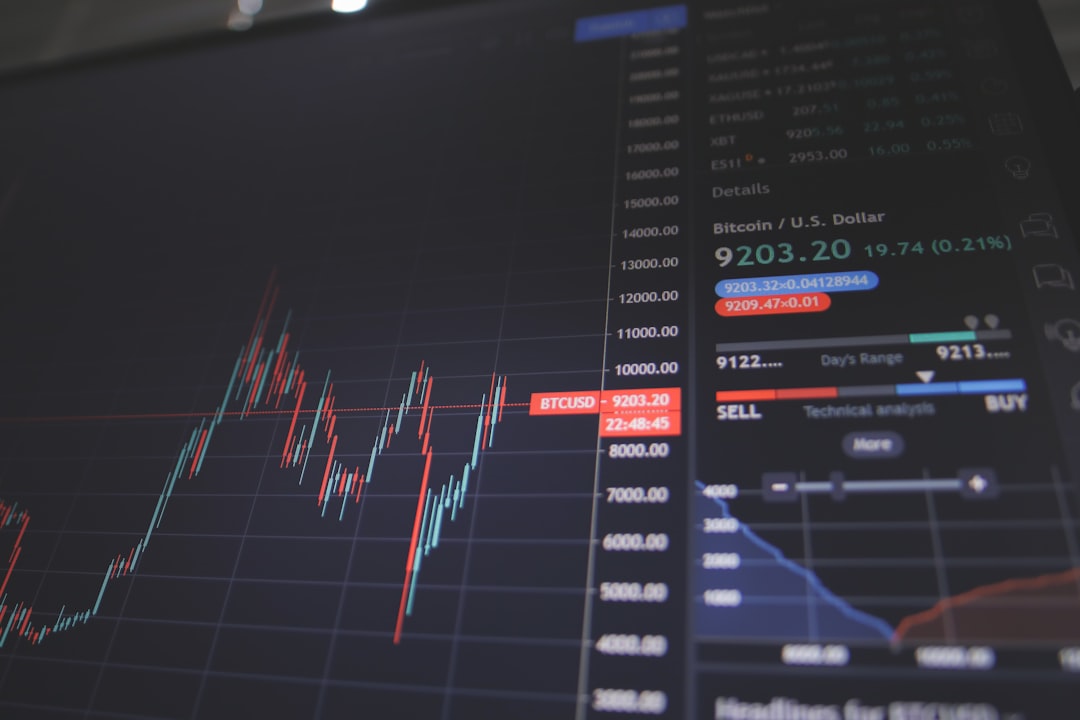
Photo by Nick Chong on Unsplash
UST promised to be different. Terra's algorithmic stablecoin was supposed to crack the code that had eluded crypto engineers for years: a coin that maintained a dollar peg without actually holding dollars in reserve. Instead, on May 11, 2022, it collapsed to $0.10 in what might be the fastest evaporation of $40 billion in financial history.
Three years later, the stablecoin market has learned almost nothing.
We still have $130 billion locked into stablecoins—the plumbing that makes crypto markets function. Most traders don't even think about where their stable value actually comes from. They just assume it's there. That assumption is increasingly fragile.
The Uncomfortable Truth About Dollar Backing
Let's start with the lie everyone tells themselves: that stablecoins backed by dollar reserves are "safe." USDC, USDT, BUSD. They all claim their coins are fully backed by actual US dollars sitting in bank accounts. Audit reports say so. Official websites promise it. But here's what makes institutional investors quietly nervous: you can't actually verify this.
When Tether, which powers USDT (and controls about 60% of stablecoin volume), finally released an audit in 2021 after years of avoiding one, it revealed something hilarious and terrifying. Their "dollar reserves" included commercial paper, loans, and other assets that definitely aren't dollars. The company had been caught depositing stablecoin proceeds into Bitfinex, the exchange they conveniently own. The same exchange that had mysteriously lost $850 million in user funds.
Yet USDT remains the dominant stablecoin. Because crypto traders don't really have a better option. And because when liquidity dries up, USDT is what everyone scrambles to hold.
The audit situation improved slightly. Newer stablecoins like Circle's USDC actually maintain reserve accounts that independent auditors can verify. But here's the catch: even with genuine dollar reserves, there's still risk. Banking risk. In March 2023, Silicon Valley Bank collapsed and took some of USDC's reserves with it. USDC's peg briefly broke—it dropped to $0.87. Not catastrophic, but enough to remind everyone that "fully backed" doesn't mean "immune to systemic financial crises."
Why Algorithmic Stablecoins Keep Seducing Smart People
If reserve-backed coins have all these problems, why do developers keep trying to build algorithmic stablecoins? Because the math *seems* elegant. UST worked on an incentive mechanism: when UST traded below $1, traders could burn $1 of Luna (Terra's other token) to mint $1 of UST. This arbitrage opportunity would supposedly keep the peg tight. What could go wrong?
Everything, as it turned out. The mechanism required faith in Luna's value. When Luna started declining, fewer people wanted to burn it. The incentive reversed. Suddenly, UST holders rushed to redeem their Luna, but Luna's price was collapsing faster than redemptions could happen. It became a death spiral. Luna went from $80 to $0.0001 in less than two weeks.
The interesting part? After UST imploded, developers immediately proposed new algorithmic designs. Waves, which tried to launch an algorithmic stablecoin through its Neutrino protocol, hit a peg of $0.80 during the broader crypto crash of 2022. MakerDAO's DAI stablecoin, which is partially algorithmic and partially backed by cryptocurrency collateral, has maintained its peg better than most alternatives. But only because it requires users to lock in $2-3 of collateral for every $1 of DAI they mint. That's not elegant. That's just using excess collateral instead of clever incentives.
The pattern repeats because blockchain engineers are, at heart, optimists about mathematics. They believe elegantly designed systems should work. They underestimate the power of human panic.
The Real Problem: Regulatory Uncertainty
Here's what nobody talks about enough: the biggest threat to stablecoins isn't technical. It's regulatory.
The Federal Reserve and the Treasury Department are moving toward stringent stablecoin requirements. New York has already implemented the BitLicense regime, which includes strict stablecoin regulations. The proposed regulatory framework would likely require stablecoin issuers to be banks themselves, or to maintain reserves in Federal Reserve accounts (which most crypto companies can't access).
If you're USDT or USDC and regulators decide tomorrow that your entire business model is illegal, your coin doesn't just lose value—it becomes legally untradeable overnight. This happened with BUSD, Binance's stablecoin. In February 2023, New York regulators told Paxos (BUSD's issuer) to stop minting new coins. BUSD's market cap dropped from $18 billion to $3 billion in months.
The irony is that regulators want stablecoins to be safe, but their restrictions might make them riskier by creating an unstable market where only a few coins are "approved." If USDT and USDC become the only options and either one hits regulatory trouble, there's nowhere else to go.
What's Actually Keeping Stablecoins Alive
Stablecoins survive because crypto markets literally cannot function without them. When you trade Bitcoin on a centralized exchange, you're not trading it for actual US dollars in most cases—you're trading it for USDT or USDC. These coins are the real currency of crypto.
This creates a perverse stability. Even if everyone knows stablecoins are precarious, they're too essential to abandon. It's like how we all know the financial system is fragile, but society keeps functioning anyway because the alternative is worse.
The smartest institutional players are hedging. Some are moving toward a multi-stablecoin strategy, holding USDC, USDT, and others to reduce single-point-of-failure risk. Others are exploring central bank digital currencies (CBDCs) as a potential alternative. But adoption of CBDCs is years away, and governments are moving glacially.
If you want to understand where stablecoin risk really concentrates, look at what happened with cross-exchange arbitrage traders. The Great Crypto Arbitrage Collapse showed how quickly liquidity evaporates when stablecoin confidence wavers. When traders can't move stablecoins between exchanges efficiently, the entire market seizes up.
The next stablecoin crisis won't look like UST's dramatic death spiral. It'll look like a slow liquidity drain, a peg that drifts from $0.99 to $0.95 to $0.85, and exchanges quietly restricting withdrawals to "verify reserves." By the time everyone realizes the situation is serious, the exit door will be too narrow for everyone to fit through.
Until then, we're all implicitly betting that stablecoins will remain stable. It's the most important assumption in crypto, and it's built on mathematics, audits, and regulatory hope. Not exactly a fortress.
Comments (0)
No comments yet. Be the first to share your thoughts!
Sign in to join the conversation.