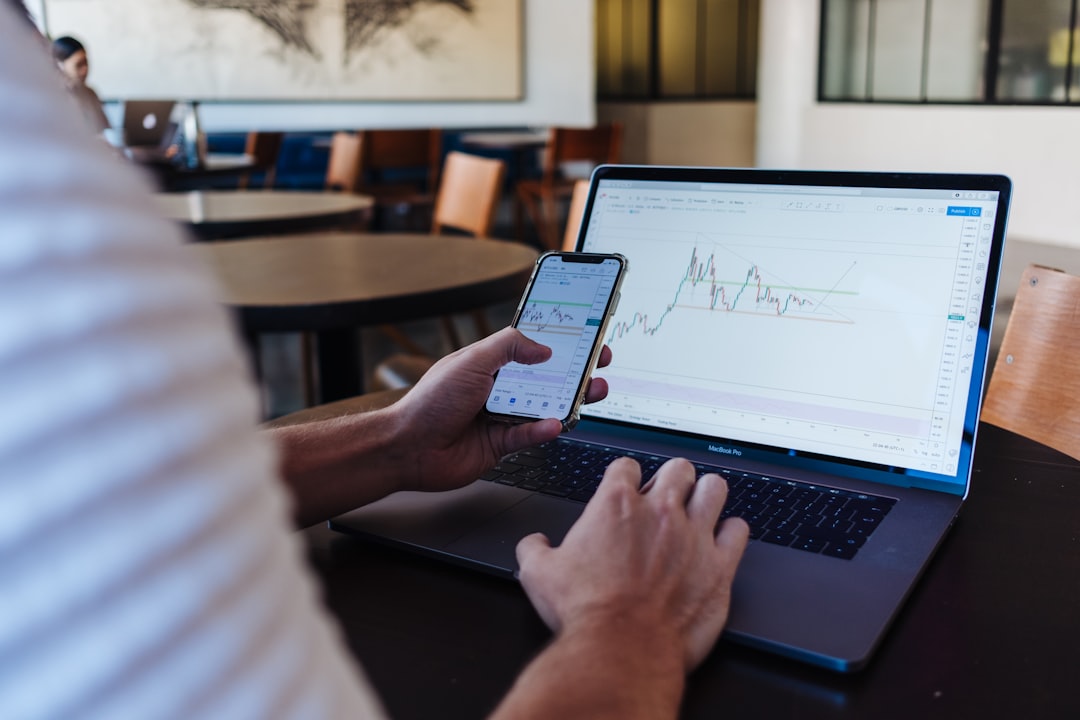
Photo by Jason Briscoe on Unsplash
Marcus had been running the same arbitrage strategy for three years. It was almost mechanical—buy Bitcoin on Kraken where it was trading $200 cheaper, sell it on Binance at the higher price, pocket the difference after fees. Thousands of tiny trades, compounding into serious money. Then, on a Tuesday morning in March, it all exploded.
"I lost more in one hour than I'd made in the previous six months," Marcus told me over encrypted chat. "The spreads inverted. Completely inverted. I was supposed to be hedged, but the hedge didn't exist anymore."
What happened to Marcus wasn't an isolated incident. It was a glimpse into how fragile crypto markets still are—and how a strategy that seemed foolproof can evaporate when market conditions shift unexpectedly.
The Arbitrage Dream vs. The Market Reality
Crypto arbitrage sounds almost too good to be true because, well, it kind of is. The basic premise is simple: different exchanges set different prices for the same asset. Bitcoin might be $42,500 on Kraken and $42,800 on Binance. A bot buys low, sells high, keeps the spread. No market risk, no directional bet. Just pure execution.
For years, this worked because crypto markets were fragmented. Exchanges didn't talk to each other perfectly. Deposits took time. Withdrawals hit delays. Regulatory restrictions in certain regions created genuine price differences. Someone with enough capital and good infrastructure could skim pennies from millions of dollars of volume.
The appeal was obvious. Unlike normal trading, you're not fighting the market. You're not predicting where Bitcoin goes. You're just exploiting temporary inefficiencies in how the market prices the same thing across different venues. Mathematicians and engineers flocked to it. Funds were built around it.
Then the infrastructure improved. Faster deposits. Better APIs. More sophisticated bots. And suddenly, the spread that used to be two percent shrank to 0.3 percent. Then 0.1 percent. Then nothing at all.
When The Numbers Stopped Adding Up
Here's what most arbitrage traders don't tell you: they don't actually stop when spreads narrow. They don't go home when the profit margins compress to nothing. Instead, they get creative.
Some start using leverage. If there's a tiny spread, maybe you amplify it with 5x or 10x margin. Others get aggressive with timing, assuming they can move through exchanges faster than the market can reprrice. A few start taking directional risk, essentially abandoning arbitrage and becoming speculators while telling themselves they're still hedged.
By 2024, the entire category had evolved into something far more dangerous than the original thesis. Traders were running overlapping positions across multiple exchanges. Some were using the same stablecoin (USDC, for example) to trade on five different platforms simultaneously, assuming they could exit quickly if needed.
Then came the liquidity shock.
A major institution suddenly needed to unwind a large Ethereum position. The sell pressure was real, but not catastrophic on its own. However, because so many arbitrage traders had structured their positions to be "market neutral," a one-directional move immediately broke their hedges.
Someone who bought ETH on Kraken and shorted it on Binance was suddenly short exposure. Someone who was long on Coinbase but short on Kraken was long exposure. The supposed "risk-free" positions became directional bets overnight. And when everyone tried to unwind at the same time, the spreads didn't just narrow—they inverted.
The Cascade of Margin Calls
What made it worse was leverage. Traders who thought they were running 2% margin for safety suddenly found themselves 40% underwater. Margin calls went out. People had to liquidate at exactly the wrong time. Some exchanges paused withdrawals during the chaos (claiming "maintenance"). Others hiked withdrawal fees.
The whole thing played out over about 72 hours. By the end of it, several well-known arbitrage trading firms had posted losses in the eight figures. At least two announced they were shutting down entirely. The losses weren't from Bitcoin crashing or ETH tanking—prices moved maybe 2-3% total. The losses were from positions that were supposed to have zero market risk.
This wasn't even the biggest shock to the system. It was just a brutal reminder that crypto markets, for all their sophistication, still operate on assumptions that break when conditions change suddenly.
What This Means For The Rest Of Us
If you're not running arbitrage bots, why should you care? Because this reveals something important about how crypto infrastructure is still developing.
Most people think of "market risk" as directional exposure—will Bitcoin go up or down? But the 72-hour collapse showed that there are entire categories of risk that most retail traders aren't even thinking about. Liquidity risk. Counterparty risk. Execution risk. The risk that your "hedge" only exists when you don't need it.
It's also worth noting that this chaos happened on exactly the kind of day that should favor sophisticated traders: moderate volatility, no black swan events, just normal market stress. If your strategy breaks on a normal Tuesday, it was never really a strategy.
The arbitrage traders who survived were the ones who either understood these risks and sized accordingly, or the ones who got lucky. Most of the ones who got wiped out had externalized the risk somehow—by using leverage they didn't understand, by trusting infrastructure that wasn't tested, or by believing that historical backtests predict actual market behavior.
For traders thinking about their own positions, the lesson is harsh but valuable: test your hedges when you don't need them. Understand the infrastructure you're relying on. Never assume that a strategy that worked for three years will work tomorrow. And if it seems too good to be true, count the ways it can break.
The most dangerous trades aren't the ones that lose money loudly. They're the ones that claim to have no risk at all.
If you want to understand how other sophisticated strategies are failing in plain sight, read about staking's hidden costs—it's a similar story of "risk-free" strategies that come with more fine print than anyone realizes.
Comments (0)
No comments yet. Be the first to share your thoughts!
Sign in to join the conversation.