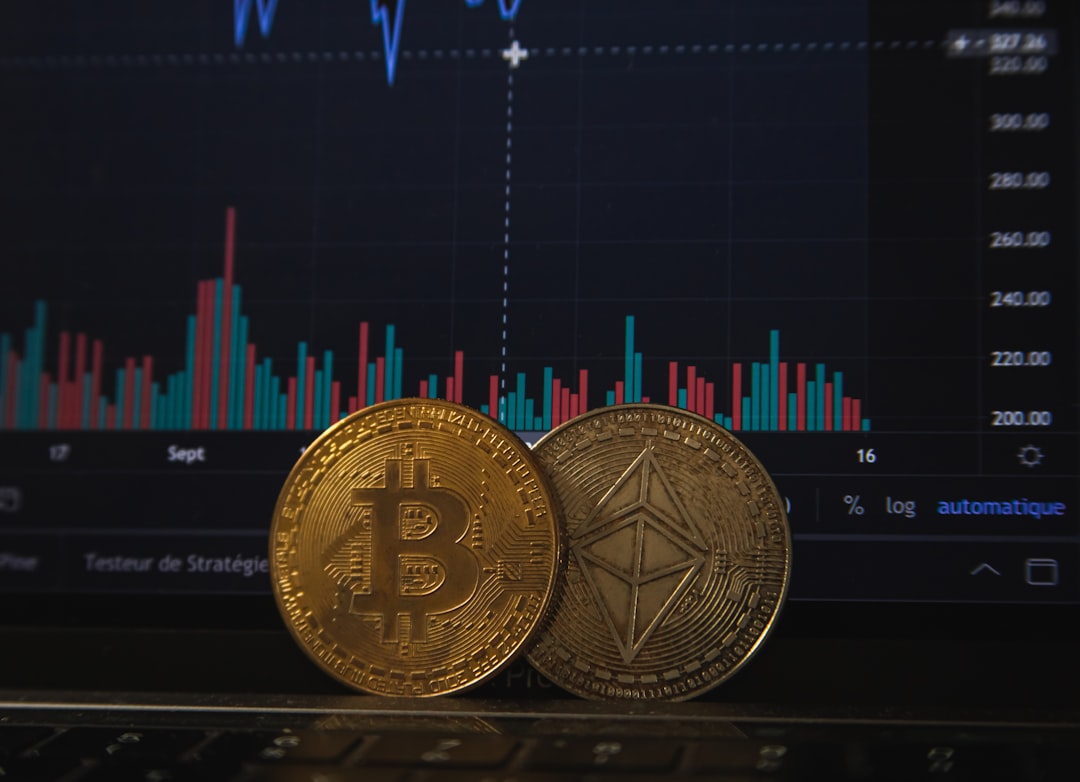
Photo by Pierre Borthiry - Peiobty on Unsplash
When FTX imploded in November 2022, most people focused on the obvious villain: Sam Bankman-Fried's criminal fraud and embezzlement. But buried under mountains of court documents and technical analysis was a far more uncomfortable truth that still haunts Solana today. The collapse exposed a fundamental architectural vulnerability in how Solana operates—one that makes it dangerously dependent on exactly the kind of centralized power structures that cryptocurrency was supposed to eliminate.
Solana wasn't just FTX's favorite blockchain. It was FTX's playground. And when the exchange went underwater, it revealed how tightly coupled the two had become, and how that coupling reflected deeper structural problems that nobody was really discussing.
The Speed Trap: How Solana Traded Security for Performance
Here's the thing about Solana that enthusiasts love to brag about: it processes 65,000 transactions per second. That's absurdly fast compared to Bitcoin's seven or Ethereum's twelve. When Solana first came on the scene around 2020, people were genuinely impressed. Finally, a blockchain that didn't require layer-two solutions or elaborate workarounds just to function like a normal payment network.
The problem? You can't just make a blockchain fast and decentralized and secure all at once. That's not pessimism; that's the blockchain trilemma, and it's real. Solana essentially chose speed and decentralization, which meant compromising on something else. What it compromised on was resilience.
To achieve those transaction speeds, Solana uses what's called Proof of History—a clever but complex consensus mechanism that relies on a network of validators organized in a very specific way. The network needs these validators to stay synchronized and honest. But synchronization costs money. Running a Solana validator requires serious hardware and bandwidth. As of late 2023, estimates suggested you'd need around $5,000-$10,000 in equipment just to run a node competently.
That's not exactly a barrier that prevents centralization. Compare that to Bitcoin or Ethereum, where developers have deliberately worked to make running a node as cheap as possible. Solana's requirements meant that validator participation was always going to be concentrated among wealthier operators. FTX, naturally, had deep pockets and strong incentives to run validators and gain influence over the network.
When Your Biggest Supporter Becomes Your Biggest Risk
FTX didn't just use Solana. It became a crucial pillar of the ecosystem. Sam Bankman-Fried and his team invested heavily in Solana projects, acquired stakes in validators, and pumped billions into Solana-based tokens. FTX Ventures became the venture capital arm that funded Solana startups. If you were building on Solana in 2021-2022, there was a decent chance FTX's money was in your cap table somewhere.
This wasn't inherently evil. But it created a catastrophic dependency. When FTX collapsed, it didn't just cause a market crash. It created cascading failures across the entire ecosystem. Alameda Research—FTX's trading firm—had borrowed billions in Solana tokens and FTX-affiliated assets. As the exchange froze and bankruptcy proceedings began, those assets evaporated. Projects that depended on FTX funding suddenly lost their primary revenue source. Validators who had exposure to FTX or Alameda faced massive losses.
The network hiccuped. Several times during the 2022-2023 period, Solana experienced outages that lasted hours. The blockchain just... stopped. Transactions couldn't process. This happens occasionally with proof-of-work chains too, but Solana's failures felt different. They felt structural. When the network needed to halt to prevent cascading validator failures, it halted. The benevolent dictator (or in this case, the Solana Foundation and its core team) stepped in and basically told validators to stop.
That's not decentralization. That's a network that works until it doesn't, and when it breaks, it needs permission from authorities to fix itself.
The Centralization Spiral Nobody Predicted
Here's where it gets really interesting. After FTX's collapse, Solana actually started becoming even more centralized, not less. Why? Because the network needed capital to survive. It needed rich entities to step in and run validators. Jump Crypto—a company owned by Jumpsuit, which is controlled by wealthy crypto investors—became a massive validator operator. Other well-funded entities consolidated validator operations.
This is the inverse of what should happen in a maturing blockchain. You want more distributed participation, not less. But when disaster strikes, markets consolidate. The strong get stronger, the weak get wiped out. Solana's architecture had no built-in mechanism to prevent this. There's no minimum validator count enforcement. There's no penalty for centralization beyond theoretical network fragility.
Compare this to Ethereum, which has built increasingly sophisticated mechanisms to encourage home stakers and smaller participants. Ethereum has actual competition between thousands of independent validator operations. Solana has a few dozen serious players and hundreds of smaller operations that are financially struggling.
What This Means Now
Does this mean Solana is finished? Not necessarily. The network still works. Developers still build on it. But the FTX implosion exposed something that the Solana community would rather not discuss: the blockchain works fine as long as nothing goes seriously wrong. The moment systemic stress appears, the architectural weaknesses become obvious.
For a blockchain that's supposed to be a decentralized alternative to traditional financial infrastructure, that's a critical liability. Centralized control and whale manipulation can happen at any layer of the crypto stack, and Solana's design makes it especially vulnerable.
The real lesson isn't that Solana is bad. It's that performance always has costs. Solana chose speed over redundancy and decentralization. That was probably the right choice for what Solana was trying to do. But it created fragility. And when Sam Bankman-Fried's empire collapsed, that fragility cracked wide open for everyone to see.
Comments (0)
No comments yet. Be the first to share your thoughts!
Sign in to join the conversation.