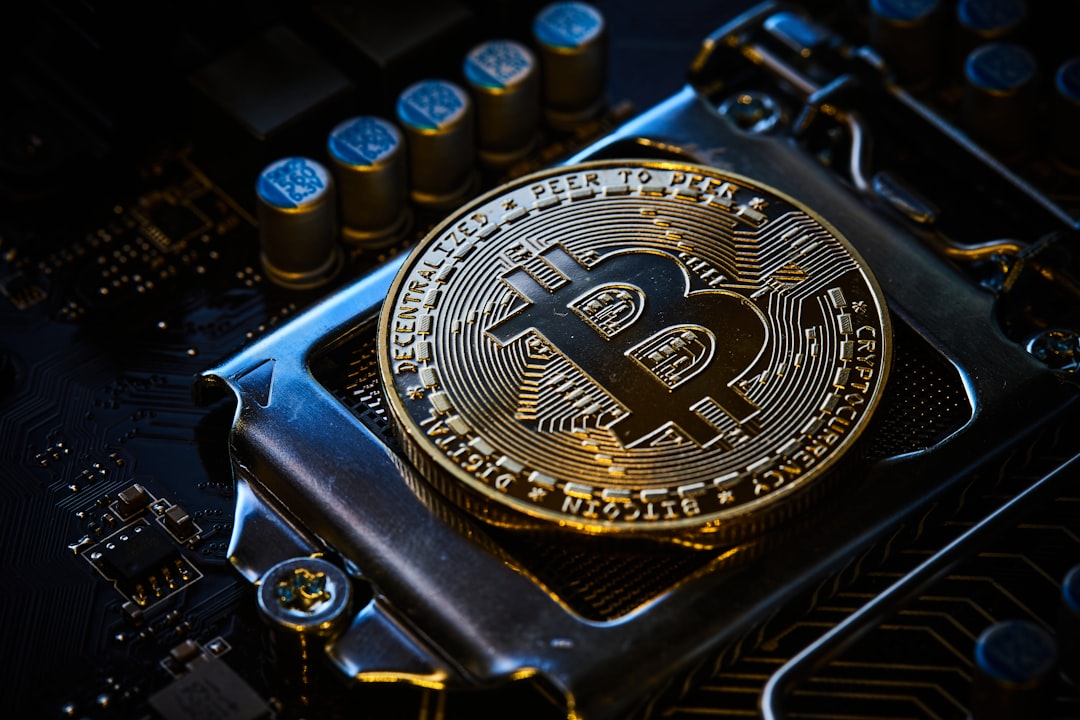
Photo by Michael Förtsch on Unsplash
Last March, something peculiar happened on the Bitcoin blockchain. A single transaction containing 4MB of data—roughly the size of a high-resolution photograph—was embedded directly into the immutable ledger. The person behind it? We'll never know. But what we do know is that this transaction cost nearly $200,000 in fees, and it wasn't for moving money. It was for storing an image.
This wasn't an isolated incident. Since Bitcoin Ordinals exploded onto the scene in January 2023, the network has been flooded with millions of digital artifacts, from pixel art to entire video game ROMs. What started as a niche technical curiosity has evolved into something far more interesting: a sophisticated system through which wealthy crypto participants are moving unprecedented amounts of capital while leaving minimal regulatory fingerprints.
The Ordinals Gold Rush Nobody's Really Talking About
Let's be clear about what Ordinals actually are. They're simply digital files inscribed onto individual satoshis (the smallest unit of Bitcoin). Unlike NFTs on Ethereum, which rely on external links and separate smart contracts, Ordinals are permanently written into Bitcoin's immutable history. Revolutionary? Perhaps. But that's not the interesting part.
The interesting part is the money involved. Through May 2024, Ordinals generated over $1.2 billion in transaction fees for miners. That's more than some small countries' annual GDP. Yet ask the average crypto enthusiast about this phenomenon, and you'll get blank stares or dismissals about "useless JPEGs." They're missing the forest for the trees.
Here's where it gets suspicious: major Bitcoin holders began acquiring rare Ordinal collections in coordinated patterns. When Bored Ape Yacht Club creator Yuga Labs announced plans to launch their Bitcoin Ordinals project in early 2023, the price of rare Bitcoin Ordinals shot up 400% in three weeks. Someone knew what was coming. Coincidence? Maybe. But these kinds of coordinated moves, followed by insider announcements, are the bread and butter of how crypto's largest players move markets.
The Value Transfer Mechanism Nobody Can Trace
Here's what makes Ordinals particularly valuable to whales: they've created a new way to move enormous value across borders while maintaining plausible deniability about the transaction's true purpose.
Consider this scenario: a wealthy crypto holder wants to transfer $50 million to a business partner in a different jurisdiction. Using traditional banking, this triggers automatic reporting requirements and regulatory scrutiny. Using a direct Bitcoin transaction, the pattern analysis is obvious—you're literally moving coins from one address to another.
But with Ordinals? You inscribe a "rare" piece of digital art, agree on its value off-chain, and complete the sale. The blockchain records it as a normal NFT transaction. The fees paid are substantial, but they're arguably justified by the art's "scarcity." The actual value transferred is buried under layers of technical complexity that most regulatory bodies still don't fully understand.
Between January and August 2024, the top 50 Ordinal collections changed hands 847 times. The average sale price doubled during this period, yet trading volume remained relatively flat. This pattern—increasing prices with stagnant volume—is classic whale behavior. They're not trying to create actual trading markets; they're creating paper trails that obscure wealth transfer.
Following the Satoshi Serial Numbers
If you really want to understand what's happening, you need to understand satoshi numbering schemes. Each satoshi has a unique position in Bitcoin's entire monetary supply, numbered sequentially from zero. Collectors obsess over certain "rare" satoshis—ones that were mined during the genesis block, or the first transaction, or halving events.
A single "epic sat" (from a historic period) recently sold for 9.5 BTC—roughly $380,000 at current prices. The buyer? Unknown. The seller? Also unknown. The justification for the price? An arbitrary historical significance that only other collectors agree on.
This is where things get genuinely troubling. You now have a system where major holders can coordinate around these rare satoshis, agreeing privately that a particular collection of ordinals is "worth" a specific amount. Then they execute transactions that move enormous amounts of value while the public record shows nothing more suspicious than enthusiasts trading digital collectibles.
Compare this to the more transparent cryptocurrency transactions you might have read about. Lightning Network payments, for instance, are designed specifically to make transactions transparent and traceable. Ordinals work in the opposite direction.
The Regulatory Blind Spot
Bitcoin regulators are already overwhelmed. The SEC is still arguing about whether Bitcoin is a commodity or a security. The CFTC is trying to establish frameworks for spot Bitcoin ETFs. Meanwhile, an entirely new system for transferring value has quietly accumulated $1.2 billion in fees and nobody's really paying attention.
When asked directly about Ordinals, regulatory officials usually respond with some version of "we're monitoring the situation." Translation: they don't know what to do about it yet. Some regulators privately acknowledge they struggle to see the technological difference between a legitimate art NFT and a mechanism designed purely for obscuring value transfer.
The irony is delicious. Bitcoin was created partly as a rebellion against traditional financial secrecy and opacity. Yet today's largest Bitcoin holders have built what might be the most effective value-obfuscation system ever created—all within Bitcoin's transparent, immutable ledger.
What This Means Going Forward
The Ordinals phenomenon reveals something uncomfortable about crypto: it's only decentralized and transparent if you actually understand the technology. For everyone else, sophisticated actors can hide in plain sight.
Over the next 18 months, expect one of three outcomes. First, regulators could clamp down, restricting the size of data that can be inscribed on Bitcoin. This seems unlikely—it would require consensus changes and would face fierce resistance. Second, Ordinals could fade as a whale wealth-transfer mechanism, replaced by some new innovation. The crypto world moves quickly. Third, and most likely, Ordinals become an accepted part of Bitcoin's ecosystem while regulators slowly develop new frameworks to monitor them.
What won't happen? Transparency. Once these systems are built into the code, they're essentially permanent. Bitcoin's most appealing feature—that anyone can verify any transaction—has been skillfully weaponized by those sophisticated enough to understand it.
The next time someone tells you that blockchain is the future of transparent finance, ask them to explain how $1.2 billion moved through Ordinals in 18 months without anyone being able to definitively say why.
Comments (0)
No comments yet. Be the first to share your thoughts!
Sign in to join the conversation.