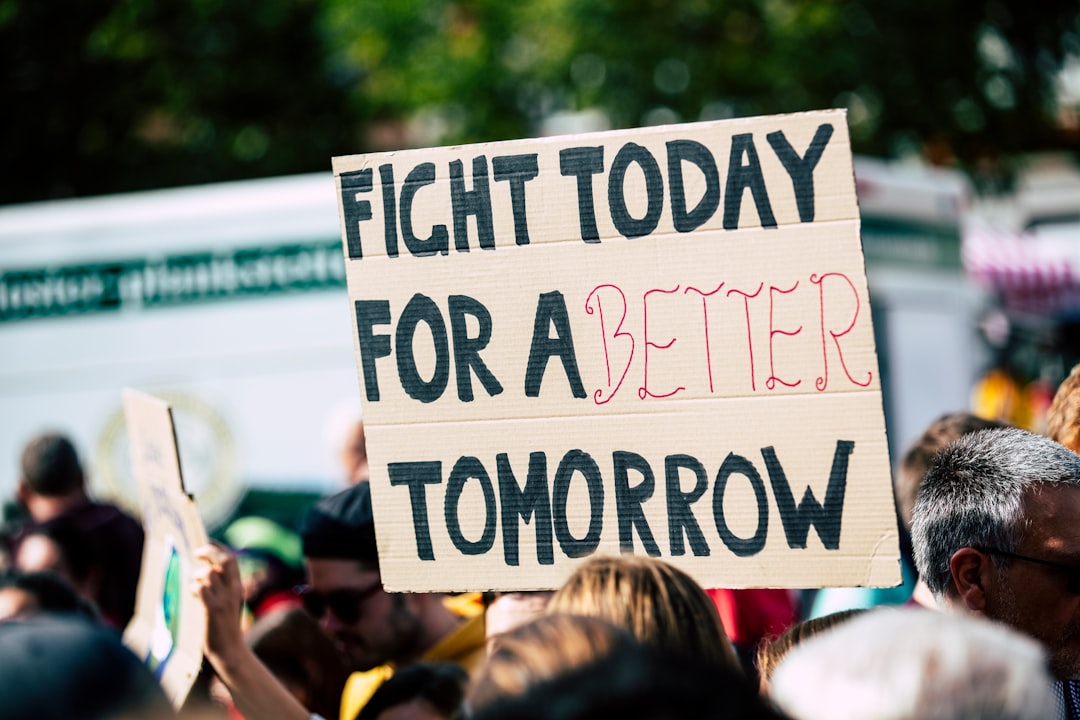
Photo by Markus Spiske on Unsplash
You know that feeling. You've decided to cancel something—a gym membership, a streaming service, a meal kit delivery. It took you thirty seconds to sign up. But now? Now you're being redirected to hold pages, transferred between departments, or told you need to call during business hours that don't align with your timezone. One minute you're logged in. The next, there's no obvious "cancel" button anywhere. It's not an accident. It's strategy.
This phenomenon has a name in the industry: "dark patterns." But that clinical term doesn't capture how infuriating it actually is when you're the one experiencing it.
The Asymmetry That Drives You Crazy
Let me paint a specific picture. Sarah signed up for a premium streaming service in October. It took her about ninety seconds on her phone. She clicked three times, entered her payment info, and she was watching shows. Fast. Easy. Seamless. The user experience team had clearly worked hard on this.
In March, she decided to cancel. She logged into her account and looked for a settings menu. Found it. Looked for "subscriptions" or "billing." Found it. Looked for "cancel subscription." And looked. And looked some more.
She found options to upgrade, to add premium add-ons, to gift subscriptions to friends. But cancellation? That required clicking through to a help page, reading through three FAQ articles, and finally finding a link that said "contact support." She filled out a form. Then waited.
Three business days later, she got an email asking why she wanted to cancel. She had to respond. Then they offered her a discount. She had to decline. Then they offered a deeper discount. She had to decline again. Finally—finally—they processed her cancellation request, but not before attempting to keep her as a customer for a full week.
That's not a bug. That's intentional design. And companies know exactly how many customers will give up before reaching the end of that process and just keep paying.
Following the Money to Understand the Motivation
According to a 2023 AARP study, nearly 73% of subscription services make cancellation deliberately difficult. Some statistics suggest that between 26-40% of people who attempt to cancel a subscription actually abandon the process and stay subscribed.
Let's do some math. If a service has one million active subscribers and just 30% of people attempting to cancel actually give up and stay, that's a significant revenue retention number. For a $15-per-month service, even if just 50,000 people stay subscribed when they wanted to leave, that's $9 million per year in revenue generated essentially through friction rather than value.
Companies call this a "business metric." People call it what it is: predatory.
The frustrating part? These companies often have the data to know exactly how many customers they're retaining through these dark patterns rather than customer satisfaction. They know the conversion rates at each step of their obfuscated cancellation funnel. They A/B test different discounts to see which one converts the most wavering customers. They have this stuff down to a science.
When Companies Take It Too Far
Some businesses have crossed from "difficult" into genuinely unethical territory. Take the fitness industry. SoulCycle's cancellation process historically required customers to attend a class and speak to a manager in person. Not to discuss their cancellation—just to authorize it. For someone who worked full-time and had shifted their schedule, that could mean taking time off work just to exit a contract.
Planet Fitness made headlines for requiring phone calls during specific business hours to cancel—and then frequently "losing" those cancellation requests. Customers reported having to call repeatedly over weeks to finally get their cancellations processed.
The beauty of these systems, from the company's perspective, is plausible deniability. "We're sorry you had trouble canceling! There must have been a technical glitch. Here, have a discount." Meanwhile, they've analyzed their cancellation data to know exactly how much friction they can add before regulators step in.
The Regulatory Pushback (Finally)
Consumer frustration eventually attracted regulatory attention. The FTC began investigating subscription service cancellation practices in 2021. The result? Several settlements and fines, including a $100 million penalty against Amazon Prime in 2023 for making cancellation unnecessarily difficult.
Some states went further. California's ROSCA (Restore Online Shoppers Confidence Act) requires that cancellation be as easy as signup. New York's Consumer Protection Board published specific guidelines. The EU's regulations are even stricter.
But here's the thing: regulation takes time. For every company that gets fined, there are dozens still experimenting with gray-area tactics. And many have simply accepted the fines as a cost of business. If your dark pattern keeps even 20% of would-be cancelers subscribed for an extra few months, a settlement might still come out ahead financially.
What You Can Actually Do About It
If you're reading this because you're currently stuck in cancellation hell, here's the uncomfortable truth: your best option might be to bypass their system entirely.
Contact your credit card company. Dispute the charge as unauthorized. Most credit card companies have zero tolerance for subscription cancellation complaints and will refund you immediately. Yes, it's nuclear. But sometimes the nuclear option is the only language companies understand.
Document everything. Take screenshots of your cancellation attempts. Email confirmation numbers to yourself. This creates a paper trail that protects you if the company tries to keep charging you. The recurring charges often continue even after supposed cancellation, so having documentation is crucial.
Leave reviews specifically about the cancellation process. Companies monitor these closely. Potential customers read them. Public complaints about cancellation difficulty have actually prompted several companies to simplify their processes, if only to improve their online reputation.
And consider voting with your wallet before you even sign up. Services that make cancellation easy often advertise it. That's not accidental. It's a sign they're confident in their product's value.
The Bigger Picture
What bothers me most about these practices isn't the individual inconvenience. It's what it says about how some companies view their customers. The assumption seems to be that people are fundamentally lazy and that if you make something hard enough, they'll just give up.
Maybe they're right about the laziness. But they're wrong about what happens next. Because eventually, even lazy people get angry. And angry customers don't just leave—they tell everyone they know why they're leaving. They leave bad reviews. They switch to competitors. They become advocates for regulation.
Smart companies have figured this out. They make cancellation frictionless and then focus on making their product so good that people don't want to leave. Revolutionary concept, I know.
The companies still gaming their customers? Their days are numbered. The regulatory pressure is increasing. The consumer awareness is growing. And honestly, karma's a subscription service too—and it doesn't offer discounts to keep you around.
Comments (0)
No comments yet. Be the first to share your thoughts!
Sign in to join the conversation.