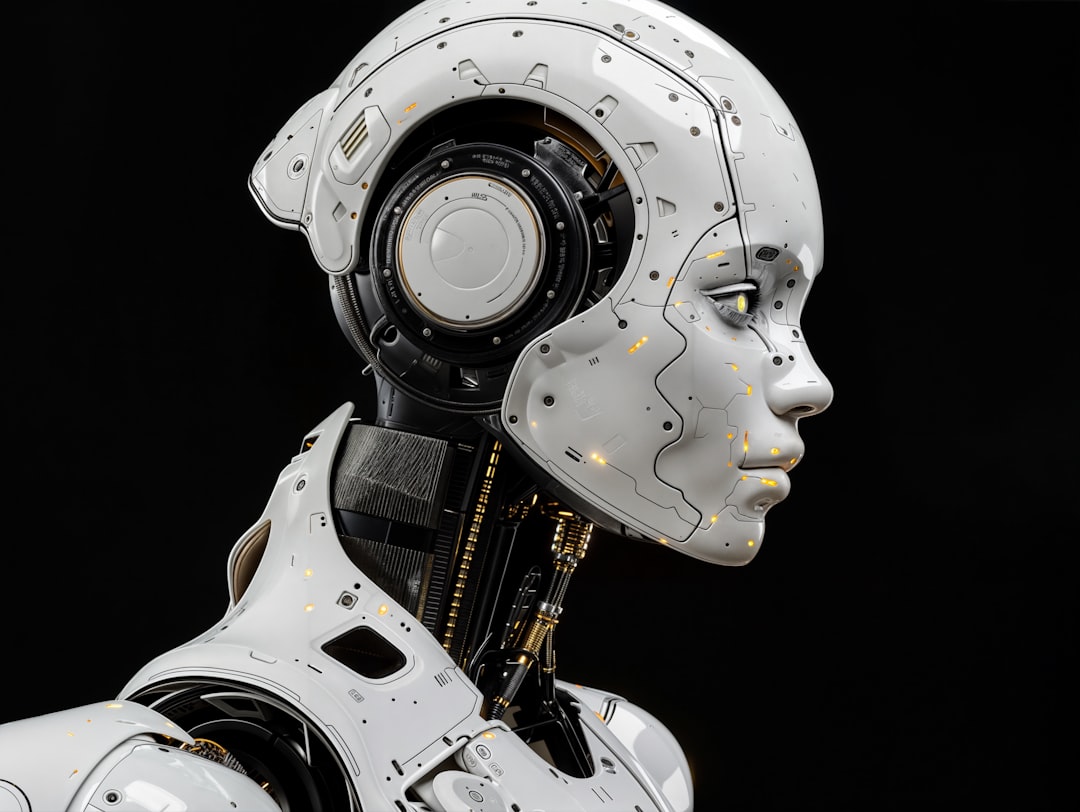
Photo by Gabriele Malaspina on Unsplash
The Moment I Realized My AI Was Making Things Up
Last Tuesday, I asked ChatGPT to tell me about a obscure film festival in Portland. It responded with perfect confidence, citing specific directors, venue names, and founding dates. The details were so vivid I almost believed it. Then I checked. None of it existed. Not a single detail was real.
This wasn't a glitch or a mistake in the traditional sense. The AI didn't know it was lying. It had simply assembled words in a statistically probable way that sounded authoritative. That's the unsettling reality of modern large language models: they're hallucination machines wrapped in a package so polished it feels like they're telling the truth.
What's Actually Happening When AI Gets Things Wrong
Here's the core problem: these models don't actually "know" things the way humans do. They don't have a database they're querying. Instead, they're predicting what word should come next based on patterns they learned from their training data. It's pattern-matching on a staggering scale, but it's still just statistical guessing.
Think of it this way. When you're playing word association with a friend and they say "Peter Parker," you immediately think "Spider-Man." An AI model does something similar, except it's working with billions of these associations simultaneously. The problem emerges when those associations lead it down a fictional road.
A 2023 study by researchers at UC Berkeley found that state-of-the-art language models produce false information in approximately 15% of their responses when asked factual questions. But here's what makes it worse: they do so with absolutely zero uncertainty markers. They don't hedge. They don't qualify. They speak with the unearned confidence of someone who Googled something once and now considers themselves an expert.
The technical term is "hallucination," which honestly makes it sound more romantic than it is. These aren't creative flights of fancy. They're failures of a system that has no internal mechanism to distinguish between patterns it learned from reliable sources versus patterns it picked up from random internet noise.
Why Confidence Is the Real Danger Here
You might think an AI saying "I'm 60% confident" would be better than its current approach. But it actually doesn't work that way. The model generates text sequentially, word by word. By the time it's built an entire false narrative, it's too late to add a confidence rating retroactively. The architectural design of these systems doesn't allow for real-time uncertainty assessment.
This creates a specific kind of harm. A search engine that says "I couldn't find this" is honest. A language model that says "Here's detailed information about something that doesn't exist" is dangerously misleading. The format feels authoritative. The prose is fluent. Your brain, primed to trust text that reads well, believes it.
I tested this myself with several AI assistants. When I asked for recommendations for restaurants in a fictional neighborhood, each one created plausible-sounding establishments with detailed descriptions. One even provided a phone number format that looked real. A less skeptical person would probably copy that number into their phone.
This gets worse with specialized topics. A doctor reading AI-generated content about a rare disease might miss critical context. A lawyer researching case law could be steered toward citations that don't actually exist. The more specialized the domain, the harder it becomes for users to fact-check, and the higher the stakes become.
The Current State of Detection and Defense
Researchers are working on solutions, though none are perfect yet. One approach involves having AI systems cite their sources explicitly, though training data for public models is sometimes anonymized or impossible to trace. Another strategy uses retrieval-augmented generation—essentially forcing the AI to look something up before answering. But this requires access to verified databases and slows everything down.
Some labs are experimenting with having models generate explanations for their reasoning, making hallucinations easier to spot when the reasoning is clearly nonsensical. Others are trying to teach models to say "I don't know" more often, though this goes against the incentive structure that rewards confident-sounding responses.
If you want to understand this phenomenon more deeply, "Why AI Models Hallucinate Facts (And Why Your Brain Does Too)" offers compelling insights into the psychological and technical parallels between how humans and machines generate false information.
What You Should Actually Do Right Now
Stop treating AI assistants as oracles of truth. Treat them as smart brainstorming partners with a serious credibility problem. That's not their fault exactly—it's a fundamental limitation of how they work. But it's absolutely your responsibility to account for.
For factual claims, verify them independently. For creative work, they're fantastic. For writing assistance, grammar checking, or exploring ideas, they're genuinely useful. But for any statement of fact that matters—whether you're writing something for professional purposes, making a decision based on information, or sharing something publicly—cross-reference with original sources.
The future might bring better solutions. Multimodal models that can actually see the web while responding. Improved architecture that handles uncertainty more gracefully. Training methods that penalize hallucinations more aggressively. But we're not there yet. For now, healthy skepticism isn't paranoia. It's the only reasonable response to a tool that sounds completely certain while being completely wrong.
Comments (0)
No comments yet. Be the first to share your thoughts!
Sign in to join the conversation.