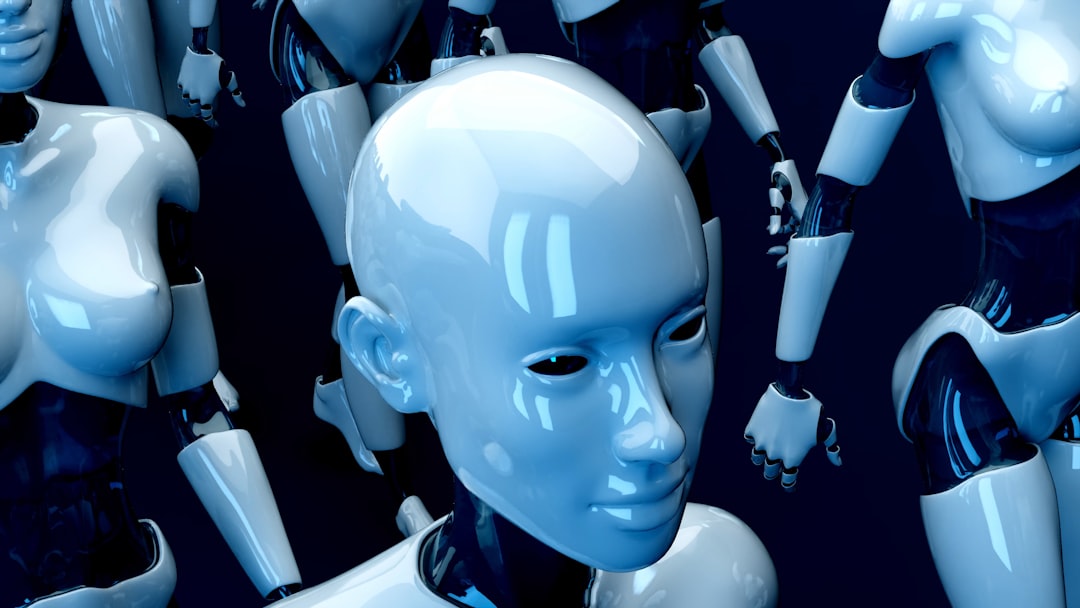
Photo by julien Tromeur on Unsplash
Last month, a lawyer submitted a court brief citing six judicial decisions that didn't exist. All of them sounded plausible. All were invented by ChatGPT. The lawyer hadn't verified them—why would he need to? The AI had written them with such conviction, such perfect legal formatting, that fiction became indistinguishable from fact.
This wasn't a freak accident. It's a feature, not a bug. And once you understand why AI models hallucinate, you'll realize we've been asking them to do something fundamentally impossible.
The Confidence Problem Nobody Wants to Admit
Here's what's actually happening inside a large language model when it generates text: it's not accessing a database of facts. It's not looking anything up. Instead, it's playing an incredibly sophisticated game of probability—predicting which word should come next based on patterns learned from billions of examples during training.
When ChatGPT writes "Justice Smith ruled in the landmark case of Smith v. Johnson that..." it's not consulting memories. It's calculating: given everything in my training data, what word statistically comes next? Given the legal context I've learned, what would a typical judicial ruling look like? Then it keeps going, predicting the next word, and the next, until it has a complete sentence.
The problem? The model doesn't actually know the difference between what it learned and what it invented. To the AI, fabricating a plausible-sounding detail requires the same process as recalling a real one. Both feel equally confident because both are just... predictions.
Neuroscientist David Eagleman has noted something unsettling about human memory: we're not much better. Your brain doesn't store facts like a computer saves files. It reconstructs them every single time you remember something, which means false memories can feel exactly as real as true ones. We're all hallucinating in slow motion.
Why We Keep Getting Fooled (And Keep Trusting Anyway)
The real issue isn't that AI hallucinates. It's that hallucinations come wrapped in confidence, specificity, and formal language that makes our brains treat them as fact.
If ChatGPT wrote "I'm not sure, but the case of Smith v. Johnson might have involved judicial precedent on contract law," we'd immediately recognize uncertainty. Instead, it writes with the tone of a law professor who studied the case forty times. It includes exact dates. It adds plausible supporting details. Our pattern-recognition systems—evolved to trust confident speech from authoritative-sounding sources—just... believe it.
This is why the same people who know intellectually that AI can hallucinate will still cite it as a source. Not because they're stupid. Because our brains evolved in environments where confident, detailed communication usually meant someone knew what they were talking about. We haven't yet developed the cognitive reflexes to second-guess a machine that sounds this sure.
For a deeper look at this exact problem, check out Why Your AI Chatbot Keeps Saying Confidently Wrong Things (And How to Fix It), which explores technical solutions to the hallucination problem.
The Uncomfortable Truth: Probability Isn't Knowledge
There's a philosophical problem buried here that nobody wants to talk about. Language models are fundamentally probabilistic. They work by understanding patterns and statistical relationships. But facts—real facts—aren't probabilistic. Justice Smith either wrote a decision or she didn't.
This creates an impossible task. We're asking a system built for pattern-matching to perform a task that requires knowledge of ground truth. It's like asking a statistician to function as a historian. Both involve understanding information, but one is about patterns and the other is about what actually happened.
The distinction matters because it reveals why fixing hallucination is harder than most people assume. You can't just "make the AI more careful." The problem runs deeper than training or fine-tuning. It's structural to how these systems work.
Some researchers are experimenting with retrieval-augmented generation—giving models access to verified databases they can actually reference. Others are working on uncertainty quantification, where AI learns to express genuine confidence levels. These help, but they're workarounds, not solutions.
What Actually Needs to Change
The realistic path forward isn't eliminating hallucination. It's building better friction into the systems that use AI outputs.
For legal briefs, that means human lawyers verify every citation—which is already standard practice, though apparently not always followed. For research writing, it means treating AI as a useful thought partner, not an oracle. For customer service, it means AI handles questions where hallucination has minimal consequences.
The problem isn't the AI. It's the gap between what these systems are and what we pretend they are. A language model is a prediction engine. If you need answers to questions, you need something different—a database, a human expert, or an AI system purpose-built for retrieval and verification.
The most dangerous use case is the one where we've optimized for sounding confident instead of being correct. But that's not a flaw in AI development. That's a flaw in how we've chosen to deploy it.
Until we stop treating probabilistic pattern-matching systems as oracles, we'll keep having versions of that lawyer's problem—just at much larger scales.
Comments (0)
No comments yet. Be the first to share your thoughts!
Sign in to join the conversation.