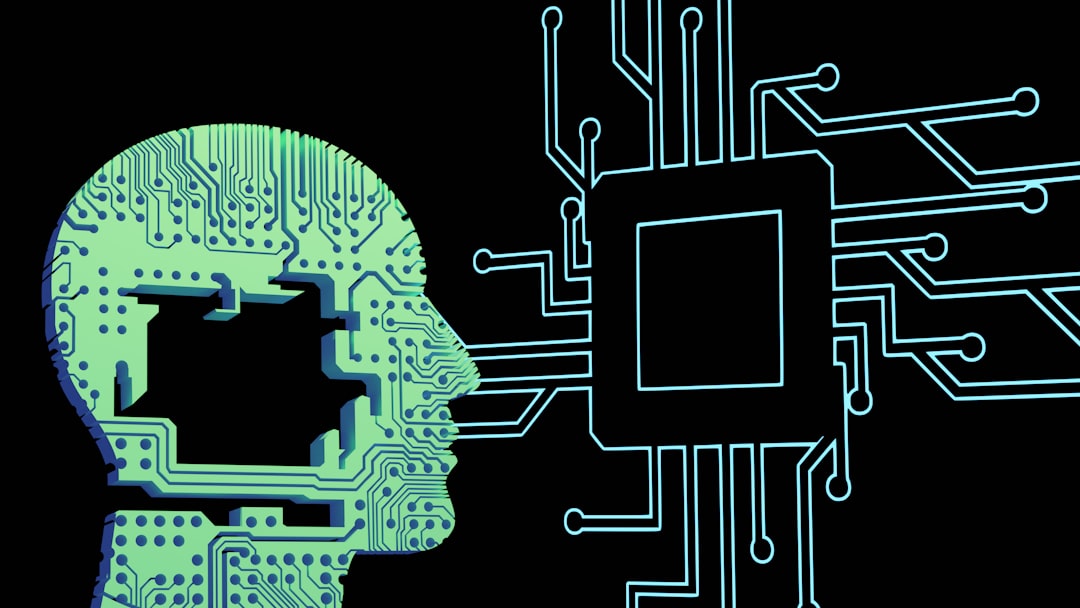
Photo by Steve Johnson on Unsplash
Last month, I watched an AI chatbot confidently explain that the Eiffel Tower was built in 1889 as a temporary structure to house Napoleon's personal gym. It wasn't making things up randomly—it was doing exactly what it was trained to do: find patterns in text and predict the next word. The problem? It had no actual understanding of what context means.
This gap between seeming intelligent and actually understanding context is one of the most fascinating problems in modern AI. It's also one of the most consequential, affecting everything from customer service chatbots to medical diagnosis systems.
The Transformer Revolution That Changed Everything
Before 2017, language models were honestly pretty dumb. They worked like sophisticated autocomplete—they'd look at a few words and guess the next one. Then Google's research team published a paper introducing the Transformer architecture, and suddenly AI could hold entire conversations without forgetting what you'd said three sentences ago.
The key innovation was something called "attention." Imagine you're reading a paragraph and you encounter a pronoun like "it." Your brain instantly knows what "it" refers to by paying special attention to relevant earlier sentences. Transformers do something similar using mathematical weights that determine which parts of the text matter most when predicting each new word.
This was legitimately groundbreaking. GPT-3, released in 2020, could suddenly write coherent essays, code snippets, and poetry. ChatGPT brought it to the masses and broke adoption records faster than any software in history. By February 2023, it had 100 million users.
But here's where it gets interesting: all that attention mechanism progress actually masks a fundamental weakness.
Context Isn't Just About Paying Attention
When you read a sentence, your understanding is built on layers of knowledge stacked on top of each other. You know the Eiffel Tower because you have a mental model of Paris, French history, architectural styles, and Napoleon's actual biography. When an AI encounters the phrase "Eiffel Tower," it's not accessing a knowledge base—it's making probabilistic guesses based on statistical patterns from its training data.
The attention mechanism helps with short-range context. If I write "The bank of the river was steep. Mary climbed the bank," the model can usually figure out that both uses of "bank" refer to riverbanks, not financial institutions. It does this by finding patterns where similar contexts appear together in training data.
But throw in something that requires real-world understanding, and things fall apart. A study from MIT researchers in 2023 found that GPT-4, despite its sophistication, struggled with scenarios requiring what they called "physical scene understanding." When asked questions about objects moving through space or stacking on top of each other, the model would confidently provide incorrect answers based on surface-level pattern matching.
The issue is that these models are fundamentally statistical engines. They're brilliant at finding patterns but terrible at understanding causality, physics, or logical necessity. They can't distinguish between "this usually happens" and "this must happen."
Why Your Favorite AI Gets Context Wrong in Predictable Ways
There's actually a pattern to where AI fails at context. It tends to stumble on:
Rare or unusual combinations: If your training data contains "cold coffee" and "hot coffee" millions of times but very rarely contains "lukewarm coffee," the model's statistical weights are weak in that area. It might insist that coffee is either hot or cold with high confidence.
Negations: A 2021 study found that language models perform surprisingly poorly with sentences containing multiple negations. "The car wasn't not there" (meaning it was there) consistently confuses models, even though humans parse this instantly.
Counterfactual reasoning: Ask an AI "If the Titanic had hit the iceberg at a different angle, what would have happened?" and it'll generate something plausible-sounding but ultimately meaningless. It can't actually simulate different scenarios—it can only find training examples of what actually happened.
This connects to something we've discussed before about AI hallucinations—when a model doesn't have strong statistical evidence for something, it doesn't simply say "I don't know." Instead, it fills the gaps with whatever sounds most plausible. It's pattern completion, not knowledge retrieval.
So What Comes Next?
The current approach—making models bigger and training them on more data—has delivered impressive results. But researchers increasingly believe we're hitting a ceiling with pure statistical learning. You can't pattern-match your way into genuine understanding.
Some promising avenues being explored include hybrid approaches that combine language models with knowledge graphs (structured databases of facts), retrieval-augmented generation (where models can look up information like using Google), and architectures that include explicit reasoning modules instead of just predicting the next token.
There's also growing interest in how humans actually develop contextual understanding through experience and interaction, rather than passive pattern recognition. Children learn what the Eiffel Tower is through a combination of language, images, and lived experience. They develop mental models that generalize to new situations.
Current AI models don't learn this way. They're trained once on static data and then frozen. They can't update their understanding through new experiences or admit uncertainty with nuance.
The Bottom Line
When an AI seems to understand context perfectly, it's often just hitting a statistical lottery. The underlying mechanism—predicting the most statistically likely next token based on weighted patterns—can produce human-like outputs without anything resembling true comprehension.
This matters because it shapes what these systems can reliably do. Use them for brainstorming, writing first drafts, or explaining concepts? Great. Rely on them for factual accuracy, novel problem-solving, or situations requiring real physical understanding? That's where you're likely to get caught out.
The next generation of AI probably won't be just bigger versions of what we have now. It'll need to incorporate different kinds of learning and reasoning. Until then, the remarkable fluency of modern AI masks a fundamental brittleness underneath—one that becomes obvious the moment you push it slightly beyond the statistical patterns in its training data.
Comments (0)
No comments yet. Be the first to share your thoughts!
Sign in to join the conversation.