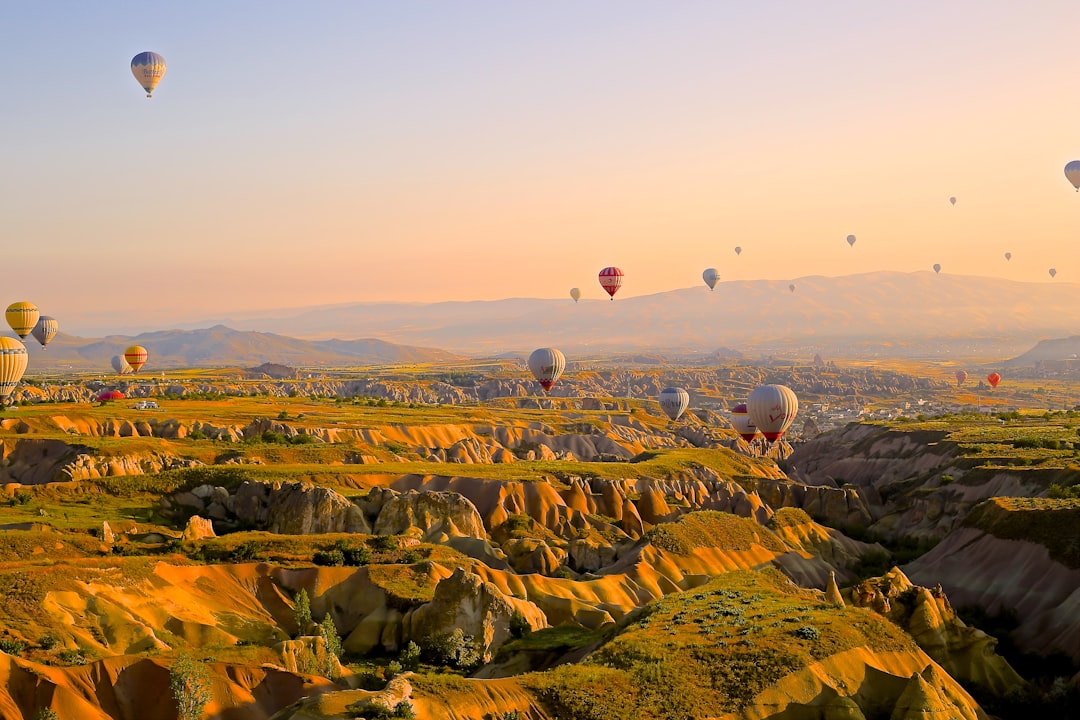
Photo by Daniela Cuevas on Unsplash
Last summer, I made a decision that would've horrified my younger self: I chose the slowest possible train from Barcelona to the French border. Not because I had time to kill, but because I'd read something intriguing about a line that stopped in villages most travelers don't even know exist. Four hours later, I understood why seasoned Europe explorers are quietly abandoning their Eurail passes for something far more interesting.
The regional train networks of Europe represent one of travel's best-kept secrets. While everyone's rushing between major cities on sleek high-speed services, there's an entire ecosystem of slower, cheaper trains that actually connect you with real people and places. These aren't your Instagram-friendly destinations. They're the unglamorous arteries of European life.
The Mathematics of Slowness
Here's what nobody tells you about train travel: the speed is inversely proportional to the experience. On a three-hour direct train from Munich to Vienna, you'll see maybe three interesting towns through your window. On a regional train taking twice as long, you'll pass through dozens of them, and you'll actually be moving slowly enough to notice something other than a blur of fields.
Consider the numbers. A standard Eurail pass costs around €250-400 for a week of unlimited travel on major routes. Meanwhile, regional rail tickets often cost €10-30 for journeys of similar distance. A ticket from Ljubljana to Zagreb on a regional train? About €15. The same journey on an express? €45. You're paying three times more to save perhaps an hour of travel time.
But the real value isn't financial. It's experiential. I once took a regional train through the Swiss Jura that stopped in eleven villages. At one stop, a woman got on carrying two enormous wheels of cheese. At another, three elderly men in hiking gear boarded with a dog that had its own ticket. A teenager got off in the middle of nowhere, and a farmer got on in the middle of everywhere. This is life. This is real.
The Towns Nobody's Fighting Over
The regional rail network opens access to places that Lonely Planet hasn't quite figured out yet. While Hallstatt, Austria suffocates under 8,000 daily visitors, there are a dozen villages thirty minutes away by regional train where you can still get a coffee without queuing for forty minutes.
Take Ceský Krumlov's lesser-known neighbor, Prachatice, Czech Republic. It's served primarily by regional trains. Medieval town square? Check. Completely walkable historic center? Check. Crowds? Mercifully absent. A meal and beer in the main square costs about €8. You'll share that square with maybe twenty other people, mostly locals.
Or consider the Engadin Valley region in Switzerland. Sure, St. Moritz is famous. But the regional Bernina Express line connects small resorts and villages that are equally stunning without the price tags or selfie-stick density. The Rhätische Bahn network operates through this region, and a day pass costs roughly €60 compared to €150+ for major rail passes.
The regional train is the equalizer. It doesn't prioritize speed or luxury—it prioritizes connection. Connection between towns, between people, between the tourist infrastructure and the actual place itself.
The Hidden Advantage: Actual Conversations
Something shifts when you're on a slow train for four hours instead of a fast one for ninety minutes. People talk. Boundaries dissolve. I've never had a meaningful conversation with a stranger on a Eurostar. I've had dozens on regional trains.
There's a Dutch cyclist named Maarten I met on a train through Alsace who told me about a village wine festival happening that week. I would've missed it completely on a major route. A retired Austrian teacher explained the history of the towns we passed through the Salzkammergut with the enthusiasm of someone who still finds magic in her own backyard. These conversations become the actual trip.
Regional trains also force a different kind of travel planning. You can't rely entirely on apps and algorithms. You need to actually ask people, check schedules, think about connections. This friction—which sounds annoying—is actually where travel becomes an adventure instead of a logistical checklist.
The Practical Reality Check
Let's be honest: regional trains aren't always comfortable. You might not get a reserved seat. The toilet situation can be iffy. There's no business-class lounge or complimentary pastry service. What you get instead is authenticity and the knowledge that you're traveling like an actual European, not like a tourist consuming a destination.
The schedules can be Byzantine. A journey that involves three trains with thirty-minute connections requires genuine planning. But that planning itself becomes part of the experience. You're not floating through a predetermined tourist bubble.
And here's something remarkable: the regional trains almost always run on time. Not like, generally on time. We're talking consistently, reliably, often to the minute. It's a European value system in action—the less glamorous something is, the more reliable it tends to be.
Actually Doing This
Start with the Trainline app or Omio, which both cover regional networks across Europe, not just the major routes. Look for journeys that take longer than you'd normally accept. Plan a week where you're sleeping in each town for a couple of nights rather than moving every day. Use those regional trains for the actual travel days—they're cheap enough that you can afford to ride for four hours just to see the country slowly.
Focus on regions outside the major tourist corridors. The Balkans are phenomenal—trains through Croatia, Bosnia, and Serbia are cheap and connect genuine places. Eastern France, the areas between major Swiss cities, southern Poland, and rural Germany all have regional networks that feel like traveling through Europe as it actually exists.
If you want to understand how Europeans actually live, you need to move through their spaces the way they do. And they do it slowly, by regional train, stopping in villages most tourists never reach.
The irony is perfect: by choosing the slowest option, by rejecting the premium experience, you actually get something premium. You get real. And in an era where most travel has been reduced to collecting experiences at tourist attractions, real is increasingly rare and therefore increasingly valuable.
Your next trip doesn't need to be faster. It needs to be slower. The trains are waiting, and they're leaving soon—just not very quickly.
If you're interested in exploring Europe's rail infrastructure further, you might also enjoy reading about The Ghost Station Mystery: Exploring Europe's Abandoned Railway Terminals and What They Reveal About Lost Cities, which explores the often-overlooked history of Europe's train networks.
Comments (0)
No comments yet. Be the first to share your thoughts!
Sign in to join the conversation.