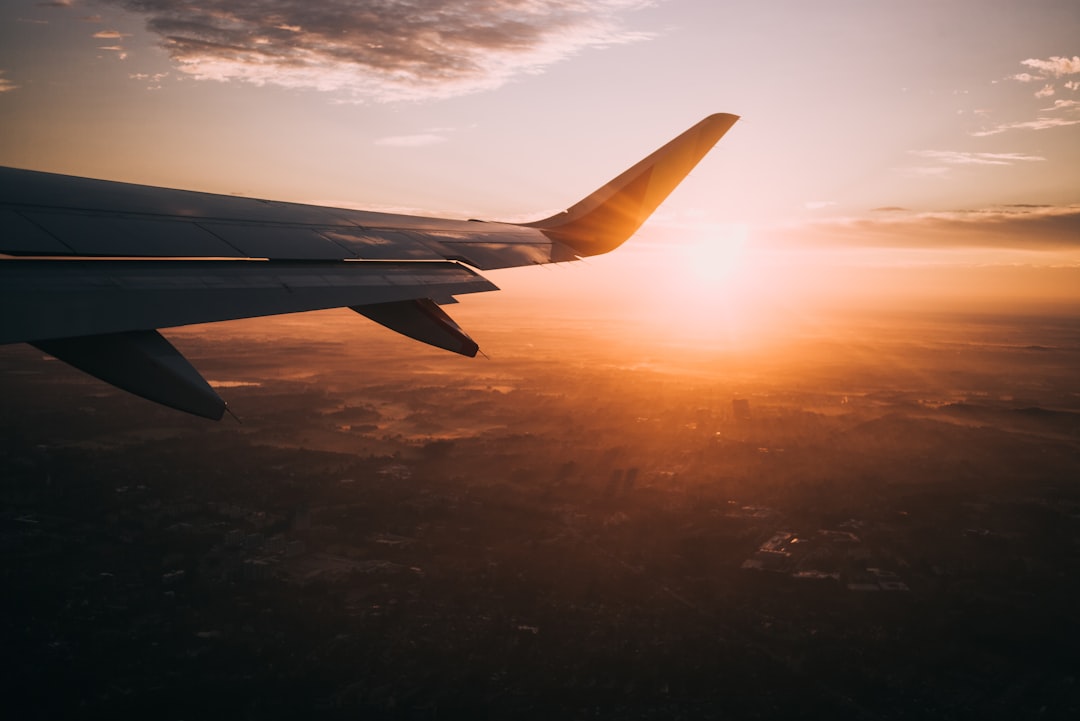
Photo by Nils Nedel on Unsplash
My phone died on a Tuesday in Lisbon, and it was the best thing that could have happened to my trip.
I was supposed to be at a specific viewpoint—Miradouro da Senhora do Monte, the one with the golden hour light and fifteen thousand Instagram photos. My battery had other plans. Dead at 4:47 PM. No GPS, no map app, no safety net of blue dots showing me exactly where to go.
So I walked. And I got spectacularly, wonderfully lost.
The Myth of the Perfect Itinerary
Travel culture has sold us a lie. We're told that the best trips are the ones meticulously planned—every restaurant reservation locked in, every museum visit scheduled, every "must-see" attraction checked off with military precision. Travel blogs have turned vacation into a checklist competition. We've quantified experiences into content opportunities, optimized our routes for maximum efficiency, and somehow made exploration feel like work.
But here's what I've learned: the experiences that actually stick with you rarely appear in guidebooks.
According to a 2023 survey by Travel Leaders Group, 68% of travelers reported their most meaningful vacation moments came from unplanned activities. Not planned. Unplanned. Let that sink in. Two out of three people found their best memories by doing something they didn't schedule.
I spent my phone-dead afternoon in Lisbon stumbling through the Alfama district. I wasn't trying to get anywhere specific. I was simply following the sound of Portuguese music drifting from an open window. I found a tiny tascas—a traditional Portuguese wine bar—tucked into a narrow street that definitely isn't in the Lonely Planet guide. The owner, Maria, was 74 and had run the place for thirty-two years. She didn't speak English. I didn't speak Portuguese. We communicated through gestures, laughter, and her insistence on giving me free sardine croquettes while we figured out how to explain to each other that I was hopelessly lost.
I spent three hours there. I learned about her granddaughter who lived in Toronto. I watched local men play cards in the corner. I drank wine that cost €2.50 a glass. It was extraordinary. And I never would have found it if my phone had been working.
The Permission to Wander
The hardest part of getting lost isn't actually losing your way—it's giving yourself permission to do it.
We've been conditioned to see lost as a failure state. We treat it like a bug, not a feature. Getting lost means you're inefficient, unprepared, or worse—you're wasting precious vacation time that you've already taken time off work to experience.
But what if we flipped that? What if getting lost was actually the whole point?
There's a concept called "psychogeography" that emerged from 1950s Paris—the idea that you can understand a city by wandering through it aimlessly and observing how it makes you feel. The Situationists who popularized this practice called it "dérive," or drifting. They believed that unplanned movement through urban space revealed things that can't be discovered through conventional tourism.
They were onto something. When you're not checking your phone every thirty seconds to see if you're on the right path, you actually see the city. You notice the architecture of the buildings you're passing. You smell the bakery before you see it. You make eye contact with actual residents instead of fellow tourists. You hear the ambient sounds—the water fountain in the courtyard, the church bells, the rhythm of daily life happening without an audience.
The Economics of Exploration
Here's something else the travel industry doesn't want you to know: getting lost is usually cheaper.
Tourist routes come with tourist prices. That viewpoint everyone's visiting has a restaurant charging €18 for a sandwich. That Instagram-famous gelato shop has a line around the block and prices to match. But the place Maria ran? €2.50 wines. The unmarked restaurant I found around the next corner offered a three-course meal for €12. The local grocery store where I bought cheese and bread for lunch cost half what the bakery near my hotel would have charged.
By getting lost, I accidentally saved money while having better experiences. The economics of tourism usually force these two things into conflict—you can either have authentic or affordable, rarely both. But wrong turns bypass the tourist economy entirely.
This isn't an accident. Small neighborhood spots survive on local business because tourists can't find them. Their prices reflect a different market. Their food is made for people who live there, not for people trying to capture the "authentic experience." There's no markup for ambiance or novelty.
Your Actual Itinerary Should Be Flexible
I'm not arguing for complete chaos. You should book your major accommodations in advance. You should have travel insurance. You should probably know roughly where you're going on any given day. But within that structure, build in margin for error. Build in space for wandering.
If you're spending three days in a city, don't schedule every single meal and attraction. Plan 60% of it. Leave 40% open. When you get that feeling of "what's down that street?"—follow it. When you hear music coming from a basement bar—go investigate. When an older person recommends a place that's not in your guidebook—write down the directions and try to find it.
This approach requires something most travel culture doesn't encourage: patience. It means being okay with taking a wrong turn and walking back. It means not optimizing every minute. It means understanding that efficiency and experience are often at odds, and sometimes the slower path creates better stories.
For more on this philosophy, check out The 48-Hour Rule: How to Actually Experience a City Instead of Just Collecting Photos, which explores how deeper engagement with places creates more authentic memories.
The Ending That Proves the Point
My phone finally died completely about a week into my trip. I didn't replace the battery until I'd been back home for two days.
During that week without it, I took roughly one-tenth of the photos I normally would on vacation. But the few photos I did take—mostly blurry shots taken with an actual camera—are the ones I look at now. Because the experiences they document actually happened to me, rather than happening for me to document them.
Getting lost isn't a travel mistake. It's a feature. The next time you're traveling, try leaving your phone at 20% battery. Try taking a street that doesn't appear on your map. Try having a conversation with someone who isn't trying to sell you anything. Try failing to find the famous thing you were looking for.
You might find something better instead.
Comments (0)
No comments yet. Be the first to share your thoughts!
Sign in to join the conversation.