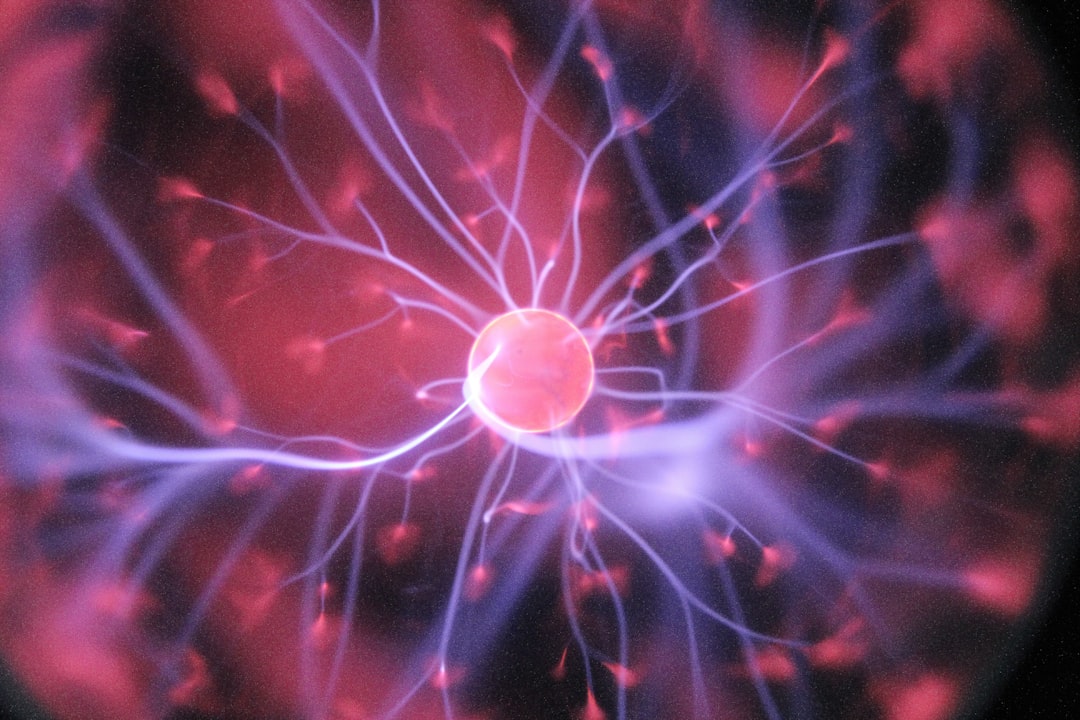
Photo by Hal Gatewood on Unsplash
You've probably heard it before: your brain peaks at 25, and then it's all downhill from there. Your parents said it. Your high school biology teacher whispered it. That friend who peaked in college keeps reminding you. But here's the uncomfortable truth hiding beneath this conventional wisdom: it's only half right.
The science is more nuanced, more interesting, and honestly, more hopeful than the doom-and-gloom narrative we've been fed. Your brain doesn't stop learning at 25. It stops learning the same way at 25. And that's a critical distinction.
The Plasticity Problem: Why Your Brain Got Lazy
Around age 25, something remarkable happens in your brain. The prefrontal cortex—the region responsible for decision-making, planning, and complex reasoning—reaches full maturity. At the same time, your brain undergoes a process called synaptic pruning. Think of it like a software update that deletes old files to make room for speed and efficiency.
This sounds efficient. And it is. But efficiency comes with a trade-off: flexibility. Your brain essentially decides which neural pathways are "important" and strengthens those while weakening others. It's like your brain is saying, "Okay, we've figured out how you work. Now let's optimize for speed."
The window for rapid neuroplasticity—the brain's ability to form new neural connections easily—closes around puberty and locks down further in your mid-twenties. A study published in Developmental Psychology tracked 2,000 subjects over a decade and found that learning speed plateaued dramatically after age 25 for most people. But here's what caught researchers off guard: it didn't have to.
The Expertise Trap: Why Knowing Stuff Actually Stops You From Learning
Counterintuitively, becoming better at something often makes it harder to learn new things. Once you've mastered guitar, learning piano feels impossibly slow. Once you've written one novel, the second one reveals how rigid your writing patterns have become. This isn't weakness—it's a feature of how efficient brains work.
Your brain develops what neuroscientists call "automatic processing." When you've done something enough times, it becomes automatic. You don't consciously think about driving a car anymore. You don't consciously think about riding a bike. This frees up mental resources for complex tasks. It's evolutionary genius.
But automatic processing is the enemy of learning. Your brain isn't creating new neural pathways when it operates on autopilot. It's running existing ones at maximum speed. So the more expert you become at something, the harder it becomes to learn something adjacent to it—unless you deliberately break your own patterns.
A neuroscientist at MIT named Suzanne Dikker discovered something fascinating in her research. Musicians who had practiced for 10,000+ hours showed almost zero brain activation in learning-related regions when exposed to new musical patterns. Meanwhile, beginners' brains lit up like Christmas trees. The expert brains weren't working harder—they weren't working at all, at least not in the learning-critical areas.
The Reactivation Protocol: How to Trick Your Brain Into Growing Again
Here's where it gets exciting. Your brain's learning capacity doesn't disappear at 25. It hibernates. And hibernation can be reversed.
The key is forcing your brain out of automatic processing. Neuroscientist James Trepel identified what he calls "cognitive novelty"—the sensation of encountering genuinely new information or skills. When your brain encounters true novelty, it essentially resets its learning protocols, even in adults over 60.
The most effective technique is learning skills that activate different neural networks simultaneously. Language learning is phenomenal for this. Not duolingo-level repetition, but real conversation with actual stakes. Your brain has to integrate phonetics, semantics, social cues, and production all at once. It can't run on autopilot.
Musical training shows similar effects. A study from the University of Helsinki tracked adults aged 30-78 learning to play piano. The learners showed increased gray matter density in multiple brain regions—the same regions that shrink with age in sedentary adults. They weren't just learning piano. They were literally rebuilding their brains.
Physical coordination skills paired with cognitive challenges work too. Rock climbing, dance, martial arts—anything that requires real-time decision making while managing your body activates the learning-critical regions of your brain in ways that scrolling social media (or reading articles like this) simply cannot.
The Age of Wisdom vs. The Myth of Peak
Here's what's wild: while your brain becomes less plastic after 25, it becomes more efficient. Your prefrontal cortex is fully developed, which means your judgment improves. You see patterns better. You make fewer impulsive decisions. In many ways, your brain is more powerful at 45 than it was at 25.
The problem isn't that your brain stops being capable. It's that we stop asking it to do hard things. We find our lane, develop our expertise, and coast. We mistake efficiency for peak performance.
If you want proof that learning doesn't stop at 25, look at The Unexpected Intelligence of Octopuses: How Eight Arms Think Independently. Scientists spent decades assuming octopuses had a simpler intelligence, yet when they studied them with genuine curiosity—with the willingness to be surprised—they discovered something extraordinary. Human brains work the same way. We discover more when we're willing to be confused again.
The research is clear: your brain at 35, 45, or 55 is absolutely capable of learning new skills, forming new neural pathways, and reaching new levels of mastery. You just have to understand that learning after 25 requires intentional novelty, genuine challenge, and the willingness to be uncomfortable again. Your brain didn't peak. You just stopped demanding it grow.
Comments (0)
No comments yet. Be the first to share your thoughts!
Sign in to join the conversation.