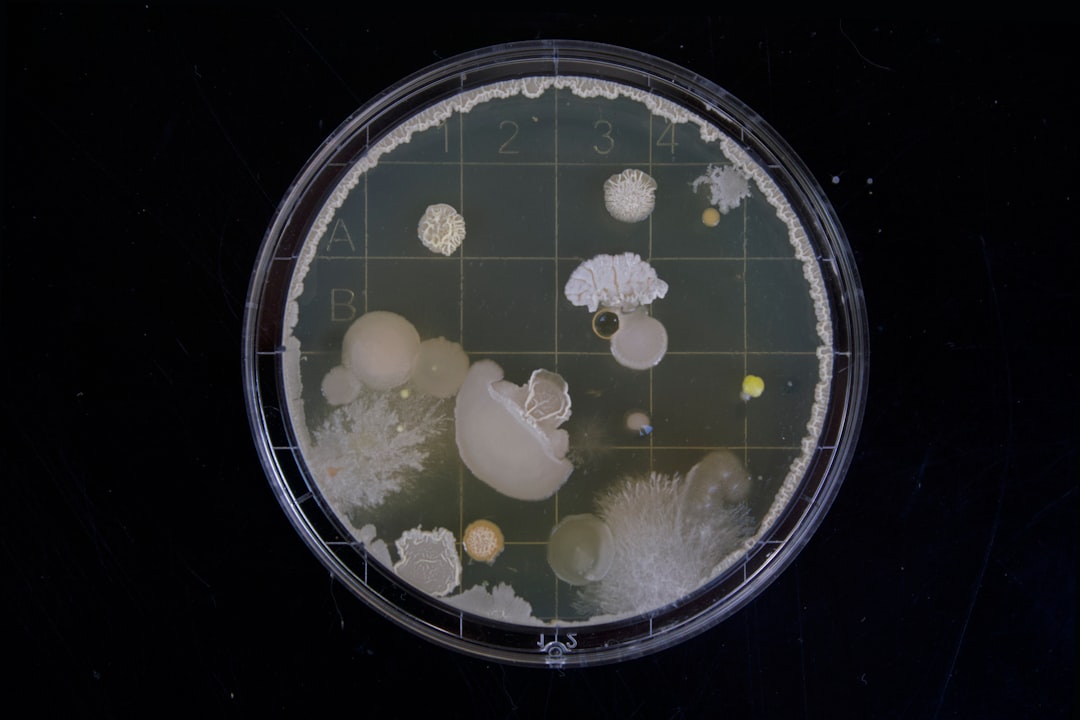
Photo by Michael Schiffer on Unsplash
When most people think about agriculture, they picture ancient Mesopotamians tending wheat fields or Chinese farmers nurturing rice paddies thousands of years ago. But if we're being honest about the history of farming, we're latecomers to the game. About 50 million years before humans figured out how to plant seeds and harvest crops, a six-legged creature in Central and South America was already running what might be the most efficient agricultural operation on Earth.
Leafcutter ants don't actually eat leaves. This seems like the kind of joke nature plays on us—these insects are famous for their leaf-cutting behavior, yet that's not the point at all. What they're really doing is farming. And their farming practices make our modern agricultural systems look rather primitive.
A Farm Hidden Underground
An average leafcutter ant colony can contain up to 5 million individual ants. That's roughly the population of Colorado living in tunnels that might stretch across an area the size of two soccer fields. The sheer logistics of keeping millions of creatures fed would break most supply chains, yet leafcutter colonies manage it with stunning precision.
The leaves aren't food themselves. Instead, ants cut leaf fragments and carry them back to their underground chambers where they chew them into pulp. This pulp becomes the substrate for cultivating a fungus—specifically, a fungus that exists nowhere in nature except inside these ant colonies. The ants are farming fungus the way we farm wheat or corn, and the fungus has become so dependent on this relationship that it can't survive without them.
The fungal gardens occupy specialized chambers within the colony, and different ant castes have specific jobs. Some ants are leaf-cutters, slicing pieces from vegetation sometimes 50 meters away from the nest entrance. Others are transporters, forming highways to move the bounty back home. Still others tend the fungal gardens, removing contamination and maintaining perfect growing conditions. It's a division of labor that would impress any human manager.
Fungicide Before Penicillin
Here's where things get genuinely wild. Leafcutter colonies maintain absolute control over pathogens in their fungal gardens. If a parasitic fungus threatens the crop, the colony's immune system springs into action with a sophistication that suggests evolution fine-tuned this process through millions of years of refinement.
Recent research has revealed that some leafcutter ants cultivate bacteria on their bodies—specifically bacteria from the genus Pseudonocardia. These bacteria produce antibiotics that protect the fungal gardens from harmful microorganisms. The ants are literally farming medicine to keep their main crop healthy. They're applying microbial pest control with more precision than most commercial agriculture operations.
Some ant species have even evolved the ability to recognize diseased fungus and destroy it before it spreads. When researchers introduced a pathogenic fungus to laboratory colonies, infected gardens were quarantined and removed within 24 hours. The ants somehow knew the difference between their beneficial fungus and the invader.
Climate Control and Infrastructure
The underground farms require specific conditions to thrive. Temperature, humidity, and air quality all need careful management. Leafcutter colonies maintain tunnel systems with remarkable ventilation—some nests have been documented with temperature differences of less than one degree Celsius between chambers. They achieve this through architectural design, not mechanical systems.
Larger colonies actually have designated garbage dumps where they dispose of contaminated material, dead ants, and waste products. They practice waste management. Some species even seem to have designated latrine areas. For an organism with a brain smaller than a grain of sand, this level of organization is almost offensive to our sense of human exceptionalism.
The scale of these operations is staggering. A single mature colony can move up to 300 kilograms of leaf material in just one year. If we scale that up to human proportions, it would be equivalent to moving about 6,000 kilograms of food annually—roughly three times the caloric requirements of a human family.
The Partnership That Changed Everything
What makes leafcutter ant agriculture truly remarkable is that it's not one organism doing all the work—it's three. The ants, the fungus, and the bacteria form a tripartite partnership that's so old and so integrated that they've essentially become a single organism from an evolutionary perspective.
The fungus provides nutrition for the ants. The ants maintain and propagate the fungus, protecting it and ensuring its survival. The bacteria produce antibiotics that keep the fungus healthy and protected from competitors. Each organism has lost capabilities it once had independently. The fungus can't reproduce sexually anymore. The ants depend entirely on the fungus for survival. The system only works because all three components show up every single day.
If you want to understand how cooperation evolves, how complexity emerges from simple organisms, or how three different life forms can become interdependent to the point of creating something greater than any of them individually—stop reading about human societies and watch an ant colony instead.
There's actually something humbling about learning that ants solved the agriculture puzzle 50 million years before we did. It suggests that when we look at the natural world, we're not observing less advanced versions of our systems. We're observing completely different approaches, some of which might actually be more elegant and more efficient than what our own cleverness has produced. And given that we're still struggling with issues like monoculture vulnerability, soil depletion, and pest resistance in our farming systems, maybe it's time to pay closer attention to what the insects have been doing all along.
If you're interested in how other creatures solve complex problems through cooperation, you might also enjoy reading about the octopus's nine brains and how they're solving problems we can't even understand yet—another reminder that intelligence takes many forms.
Comments (0)
No comments yet. Be the first to share your thoughts!
Sign in to join the conversation.