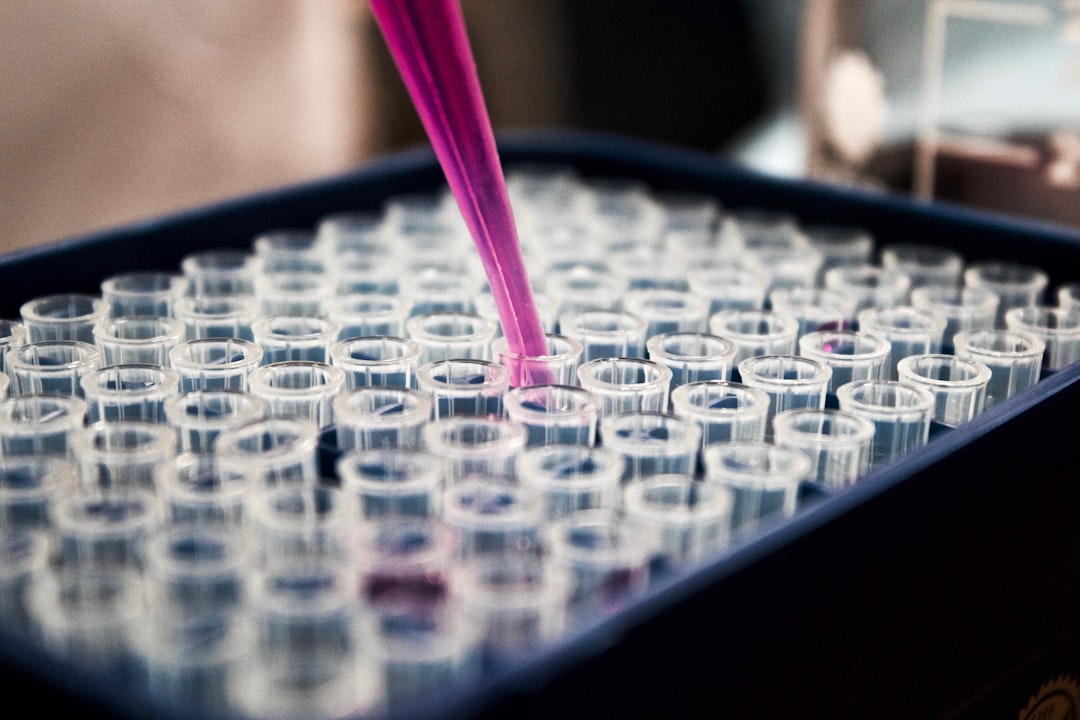
Photo by Louis Reed on Unsplash
They're barely visible to the naked eye, yet they've survived five mass extinction events. They can withstand radiation doses 1,000 times greater than what would kill a human. They've journeyed to space, been frozen in liquid nitrogen, and dried out completely only to come back to life years later. Welcome to the astonishing world of tardigrades—or as most people call them, water bears.
These microscopic animals, which typically measure between 0.3 and 0.5 millimeters long, seem to mock every biological limitation we know. A tardigrade looks like something from a science fiction movie: eight stubby legs, a barrel-shaped body, and a mouth designed to pierce and suck the contents from other cells. But don't let their alien appearance fool you. These creatures have become the darling of modern biology because they've cracked the code of survival in ways that challenge everything we thought we knew about life itself.
The Cryptobiosis Secret: Death Without Dying
The magic behind tardigrades' seemingly supernatural resilience lies in a state called cryptobiosis. The name comes from Greek roots meaning "hidden life," and that's exactly what it is. When conditions become unbearable—whether that's extreme heat, cold, radiation, or desiccation—tardigrades don't fight back. Instead, they surrender to a state of suspended animation so complete that scientists struggle to prove they're alive at all.
During cryptobiosis, a tardigrade's metabolism essentially flatlines. Water content drops to less than 1% of their body weight. Their heart stops beating. All cellular activity halts. They become tiny, dessicated husks—little more than organized dust. And yet, when conditions improve and moisture returns, something miraculous happens. The tardigrade's cells rehydrate. Metabolism reignites. The heart begins beating again. Life resumes as though nothing happened.
Scientists have watched tardigrades undergo this transformation after decades of dormancy. One study kept tardigrades in a dried state for 30 years before rehydrating them—and they woke up perfectly fine. Some researchers believe these creatures could theoretically survive this way for centuries, though no one has actually tested that hypothesis. There's simply no biological reason they couldn't.
What makes this even more remarkable is that we still don't fully understand how tardigrades do it. They produce special proteins called late embryogenesis abundant (LEA) proteins that seem to prevent cells from collapsing and breaking down. They accumulate trehalose, a sugar that protects cell membranes. But even with these mechanisms identified, the full picture remains fuzzy. It's as though tardigrades possess an instruction manual for survival that scientists are only beginning to read.
Radiation? Bring It On
In 2007, scientists sent a payload of tardigrades into space aboard a Russian rocket. They were exposed to the vacuum of space and intense radiation from the sun—conditions no Earth organism should survive. When they returned, most of the tardigrades that had been exposed to the vacuum died, but some survived. More impressively, those that experienced only radiation exposure thrived. They survived doses that were approximately 1,000 times what would prove lethal to most other life forms, including humans.
How do they manage this? Tardigrades possess remarkable DNA repair mechanisms. When radiation damages their DNA, these creatures don't panic. They calmly activate repair systems that systematically patch up the damage. Scientists have identified genes in tardigrades that code for proteins that excavate damaged DNA, remove the bad parts, and fill in the gaps. It's cellular carpentry at the molecular level.
Perhaps most surprisingly, some of this radiation resistance might be hereditary in an unexpected way. Tardigrades don't actually generate all their own radiation-busting proteins—at least not the ones responsible for the most extreme protection. Some research suggests they've borrowed genes from bacteria through a process called horizontal gene transfer. Essentially, at some point in their evolutionary history, tardigrades incorporated bacterial DNA into their own genome, and now they deploy bacterial defenses like genetic soldiers standing guard against cosmic radiation.
The Temperature Extremes Nobody Should Survive
Want to freeze a tardigrade? Go ahead. Dunk it in liquid nitrogen at -196°C. Scientists have done this, and the tardigrade simply enters cryptobiosis and waits. Heat it to 300°C? Again, if the tardigrade is in the right state of dehydration, it'll survive. The range of temperatures tardigrades can tolerate is genuinely staggering—from near absolute zero to temperatures hotter than boiling water.
This tolerance opens fascinating possibilities for future technology. Researchers have begun exploring whether tardigrade DNA might hold secrets for preserving biological materials, medicines, and vaccines without refrigeration. Imagine vaccines that don't require constant cooling. Organs that could be preserved for transplantation without complex machinery. Blood products that remain viable for years without special storage. All of this might become possible if we can decode and replicate the tardigrade's protective mechanisms.
Why They Matter Beyond Curiosity
Tardigrades aren't just weird for weirdness's sake. Understanding how they achieve their feats of survival could revolutionize medicine and biotechnology. Companies and universities worldwide are racing to unlock tardigrade secrets. Some researchers have already begun introducing tardigrade genes into other organisms, creating hybrid creatures with enhanced stress resistance.
There's also the philosophical angle. Tardigrades remind us that life is far more adaptable and resilient than we might assume. They suggest that the universe might be more hospitable to life than we've traditionally believed. If these creatures can survive space, perhaps microbes could hitch rides on meteors between planets. Perhaps life isn't as fragile as we thought.
If you're fascinated by extreme survivors in nature, you might also enjoy learning about other resilient organisms. Check out The Mysterious Glow: Why Fireflies Are Disappearing and What Science Says We Can Do About It for insights into how different species adapt to changing environments.
Tardigrades have taught us a simple but profound lesson: never underestimate life. In the smallest packages, under the harshest conditions, living systems continue to innovate, adapt, and endure. These eight-legged water bears have been here longer than dinosaurs, and they'll likely be here long after we're gone. Maybe that's the real lesson of the tardigrade—not just that survival is possible, but that it's inevitable for those willing to transform themselves completely.
Comments (0)
No comments yet. Be the first to share your thoughts!
Sign in to join the conversation.