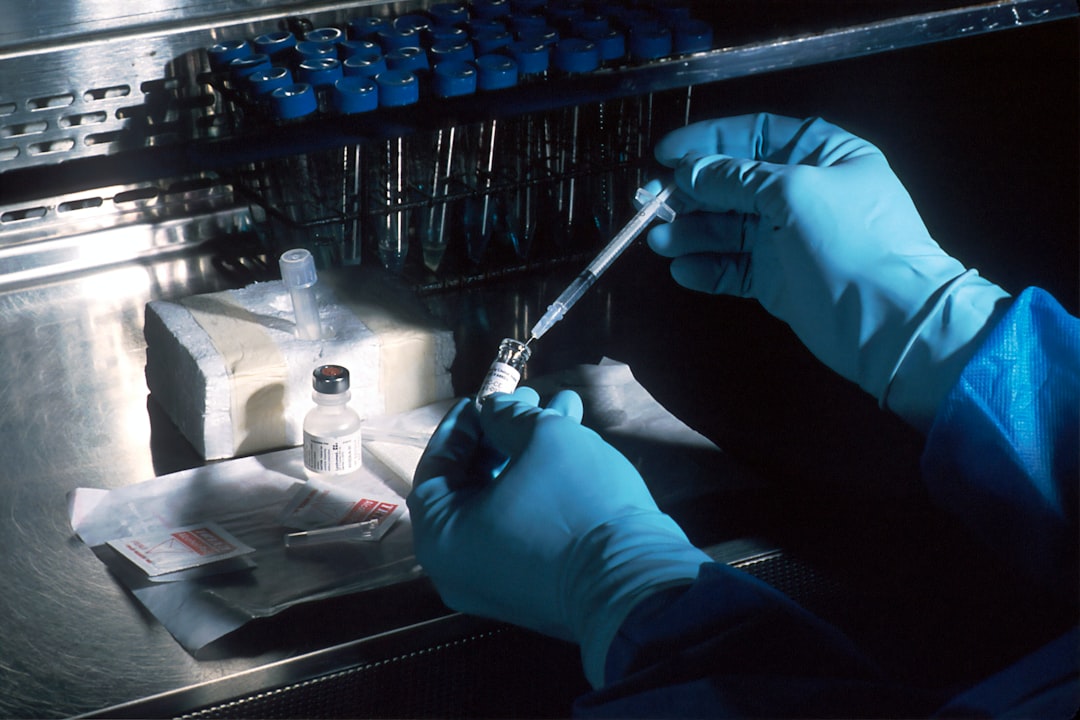
Photo by National Cancer Institute on Unsplash
You have roughly 37 trillion cells in your body, and about 38 trillion bacteria living inside you. They outnumber your own cells. And here's the unsettling part: they're not just passengers. These microscopic organisms are having constant conversations with your brain through pathways scientists are only now beginning to map.
The relationship between your gut microbiome and your central nervous system—what researchers call the gut-brain axis—sounds like science fiction. But it's become one of the most rapidly advancing frontiers in neurobiology.
The Messenger Highway Inside You
Your gut bacteria communicate with your brain through multiple channels simultaneously. The most direct route is the vagus nerve, a thick bundle of neural fibers that runs from your brain stem all the way down to your digestive tract. Think of it as a superhighway with traffic flowing both directions.
But the bacteria aren't just sending random signals. They're manufacturing neurotransmitters—the same chemical messengers your brain uses to regulate mood, sleep, and motivation. A 2018 study published in Nature Microbiology found that certain bacterial species produce about 90% of the body's serotonin, the neurotransmitter that influences everything from depression to appetite control. Your gut bacteria are literally producing the chemicals that make you feel happy or sad.
Dr. Emeran Mayer, a neurogastroenterologist at UCLA, has spent two decades studying this connection. He describes the relationship as truly symbiotic: "We used to think of the brain as this isolated organ making independent decisions. Now we understand it's constantly negotiating with an entire ecosystem living inside us."
The bacteria also produce short-chain fatty acids through fermenting dietary fiber, which influence inflammation levels in the brain and affect conditions like anxiety and depression. They modify your immune response, which has profound effects on neuroinflammation. They even regulate the permeability of the blood-brain barrier—essentially controlling what gets access to your brain.
What Happens When the Conversation Goes Wrong
When your microbiome gets out of balance—a condition called dysbiosis—the consequences ripple through your mental health. People with depression show significantly different microbial compositions compared to healthy controls. Those with anxiety disorders have alterations in specific bacterial populations. Some researchers now wonder if we've been treating these conditions without addressing their microbial foundation.
A 2019 study followed patients with irritable bowel syndrome, many of whom also suffered from depression and anxiety. When researchers supplemented their diets with specific probiotic strains, not only did their digestive symptoms improve, but their psychological symptoms decreased measurably. The bacteria they added literally improved their mental state.
Perhaps more striking are the studies involving germ-free mice—laboratory mice raised in completely sterile environments with zero microbiota. These mice display anxiety-like behaviors and learning impairments. The moment researchers colonize their guts with normal bacteria, the behavioral problems largely resolve. A mouse's personality, in a very real sense, depends on what's living in its intestines.
Some of the most compelling evidence comes from studies of autism spectrum disorder. Children with autism often have dramatically altered microbiota compared to neurotypical children. When researchers gave probiotics to mice with autism-like behaviors, some of the social and repetitive behaviors improved. Clinical trials in humans are currently underway.
The Implications Are Only Beginning to Sink In
If your gut bacteria can influence your mood and cognition, it raises uncomfortable questions about agency and choice. When you're feeling depressed, are you chemically depressed, or are your bacteria signaling depression? The honest answer is: it's not a useful distinction anymore. Your mental state emerges from a conversation between your neurology and your microbiota.
The pharmaceutical industry is already taking notice. Rather than just treating depression with SSRIs that alter brain chemistry, some researchers are exploring psychobiotic interventions—using specific bacterial strains to influence mental health from the ground up. Companies are developing targeted probiotic formulations for anxiety, depression, and ADHD.
But here's what's remarkable: you don't need to wait for pharmaceutical solutions. Your diet directly shapes your microbiota. Eating fermented foods like yogurt, kefir, sauerkraut, and kimchi introduces beneficial bacteria. Consuming fiber-rich foods feeds the bacteria already living inside you. A Mediterranean diet—high in vegetables, whole grains, and healthy fats—consistently correlates with better mental health outcomes, and researchers increasingly believe the mechanism runs through your microbiome.
A study from Ireland found that volunteers who spent just two weeks eating a high-fiber diet experienced measurable improvements in anxiety and sleep quality. The bacteria in their guts had shifted toward a healthier composition, and their brains reflected that change almost immediately.
The Future Is Microbiome-Aware Medicine
If you've been struggling with mental health issues, there's a good chance your doctor has never asked about your microbiota. This is changing, but slower than the science warrants. Forward-thinking psychiatrists and neurologists are now ordering microbiome analyses as part of their diagnostic toolkit, the way they might order a blood panel.
What makes this field so exciting—and humbling—is how much we still don't understand. We've identified about 1% of all bacterial species on Earth. The microbiota inside your body contains thousands of different species, many of which we haven't formally catalogued, let alone studied for their neurological effects.
There's also the tantalizing possibility that this connection could be weaponized or manipulated. Corporations are already developing targeted marketing around probiotics with dubious scientific backing. Some of the claims border on science fiction. But the legitimate science, conducted by rigorous researchers at major institutions, is clear: your microbiota profoundly influences who you are.
If you're interested in how other complex biological systems are reshaping our understanding of intelligence and consciousness, check out our exploration of how octopuses challenge everything we thought we knew about distributed intelligence.
The bottom line? Your gut bacteria aren't freeloaders. They're collaborators in the project of being you. Feed them well. They're literally helping you think.
Comments (0)
No comments yet. Be the first to share your thoughts!
Sign in to join the conversation.