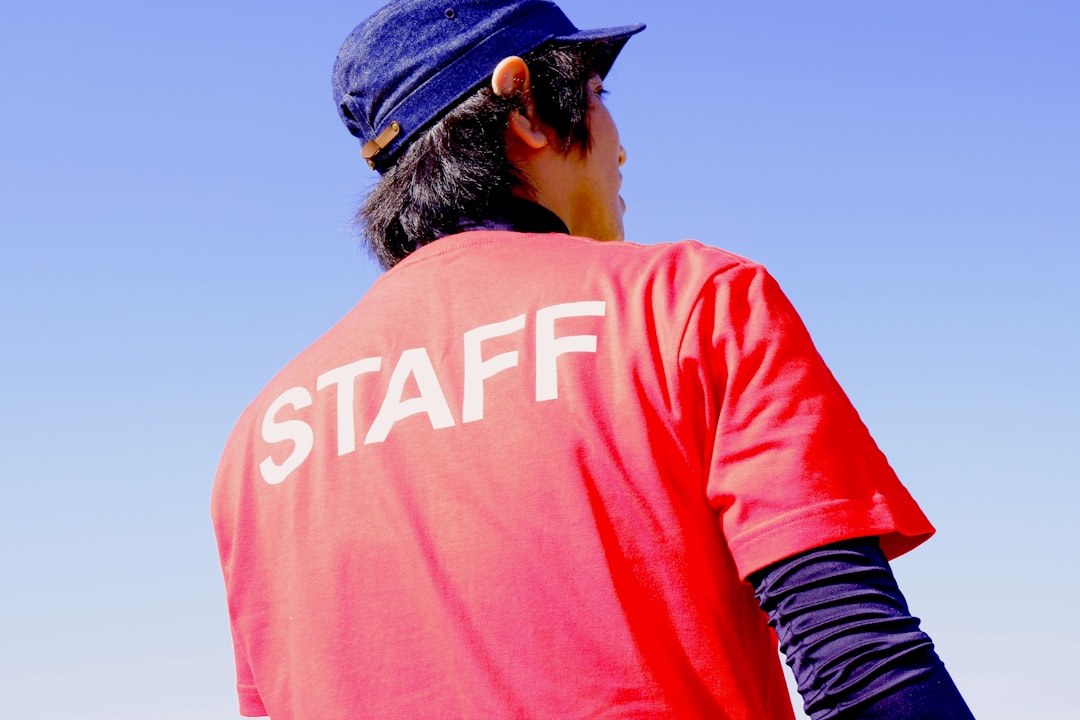
Photo by DuoNguyen on Unsplash
I spent twenty-three years being whoever I thought people needed me to be.
As the middle child in a family that valued achievement above all else, I became the peacekeeper. At school, I was the quiet, reliable one. With friends, I was the witty listener who asked good questions. At work, I morphed into whatever role would earn me approval—the ambitious go-getter, the team player, the problem-solver. I had so many versions of myself catalogued and ready to deploy that I eventually forgot which one was actually me.
The exhaustion didn't announce itself dramatically. It crept in like humidity on a summer evening—barely noticeable at first, then suddenly suffocating.
The Cost of Constant Curation
My breaking point came during a Tuesday afternoon meeting in 2019. My boss was discussing a project I'd poured weeks into, and she was describing it to senior leadership with ideas that contradicted everything I'd actually suggested. I should have spoken up. The "real me"—if I even knew who that was anymore—would have corrected her. But instead, I sat there, nodding, watching my work get credited to someone else's vision. And the worst part? I wasn't even angry. I was just... hollow.
That evening, I did something I hadn't done in years. I sat with myself without trying to be impressive, productive, or agreeable. I just existed. And I realized how much of my mental energy was spent on the logistics of being likable. According to research from the American Psychological Association, people-pleasing behaviors are linked to increased anxiety, depression, and burnout. But the statistics didn't capture the real cost—the quiet erosion of knowing yourself.
I had optimized myself into irrelevance.
The most damning part was recognizing how I'd passed this behavior onto my ten-year-old niece. During a family dinner, she mentioned she'd quit the volleyball team she loved because her classmates had stopped playing. "But you were excited about it," I said. She shrugged. "Yeah, but I didn't want to be the only one." I saw myself reflected in that tiny shrug—the same architecture of fear, the same mathematics of self-erasure. That's when I knew something had to change.
The Unexpected Liberation of Disappointing People
My first act of radical honesty was small enough that it seemed almost ridiculous. My team was planning a surprise birthday party for a coworker at a nightclub—my personal nightmare environment. For years, I would have gone, smiled brightly, and slowly died inside. This time, I declined.
I didn't make up an excuse. I said, "I appreciate the invite, but loud nightclubs aren't my thing. I'm going to send a gift instead and see her on a quieter day." The sky didn't fall. Our coworker wasn't offended. My team didn't stage an intervention. They just... accepted it.
That single "no" opened a floodgate I didn't know had been dammed shut.
I started saying no to lunches I didn't want to attend. I admitted to my parents that I'd never actually wanted to go to law school—I'd only pursued it because my older brother had. I told my best friend that I sometimes found her negativity draining, and instead of losing her friendship, we actually got deeper because I stopped performing and started being real. Each time I risked disappointment, something unexpected happened: people either adjusted to the actual me, or they didn't matter as much as I'd feared.
There's a particular freedom in realizing that some people's approval isn't worth the price of your own disappearance.
Who Am I When Nobody's Watching?
The question sounds simple. The answer is terrifyingly complicated.
I had to actively relearn my own preferences. On weekends, without anyone to perform for, I discovered that I genuinely love early mornings—not because they make me productive or impressive, but because the quiet feels sacred. I found out I'm the kind of person who thinks deeply before speaking, which I'd always interpreted as "being boring" when really it just means I'm not built for small talk. I realized my sense of humor is weird and specific, and that's actually endearing rather than off-putting when I'm around people who appreciate it.
I started keeping a messy journal—really messy, full of contradictions and changing opinions. I let myself be inconsistent. One week I'd be obsessed with starting a new business venture; the next week I'd decide I actually just wanted a simple job that didn't follow me home. I gave myself permission to evolve without explaining myself to anyone.
This reconnection with my authentic self also informed how I view the world around me differently. When I stopped trying to be acceptable, I became more aware of the systems and expectations constraining others. Ghost Forests Are Drowning America's Coasts—And Nobody's Stopping Them is a powerful example of how we've normalized destruction for the sake of convenience and comfort—much like I'd normalized the destruction of my own authenticity for the sake of fitting in.
Building a Life That Actually Fits
Now, eighteen months later, my life looks smaller in some ways and infinitely larger in others.
I've lost some friendships, though not the ones I actually valued. I've had to have uncomfortable conversations with family members about boundaries. I'm probably less "likable" in the way I was before—more opinionated, less accommodating, quicker to admit when something isn't working for me. My career trajectory shifted because I stopped chasing roles that looked good on paper and started building toward work that actually energized me.
But here's what I gained: I know myself now. Not theoretically, but in the way you know a place after you've actually lived there instead of just visiting. I know what makes me laugh, what bores me, what I believe even when it's unpopular, and how I want to spend my finite time on this earth.
The most unexpected benefit? Authentic connection. When I stopped performing, the people in my life could actually see me. And they liked me better. Not because I became more impressive—I actually became less impressive in the traditional sense. But because there's something profoundly magnetic about someone who's finally comfortable in their own skin.
My niece texted me last week. She's joined a chess club. Not because everyone else was doing it, but because she actually wanted to. "Is that weird?" she asked. I told her the truth: "No. It's the opposite of weird. It's the bravest thing you can do."
I meant it.
Comments (0)
No comments yet. Be the first to share your thoughts!
Sign in to join the conversation.