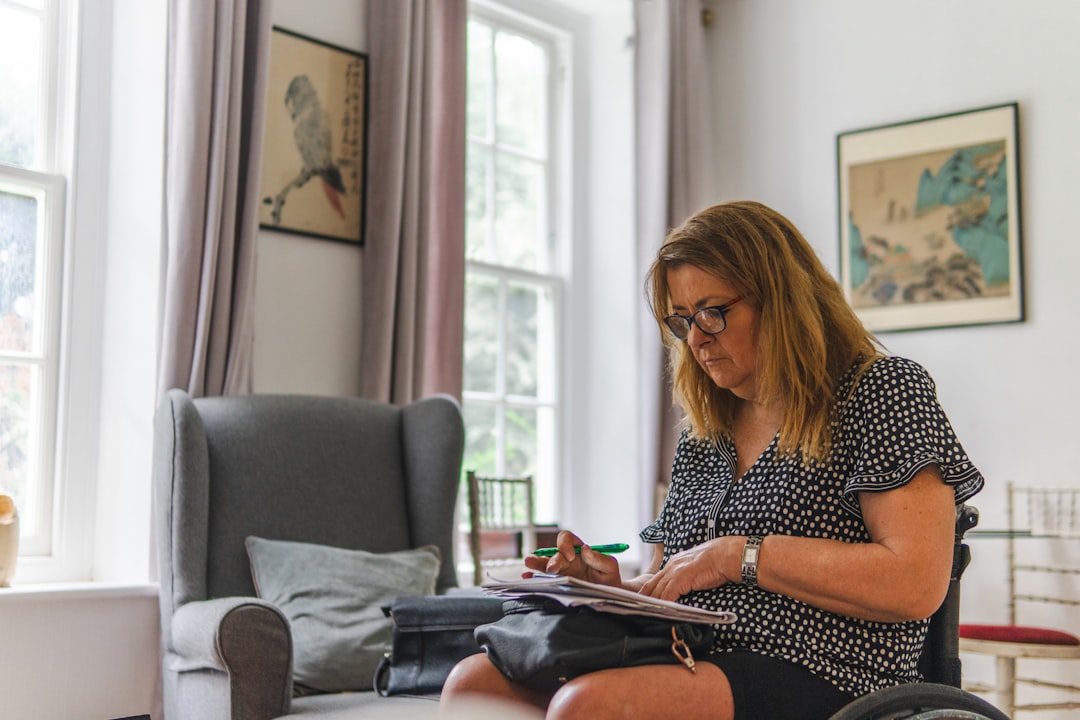
Photo by Centre for Ageing Better on Unsplash
I found my old diary last spring while cleaning out my parents' basement. It was from sophomore year, spiral-bound with a broken clasp and full of my anxious teenage handwriting. I read about the person I was certain I'd become: a successful journalist living in New York, childless by choice, writing award-winning pieces that would change the world. The margins were filled with sketches of my imagined future apartment, tiny boxes representing rooms I'd carefully designed in my head.
That future never arrived. Not even close.
Instead, I'm 35 now, living in suburban Ohio, working as a content manager for a regional healthcare company. I have two kids, a mortgage that still makes me anxious, and I haven't written anything bylined since college. When I closed that diary, I felt something I hadn't expected: a strange collision of grief and relief, all tangled together.
The Specific Disappointments
It's not like I failed catastrophically. My life is objectively fine. Stable. My kids go to decent schools. My marriage works, mostly. We take one nice vacation a year and we're not drowning in debt. By most measurable standards, this should feel like success.
But there's a particular sting that comes with realizing your life looks nothing like you planned—not because disaster struck, but because you simply... changed. And life got in the way. And priorities shifted. And you turned out to be the kind of person who actually enjoys stability more than you enjoy the idea of ambition.
The specific disappointments are what get you. Not the big ones. The big ones you can rationalize. You can tell yourself the story of why it made sense to defer your dreams when your first child was born. You can explain why you took the safer job with better benefits. You can justify all of it.
But then there's the smaller stuff. The fact that you haven't read a book about journalism in five years. That you're not following the careers of the writers you admired anymore because it hurts a little. That when someone asks what you do, you say your job title instead of mentioning your actual writing projects—because there are no actual writing projects.
My friends from high school have done some genuinely impressive things. Sarah is a partner at a law firm. Marcus published his first novel last year. Jenny manages a nonprofit that actually changes policy. When I see their accomplishments on social media, I don't feel happy for them exactly. I feel something closer to watching your favorite show continue without you.
The Trap of the Deferred Dream
Here's what nobody tells you about deferring your dreams: they don't wait patiently in a drawer for you to be ready. They accumulate dust and get replaced by other dreams, quieter ones. Dreams about getting your teenager to actually eat vegetables. Dreams about saving enough for a decent retirement. Dreams about finishing the kitchen renovation before the paint chips off entirely.
I spent years telling myself I'd go back to writing once the kids were older. Once they were in school. Once they didn't need me quite so much. Once my job was less demanding. I'd construct these elaborate timelines in my head where I'd finally have the space and energy to pursue what I really wanted.
The cruel part is that time did pass. My kids are now nine and twelve. My job isn't less demanding, but I'm more efficient at it. I probably have more free time now than I did five years ago. The objective conditions have improved.
But I don't write. And when I sit down with the intention to write, something's missing. The hunger feels different now. Less like drive and more like obligation. Like I'm trying to fulfill a contract with my seventeen-year-old self instead of actually wanting something for myself right now.
The Unexpected Thing I Actually Became
This is where the story usually takes a turn toward inspiration. This is where I'd normally write about how I realized that being a good mom was its own form of meaningful work, or how I discovered that ambition was just ego anyway, or some other narrative that lets everyone off the hook.
But that feels dishonest. And honestly, it's also not entirely true.
The real thing I've come to understand is smaller and stranger. I became someone who knows things. Not in the way I imagined—I'm not the writer who influences policy or changes minds at scale. But I'm the person my friends call when they need to figure something out. I'm the one who actually reads the fine print on medical bills and knows how to contest insurance denials because I've done it seventeen times. I know how to talk to anxious kids about hard things. I know how to fix a marriage that's cracked but not broken.
These aren't the skills I valued at fifteen. They're not impressive at dinner parties. They won't look good on a book jacket. But they're real, and they matter to actual people in my actual life.
I've also become someone who's genuinely curious about things I never expected to care about. I listen to podcasts about urban planning now. I have opinions about local school board elections. I've read more parenting books than I'd like to admit, and some of them were actually brilliant.
Making Peace With the Detour
The grief hasn't entirely gone away, and I think that's okay. I think you're allowed to feel sad about the life you didn't live while also being grateful for the life you actually have. These things don't cancel each other out. They exist simultaneously, like two colors bleeding into each other at the edges.
What's shifted is that I've stopped treating my current life as a holding pattern. It's not the waiting room before my real life begins. This is the real life. The one that's actually happening.
I started writing again recently, but not in the way I expected. I started a letter to my kids about their lives—not parenting advice, but actual observations about who they are and what they're becoming. I'm not sure I'll ever let them read it. That's not really the point. The point is that I'm writing again, and it matters because I choose to do it, not because it fulfills some contract I signed with my younger self.
Sometimes I wonder what that fifteen-year-old girl would think if she could see me now. I think she'd be disappointed. I think she'd also fail to recognize that I'm living a life she couldn't have imagined—not better exactly, but more textured. More real. More shaped by actual human connections instead of theoretical ambitions.
The diary is back in the basement now. I didn't throw it away. But I'm not going to reread it again, either. That girl had her dreams, and I had mine. We just turned out to be different people.
And maybe that's the part nobody prepares you for—not the failure to achieve your goals, but the quiet realization that you don't want the same things anymore. That the person who wanted those things doesn't exist anymore. If you're wondering whether that's a loss, well, it is. But it's also exactly how growing up is supposed to feel. Complicated. Bittersweet. Real.
If you're struggling with this particular collision between who you thought you'd be and who you actually became, you might recognize yourself in the guilt of saying no to paths that no longer fit. Sometimes the life you didn't live asks a lot from you, even after you've moved on.
Comments (0)
No comments yet. Be the first to share your thoughts!
Sign in to join the conversation.