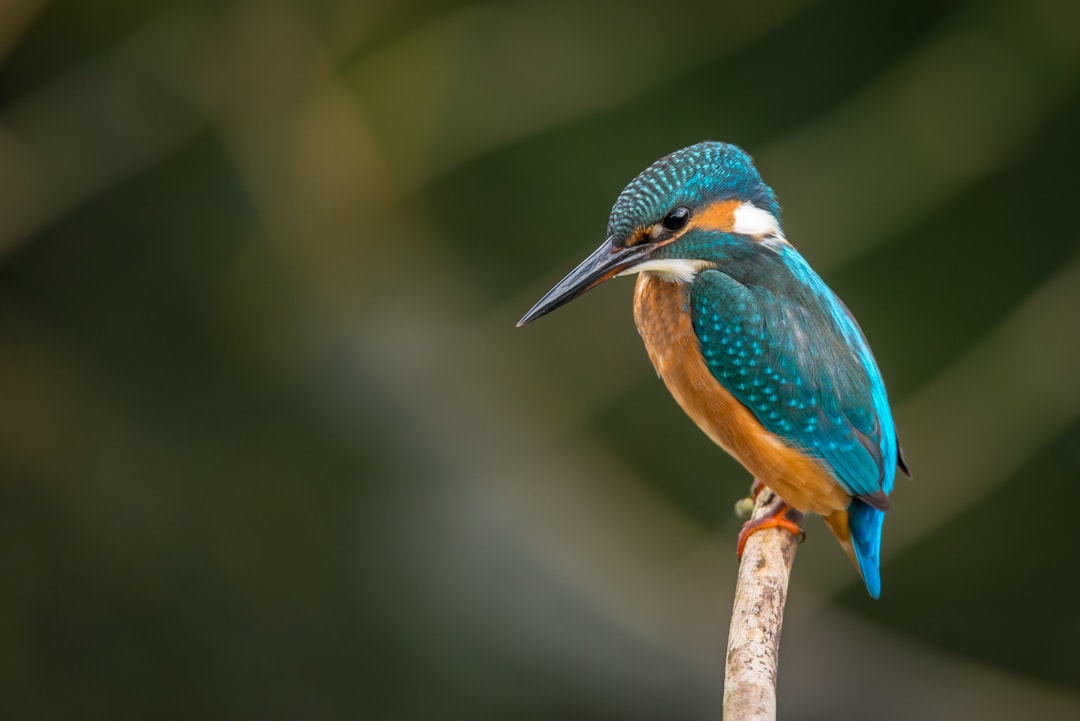
Photo by Vincent van Zalinge on Unsplash
Picture this: a sleek black crow perches on a branch, studying a leaf with the concentration of a surgeon. After careful inspection, it begins systematically stripping away the green tissue, leaving only the skeletal veins. Then it uses this newly created tool to extract insects from a crevice three inches away. The whole process takes maybe ninety seconds, and nobody taught this bird how to do any of it.
This isn't a one-time fluke or an isolated incident. Since researchers first documented tool use in New Caledonian crows in the 1990s, we've watched these remarkable birds invent, refine, and even trade tools with a sophistication that's forced us to completely rethink what we mean by intelligence in the animal kingdom.
From Simple Sticks to Surgical Precision
When Dr. Gavin Hunt first spotted New Caledonian crows crafting tools in the rainforests of New Caledonia, the scientific community was genuinely shocked. Sure, chimpanzees and a handful of other primates used basic tools, but birds were supposed to rely entirely on instinct. The stereotype was pretty firm: birds build nests, birds migrate, birds don't engineer solutions to problems.
The crows shattered that assumption almost immediately. They didn't just poke sticks into tree bark. They created different tools for different jobs. Straight probes for reaching insects in shallow holes. Hooked tools fashioned from twigs for fishing larvae from deep crevices. Stepped tools that worked like tiny ladders to access food in specific locations. Each design was purposeful, refined, and unmistakably intentional.
What really blew researchers' minds came later. In 2002, scientists observed crows folding leaves into precise shapes—cutting along specific angles, creating sharp edges, and handling the materials with obvious care. The leaf tools worked beautifully for extracting food, but they required a level of dexterity and planning that seemed impossible for a bird brain. These weren't accidents. These were deliberate designs based on understanding what shape worked best for what job.
The Innovation Never Stops
Here's where it gets genuinely eerie: the tools keep getting better. Researchers have documented crows creating more efficient designs over time. They've watched birds modify existing tools on the fly, adjusting length and angle based on immediate feedback. They've observed crows selecting materials with specific properties—choosing rigid twigs for some jobs, flexible ones for others—suggesting a working knowledge of material science that would impress many humans.
In captive studies, young crows have demonstrated the ability to solve multi-step puzzles they've never encountered. They'll figure out that moving one object reveals another object, which then grants access to a third object holding food. They solve these puzzles efficiently, without trial-and-error fumbling. They appear to actually think through the problem first.
Perhaps most fascinatingly, crows have shown evidence of teaching these skills to younger birds. Researchers have observed adult crows making tools in front of juveniles, apparently demonstrating technique. The young birds watch intently, then attempt to replicate the behavior. This is cultural transmission—knowledge passing from one generation to the next through observation and imitation, something we thought was uniquely human.
What This Tells Us About Evolution
The crow story forces us to completely reconsider how evolution works. We've long operated under the assumption that intelligence develops slowly, that it requires massive brain size, that it takes hundreds of thousands of years to refine. New Caledonian crows didn't get that memo.
These birds branched off evolutionarily from other corvids (the crow family) somewhere between 1 and 2 million years ago. In that relatively brief window, they developed tool-making abilities comparable to some primates. Their brains are tiny—roughly the size of a walnut—yet they're capable of abstract reasoning, problem-solving, and behavioral innovation that rivals much larger-brained animals.
This suggests that intelligence isn't some linear progression toward bigger brains. It's contextual. It develops where it's needed. In the specific ecological niche of New Caledonia's rainforests, with particular food sources requiring particular solutions, intelligence became advantageous. The evolutionary pressure selected for brains capable of innovation, tool use, and flexible thinking. Over just a couple million years, that pressure produced remarkable results.
The implications ripple outward. If intelligence can evolve this rapidly in birds, what about other animals we've underestimated? We're increasingly discovering that octopuses solve problems in ways that suggest genuine intelligence, yet they evolved their cognitive abilities on a completely different branch of the evolutionary tree than vertebrates. Intelligence isn't a single ladder we're all climbing. It's a diverse set of solutions that evolution has discovered and rediscovered in countless species.
The Questions We're Still Asking
We still don't fully understand how much of crow tool-making is instinctive versus learned. Genetic factors almost certainly play a role—the birds seem predisposed to recognize the potential of sticks and leaves. But the specific innovations, the refinements, the trade-offs between tool types? That appears to be genuine learning and cultural knowledge.
Researchers are currently investigating whether crows have individual styles—whether different populations create slightly different tools based on local teaching traditions. Early evidence suggests they do. One population might prefer hooked tools while another favors stepped designs. These preferences spread through the community and persist across generations, exactly like human culture.
The real frontier is understanding crow consciousness. When a crow fashions a tool, does it have a mental image of the finished product before it starts? Does it understand why the leaf-stripping technique works? Is there something analogous to human intention and foresight happening in that small crow brain? We don't have definitive answers yet, but the questions are finally being asked seriously.
Why This Matters to Us
Beyond pure scientific curiosity, crow intelligence reminds us that we share this planet with minds fundamentally different from our own. They solve problems in unique ways. They have preferences, traditions, and behaviors that vary between individuals. They teach. They learn. They innovate.
Recognizing this should humble us. We spent centuries treating animals as mechanical automata, mere stimulus-response machines. But nature is far stranger and more wonderful than that simple model allowed. Intelligence appears throughout the animal kingdom in forms we're only beginning to recognize and understand. The crow stripping a leaf into a surgical tool isn't just doing its programming. It's thinking. It's creating. It's being clever.
The next time you see a crow, watch it more carefully. That bird's brain might be plotting solutions to problems you didn't even know existed. And somehow, through no instruction from us, through no human intervention, it figured out exactly what to do.
Comments (0)
No comments yet. Be the first to share your thoughts!
Sign in to join the conversation.