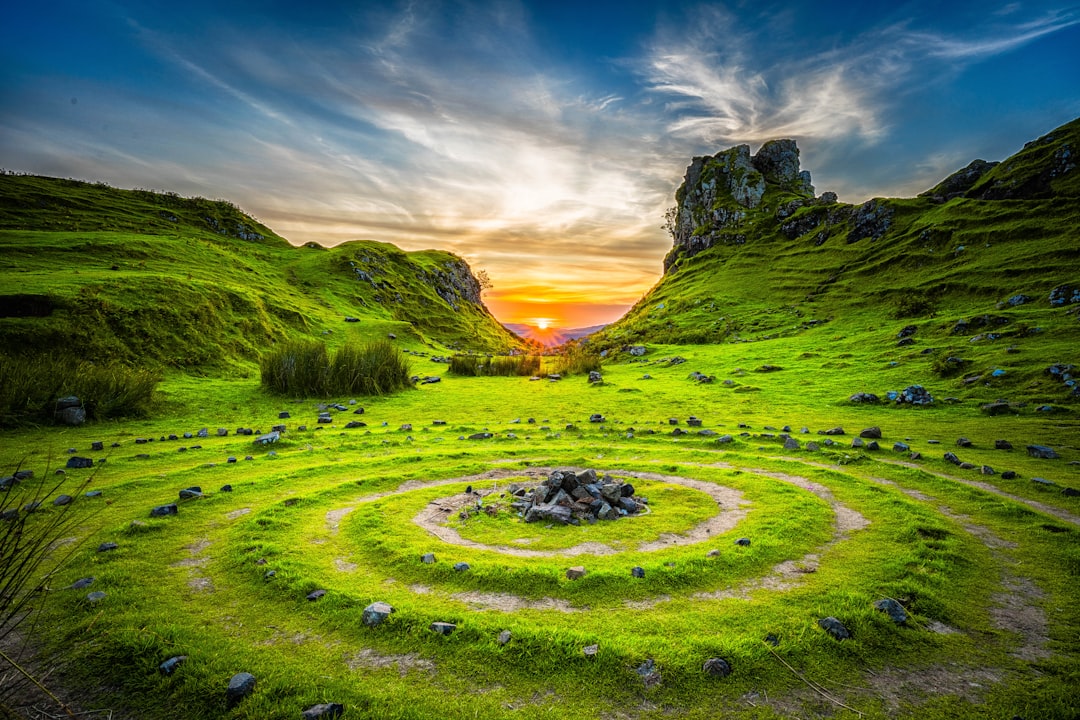
Photo by Robert Lukeman on Unsplash
On a cold January morning in 1995, wildlife biologist Doug Smith watched from a snow-covered ridge as the first gray wolves in nearly 70 years stepped out of their transport crates into the Lamar Valley of Yellowstone National Park. Nobody that day—not the biologists, not the park rangers, not even the most prescient ecologists—fully understood what would happen next. The wolves weren't just returning to the landscape. They were about to rewrite the rules of an entire ecosystem.
What happened over the following decades became one of the most striking examples of what ecologists call a "trophic cascade," a chain reaction of effects that ripples through nature when a single species is added or removed. But calling it a cascade seems almost too gentle a word for the magnitude of change that occurred.
The Wolves' First Meal Changed Everything
When those initial 66 wolves arrived, Yellowstone's elk population was out of control. Decades without predators had allowed their numbers to balloon to nearly 19,000 animals. These elk were devastating the vegetation. Willows, aspens, and cottonwoods—trees that had once covered riverbanks—were being browsed into extinction. Young saplings never got the chance to grow.
The wolves began hunting elk. Simple enough on the surface. By 2005, the elk population had dropped to around 4,000. But here's where it gets fascinating: the wolves didn't just reduce elk numbers. They changed where elk went and how they behaved. Spooked by predation, elk stopped spending long hours grazing in riverside valleys. They moved to higher elevations, into forests, away from water.
This shift had unexpected consequences. Willows returned. The aspen trees that had nearly vanished started growing back. And when willows and aspens flourished, the riverbanks stabilized. Less erosion meant clearer water. Clearer water meant more fish. More fish meant more food for grizzly bears, especially in spring when bears emerge hungry from hibernation. Between 1995 and 2015, the grizzly bear population increased from around 330 to over 1,000 animals.
The rivers themselves transformed. Bank erosion decreased. Water temperature became more stable. Song sparrows returned because they need willow growth for nesting. Beavers, which had disappeared when willows died back, made a comeback. Their dams created wetlands that supported muskrats, mink, and waterfowl. An entire community of animals was resurrected not because anyone introduced them, but because wolves changed the behavior of elk.
The Unexpected Players in Ecological Resurrection
What makes this story particularly compelling is how non-obvious many of these effects were. Ecologists could predict that wolves would hunt elk. But predicting that this would trigger a specific change in elk behavior, which would allow willows to grow back, which would stabilize riverbanks, which would create conditions for beavers to return—that requires understanding nature as a deeply interconnected system.
Reuben Schiff, a wildlife biologist who studied the Yellowstone wolves extensively, was struck by how humbling the experience proved. "We thought we knew how this system worked," he once said. "But nature kept surprising us." The wolves demonstrated something crucial: you cannot understand an ecosystem by studying any single species in isolation. Every organism exists within an intricate web of dependencies.
The beaver resurgence was particularly telling. Beavers aren't apex predators. They're not charismatic megafauna. But their return mattered enormously. Beaver ponds create ecosystems within ecosystems. They provide nesting sites for waterfowl, hunting grounds for mink, and drinking areas for deer. They slow water movement, allowing sediments to settle and nutrients to build up. In some ways, the beavers—creatures that had seemed almost incidental to the "big" ecological story—became as important as the wolves themselves.
The Human Dimension: Why This Matters Beyond Yellowstone
The Yellowstone wolves didn't just teach ecologists something about how nature works. They offered a powerful counterargument to the belief that humans had permanently broken the natural world. For decades, the sentiment among some scientists was essentially: we've damaged nature so thoroughly that restoration is largely impossible. Management means accepting fundamentally altered systems.
But Yellowstone showed something different. Reintroduce one missing piece—the apex predator—and suddenly the system starts healing itself. The trees don't need humans to plant them. The beavers don't need to be relocated. The fish don't need to be restocked. When the right conditions are created, nature demonstrates a remarkable capacity for self-recovery.
This doesn't mean ecological restoration is simple or that we can undo all the damage we've done. It does mean that understanding these interconnections offers hope and practical guidance. Conservation efforts can be more effective when they focus on restoring these critical relationships rather than trying to manage every detail individually.
If you're interested in how species communicate within these complex systems, consider reading about how forest birds are abandoning their songs—another form of ecological change that reveals the fragility and adaptability of wild communities.
The Ongoing Story
Twenty-five years later, Yellowstone continues to teach us. The wolves are still there, still hunting, still shaping the ecosystem. Recent research suggests their presence even affects soil composition through complex nutrient cycling pathways that scientists are still working to fully understand.
Standing in that same Lamar Valley today, you'd see a radically different landscape than what existed in 1995. Trees that had been absent for generations are thriving. Water flows clearer. Animals move through the valley in patterns that reflect the presence of predation—more cautious, more varied in their ranging behavior. It's not a return to some pristine pre-human state. Yellowstone has been shaped by human management for over 150 years. But it's something closer to ecological balance, achieved by understanding how nature's parts interconnect.
The wolves' return reminds us that we're not separate from nature—we're part of the same system. Understanding how that system works, respecting the connections, and sometimes simply stepping back to let natural processes unfold—these are the real lessons Yellowstone has offered the world.
Comments (0)
No comments yet. Be the first to share your thoughts!
Sign in to join the conversation.