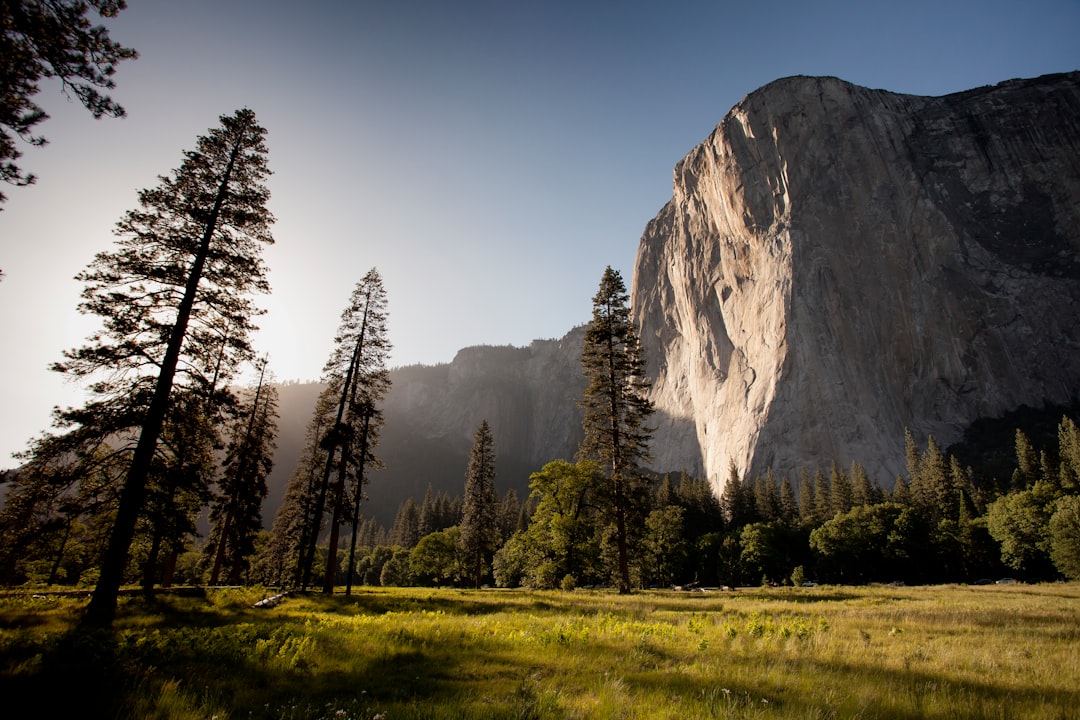
Photo by Adam Kool on Unsplash
Last summer, a biologist named Suzanne Simard was hiking through a British Columbia forest when she noticed something peculiar. A Douglas fir tree, struggling in the shade of its taller neighbors, was thriving—impossible given the lack of sunlight. She knelt down, examined the soil around its roots, and made a discovery that would challenge decades of botanical assumptions. The struggling tree was receiving carbon directly from its neighbors through an underground fungal network, a biological pipeline that shouldn't exist according to conventional plant science.
That moment, which occurred in 1997, launched Simard into a career studying what she would later call the "Wood Wide Web." What she found was staggering: beneath nearly every forest on Earth runs a sophisticated communication and resource-sharing network powered by mycorrhizal fungi—thread-like organisms that colonize plant roots and create channels for resource exchange. This isn't metaphorical networking. It's literal, measurable, and it fundamentally changes how we understand plant society.
The Underground Internet Nobody Knew About
The basic concept seems almost too simple. Mycorrhizal fungi are organisms that live in a mutually beneficial relationship with plant roots. The fungus extends thin filaments called hyphae into the soil—think of them as biological cables that spread far and wide. These filaments can reach nutrients like phosphorus and nitrogen that plant roots alone cannot access. In return, the plant provides the fungus with sugars created through photosynthesis. It's a trade deal that has existed for over 400 million years.
But here's where it gets wild: these fungal networks don't stop at connecting one plant to one fungus. Instead, they weave through the soil like an intricate web, connecting dozens, sometimes hundreds of plants together. A single fungal network can span several acres. Researchers have identified individual networks containing over 15 billion individual fungal cells. When you walk through an old-growth forest, you're literally walking on top of one of nature's most complex communication systems.
The most famous example comes from the Malheur National Forest in Oregon. A single honey fungus organism covers over 2,400 acres and weighs approximately 600 tons, making it one of the largest living organisms on Earth. Yet most people who visit that forest have no idea they're standing on something bigger than the largest animals in existence.
Plants Talking, Trading, and Taking Care of Their Offspring
The real revelation came when scientists realized these networks weren't just plumbing systems. They were communication highways. In elegant experiments, Simard demonstrated that trees actually send warning signals through fungal networks. When a Douglas fir is attacked by aphids, it sends chemical alarm signals through the fungal pathways to neighboring trees, which then boost their defense chemicals before the insects arrive. The trees that received the warning showed significantly increased resistance to infestation compared to isolated trees.
The implications are profound. Plants aren't solitary organisms competing for resources in brutal isolation. They're cooperative members of a community that actively support one another. When a tree is injured or sick, its neighbors can redirect nutrients through the fungal network to keep it alive. Older trees can support younger saplings through nutrient transfers, essentially acting as guardians for the next generation.
Perhaps most remarkably, mother trees—mature trees that have established extensive fungal connections—appear to recognize their offspring. Research suggests that trees preferentially nurture their genetic children, sending more resources through the fungal network to their own seedlings than to unrelated saplings. It's a form of parental investment that we typically associate with animals, not plants.
This discovery echoes patterns we're seeing in other ecosystems too. Billions of creatures participate in coordinated mass migrations through Earth's oceans each night, revealing that nature's systems operate on scales and levels of coordination we're only beginning to understand.
What This Means for How We See Plant Intelligence
The mycorrhizal network revolution forces us to confront uncomfortable questions about plant consciousness and intelligence. Plants lack brains and nervous systems, yet they demonstrate sophisticated information processing. They make decisions about resource allocation. They remember past interactions. They respond to neighbors' needs. They even seem to show preference for their offspring. These are markers we typically reserve for creatures we consider intelligent.
This doesn't necessarily mean trees are "thinking" in the human sense. But it does suggest that intelligence exists on a spectrum we barely understand. A tree's intelligence operates on a different timescale than ours. Decisions that take a tree months or years to implement might be instantaneous to us, while our moment-to-moment choices might seem meaningless to a organism that thinks in seasons.
The practical implications are already reshaping forestry. Traditional logging practices often removed "less valuable" trees to make room for commercially important species. Now we understand that removing those "less valuable" trees destabilizes the entire fungal network, weakening the remaining trees' ability to communicate and support one another. New forestry practices are starting to account for mycorrhizal networks, treating forests as integrated systems rather than collections of individual timber units.
The Frontier Still Ahead
Despite rapid advances, mycologists and plant scientists acknowledge they've barely scratched the surface. We don't fully understand the biochemical mechanisms of fungal signaling. We don't know how trees decide which signals are genuine warnings versus noise. We haven't mapped out the complete structure of most forest networks or determined how climate change might disrupt these connections.
What we do know is this: the forest beneath your feet is far stranger and more sophisticated than we gave it credit for even a decade ago. The next time you stand among old trees, remember that you're surrounded by an ancient intelligence at work. Networks are communicating. Resources are flowing. Warnings are being transmitted. Families are being supported through underground channels you can't see.
The forest isn't quiet. We just haven't learned how to listen.
Comments (0)
No comments yet. Be the first to share your thoughts!
Sign in to join the conversation.