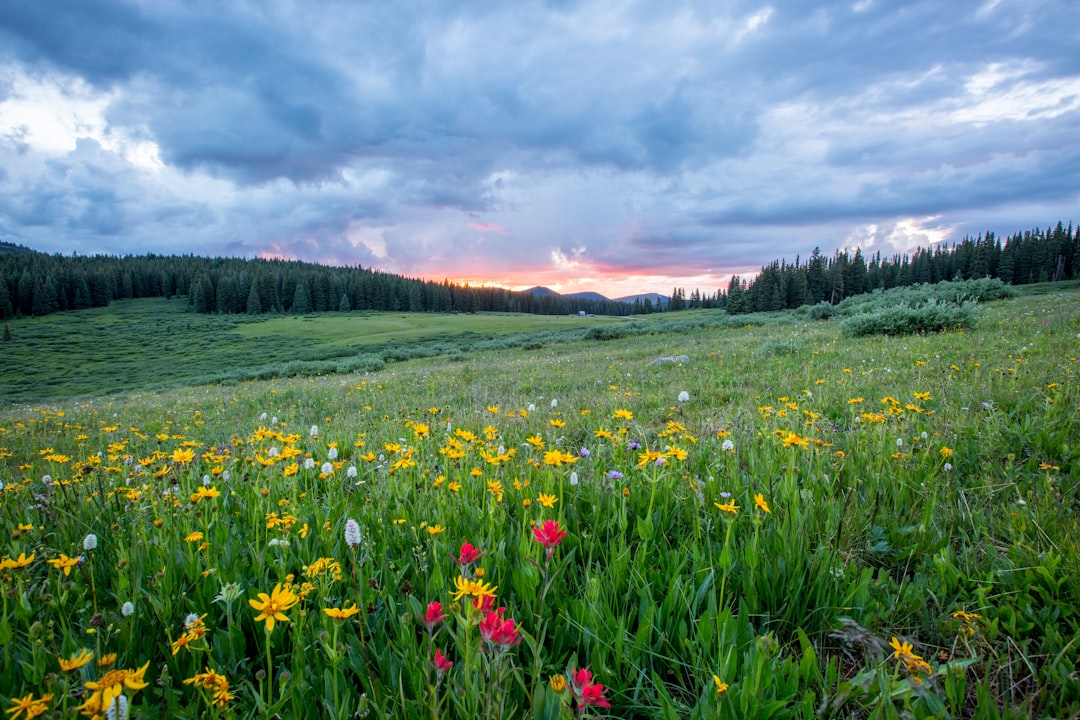
Photo by Joel Holland on Unsplash
Walk through any forest and you're literally standing on top of one of nature's most sophisticated communication systems. You can't see it. You can't hear it. But the trees around you are actively talking to each other through a vast underground network of fungal threads—and they're sharing everything from nutrients to warning signals about pest attacks.
This isn't metaphorical. It's not poetic. It's real, measurable, and it's completely changing how scientists understand the intelligence of forests.
The Discovery That Started It All
In 1997, a forest ecologist named Suzanne Simard conducted an experiment that would fundamentally alter our understanding of trees. Working in a British Columbia forest, she took three types of seedlings—Douglas fir, paper birch, and western red cedar—and connected some of them with a mycorrhizal fungal network while isolating others.
What happened next seemed impossible.
The connected trees started sharing resources. When Simard introduced radioactive carbon isotopes into the birch trees, the carbon tracers moved through the fungal network into the Douglas firs. The firs returned the favor by sending nitrogen back to the birches. Even stranger? When she damaged one tree by clipping its leaves, it began sending chemical warning signals through the fungal network to its neighbors, which then increased their own chemical defenses before any pest had even attacked them.
Other scientists initially dismissed her findings as impossible. But decades of research have since proven Simard was onto something revolutionary. We now know that approximately 90% of plant species on Earth form relationships with mycorrhizal fungi. These aren't optional partnerships. For most plants, they're essential for survival.
How the Underground Internet Actually Works
Mycorrhizal fungi are decomposers. They break down organic matter in soil and extract nutrients that plants need—phosphorus, nitrogen, potassium, and trace minerals. In exchange, plants provide the fungus something it can't make on its own: sugars produced through photosynthesis.
But here's where it gets interesting. The fungal threads, called hyphae, don't just connect one tree to one fungus. They weave through the soil creating an interconnected web that can link dozens of trees together into what researchers call the "wood wide web."
A single fungal network can span acres. A recent study of a honey fungus in Oregon's Malheur National Forest mapped a single organism covering 2,385 acres—making it one of the largest living organisms on the planet. Within smaller networks, the fungal threads can be so densely packed that there's more fungal biomass in a handful of healthy forest soil than there are bacteria in the human gut.
Through these networks, trees engage in resource redistribution that makes sense only when you understand them as members of a community rather than isolated individuals. A mature tree with full access to sunlight might send surplus carbon down to the fungal network to support younger trees growing in shade. Those younger trees might return nutrients they've accumulated. A tree recovering from damage or disease might draw more resources than it contributes temporarily. It's not charity—it's mutual aid with the fungus as the intermediary.
The Chemical Conversations Hidden Below
What makes this system truly mind-bending is that it enables something approaching conversation. Trees don't have brains, but they do have chemistry. They produce volatile organic compounds and other signaling molecules that communicate their status to neighboring trees through the fungal network.
When a tree is attacked by insects, it can send distress signals warning others to activate their own defensive compounds before the pests arrive. A tree experiencing water stress might signal its neighbors to prepare for drought. A tree abundant in resources might advertise its availability to support others. Remarkably, a mother tree can even identify her own offspring and direct extra resources toward them through the fungal network.
Scientists have documented this repeatedly. In one study, Douglas fir mothers identified their genetic offspring among other seedlings in the same network and provided them with preferential access to nitrogen and carbon—a form of parental investment that challenges everything we thought we knew about plant behavior. Another study found that sickly trees received preferential carbon allocation from healthier trees connected through the fungal network, essentially acting as a forest hospice system.
Similar to how scientists are decoding whale communication, researchers are now working to understand the full complexity of these chemical signals. What we've discovered so far is just the beginning. The vocabulary of the wood wide web is vast and largely still untranslated.
Why This Matters More Than Ever
Understanding mycorrhizal networks has immediate practical implications. Logging practices that destroy fungal networks fragment forests ecologically in ways we didn't realize. Monoculture plantations fail partly because they lack the fungal diversity that naturally supports forests. Climate change and increased wildfires are disrupting these networks, potentially cascading through entire ecosystems in ways we're only beginning to predict.
But there's something deeper here too. For centuries, Western science has approached nature as a collection of independent organisms competing for survival. We've celebrated the strong and efficient, viewing forests as battlefields where only the fittest survive. But the reality is far more collaborative. Trees aren't isolated fighters in a brutal landscape. They're members of a community, linked by fungal networks, sharing resources, trading information, and supporting each other through hardship.
The next time you walk through a forest, you're not just seeing individual trees. You're walking through a superorganism—a collaborative network of thousands of individual organisms working together as a single integrated system. It's taken science nearly a century to catch up to what Indigenous peoples have understood for millennia: forests are alive not just as collections of individual trees, but as unified wholes.
And maybe, just maybe, we should start listening to what they've been telling us all along.
Comments (0)
No comments yet. Be the first to share your thoughts!
Sign in to join the conversation.