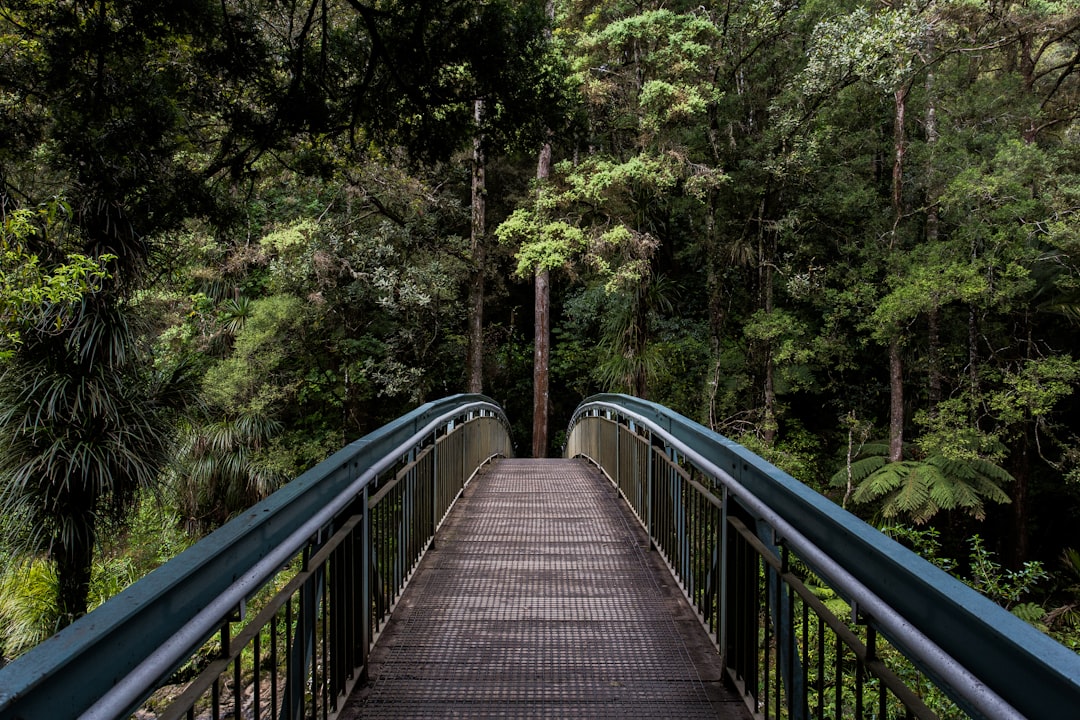
Photo by Tim Swaan on Unsplash
Walk through an old-growth forest and you're standing atop one of nature's most sophisticated communication systems. Yet for decades, we missed it entirely. The real action isn't happening in the branches above our heads. It's underground, in the dark soil where tree roots intertwine with threadlike fungal filaments in an arrangement so intricate that scientists are still struggling to understand its full complexity.
The Wood Wide Web Isn't a Metaphor
In 1997, forest scientist Suzanne Simard conducted an experiment that would fundamentally change how we understand forests. She took three tree species—Douglas fir, paper birch, and lodgepole pine—and connected them underground using plastic tubes and radioactive isotopes. What she discovered was shocking: trees were actively trading resources with each other. Carbon moved from birches to firs in summer, then reversed in autumn when the firs had more to give. The trees weren't just surviving side by side; they were cooperating.
The mechanism behind this exchange is a fungal network often called the "mycorrhizal network" or, more poetically, the "wood wide web." Mycorrhizal fungi form relationships with tree roots in which both parties benefit. The fungus receives sugars from the tree's photosynthesis, while the tree gains access to the fungus's vast network of hyphae—thin filaments that can explore soil far more extensively than roots alone could ever reach. A single fungus can connect dozens of trees, creating something that behaves less like individual organisms and more like a distributed intelligence.
The scale of these networks is almost incomprehensible. In 2015, a honey fungus in Oregon's Malheur National Forest was identified as the world's largest living organism. This single fungus sprawls across 2,384 acres—larger than 1,600 football fields—and is estimated to be between 2,400 and 8,650 years old. It exists as a unified organism despite being spread across an entire forest.
More Than Just Trading Nutrients
What makes the wood wide web genuinely fascinating isn't merely the exchange of nutrients. It's that trees appear to use these networks to communicate.
When a tree is attacked by insects, it doesn't just mount a local defense. Research published in the journal Science in 1997 showed that healthy trees could somehow sense when their neighbors were under pest attack and preemptively ramp up their own defensive chemistry. Chemical signals travel through the fungal network—sometimes with remarkable speed. A tree can essentially send a warning: "Insects incoming. Prepare your defenses."
There's even evidence that trees recognize kin and give them preferential treatment. In controlled experiments, trees send more resources through mycorrhizal networks to their genetic relatives than to unrelated trees. It's a form of nepotism playing out beneath the forest floor, suggesting that individual trees may possess something approaching awareness of their place within a family unit.
Mature trees have been observed supporting their own seedlings through mycorrhizal connections, essentially nursing the next generation before they can manage on their own. This contradicts the old assumption that adult trees actively compete with younger plants for resources. Instead, they're more like parental figures, guiding their offspring toward survival.
The Skeptics and the Science
Not everyone agrees that these observations indicate intentional communication or cooperative behavior. Critics argue that what looks like altruism might simply be the fungal network operating according to basic principles of resource distribution, with no conscious decision-making involved. They point out that saying a tree "recognizes" its offspring or "warns" neighbors of danger uses language that implies awareness the tree almost certainly doesn't possess.
These are fair objections. The danger with popularizing discoveries is anthropomorphizing natural processes. A tree doesn't "think" the way you do. But that doesn't make what's happening any less remarkable. Even if a tree network operates without intention, the system itself produces outcomes that look indistinguishable from cooperation. From a practical standpoint, the distinction between real communication and apparent communication may be less important than recognizing that these systems work.
What we can say with confidence is this: when foresters clear-cut a forest and remove the mature trees, they're not just harvesting timber. They're destroying networks that took centuries to develop. Seedlings planted in clear-cut areas often struggle to establish themselves compared to those in forests where older trees remain. Without access to the mycorrhizal network that parent trees maintain, they're essentially orphaned.
Rethinking Forest Management
Understanding the wood wide web has serious implications for how we manage forests. Traditional logging practices that remove most trees and leave behind a barren landscape ignore the ecological infrastructure underground. Recent studies suggest that preserving at least some mature trees can dramatically improve the survival rates and vigor of new growth, even if that new growth involves different species.
Some forward-thinking forestry operations are beginning to apply these insights. Rather than clear-cutting and replanting monocultures, they're using variable retention harvesting—leaving behind networks of mature trees that can support the regeneration of younger plants. Early results suggest this approach produces healthier forests that are more resilient to disease and pests.
If you want to understand how interconnected forest ecosystems truly are, consider how disturbances in one ecosystem ripple across others. Forests operate on similar principles, but the connections are often invisible to us.
What This Means for Us
Trees have been communicating and cooperating for hundreds of millions of years. They've developed solutions to problems we're only now beginning to understand. When we destroy old-growth forests without understanding the systems beneath our feet, we're not just losing trees. We're dismantling information networks that have been perfecting the art of survival since before humans walked the earth.
The next time you stand in a forest, remember that what appears to be a collection of individual plants is really a community. A conversation is happening in the darkness below you. And that conversation is far more elegant than anything we've managed to invent.
Comments (0)
No comments yet. Be the first to share your thoughts!
Sign in to join the conversation.