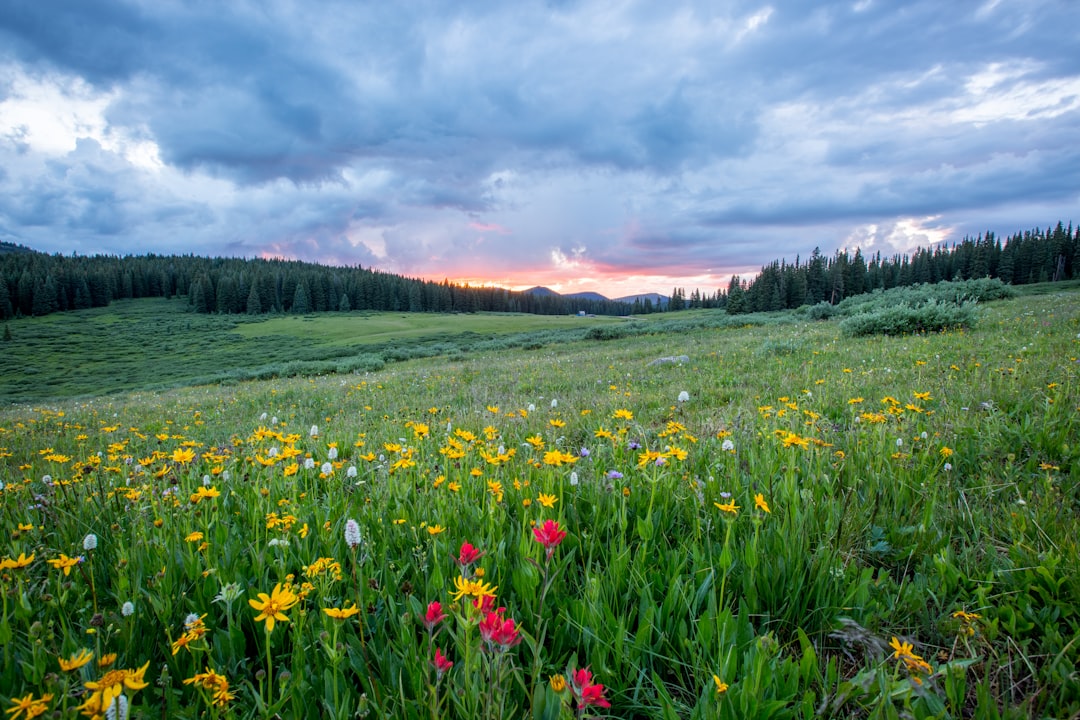
Photo by Joel Holland on Unsplash
The Arctic tundra doesn't follow the same rules as the rest of Earth's gardens. When summer arrives at the top of the world, it arrives with urgency—a compressed explosion of growth that must happen in mere weeks before winter's darkness returns. But something strange is happening above the Arctic Circle these days, and scientists are watching it with growing concern. Plants are waking up earlier. They're blooming faster. And the entire ecosystem that depends on their predictable timing is starting to come apart at the seams.
Racing Against the Seasons
Imagine living somewhere that's completely dark for months, then completely light for months. That's the reality for plants living above 66 degrees north latitude. For Arctic wildflowers like Arctic poppies and saxifrages, the growing season is their one shot—a narrow window of opportunity when temperatures climb above freezing and the sun barely sets. These plants have evolved over millennia to time their blooming with extraordinary precision, triggered by a combination of temperature and day length.
Since the 1990s, researchers monitoring plants across Alaska, Scandinavia, and Siberia have documented a troubling shift. Early spring indicators—the first green shoots pushing through melting snow—are arriving 2-3 weeks earlier than they did just 30 years ago. In some regions, like the Aleutian Islands, flowering dates have shifted by up to 35 days. That might not sound dramatic if you live somewhere with a gentle seasonal transition, but in the Arctic, those weeks matter enormously.
A 2020 study published in *Scientific Reports* tracked phenological changes (the timing of life cycle events) across 117 Arctic plant species over three decades. The researchers found that not all plants are responding equally to warming. Some species are jumping into bloom seasons that are weeks earlier, while others are changing on a slower timeline. This uneven acceleration is creating what scientists call "phenological mismatch"—and it's throwing the entire Arctic food web into disarray.
When Pollinators Miss Their Cue
Here's where the real trouble begins. Arctic plants didn't evolve to bloom whenever they felt like it. Their flowering times synchronized with the arrival of their pollinators—primarily bumblebees, butterflies, and flies that themselves depend on other seasonal triggers. A bumblebee queen, emerging from hibernation, searches for early flowers that will provide the nectar and pollen needed to fuel her colony's growth. If those flowers bloom and fade before the bees arrive, the entire season collapses.
Field observations from Greenland have documented exactly this scenario. In certain years, Arctic poppies have peaked in flowering before the primary bumblebee species (*Bombus hyperboreus*) finished emerging from their winter dormancy. The flowers have already set seed and begun to wither just as their pollinators arrive, hungry and desperate. This mismatch doesn't kill the pollinators immediately, but it forces them to rely on backup food sources that are far less reliable. Colonies grow smaller. Reproduction suffers. Population numbers decline.
Migratory birds are caught in the same squeeze. Species like the Arctic tern and various shorebirds time their journeys from Antarctica and Africa based on day length and temperature patterns that worked for millions of years. But they're now arriving to find that insects have already hatched and begun their own population crashes—triggered by the absence of flowers blooming on schedule. A 2019 study of wading birds in northern Alaska found that timing mismatches with peak insect abundance reduced chick survival rates by up to 50 percent in certain years.
The Cascade Effect
This is where ecosystem dynamics reveal their fragility. Plants at the base of the food chain set the tempo for everything above them. When their timing becomes unpredictable, the consequences ripple upward with brutal efficiency.
Herbivores like musk oxen and caribou depend on early vegetation growth to feed calves during the critical window when they're learning to forage independently. Earlier, harsher springs mean vegetation appears before these animals are physiologically ready to utilize it optimally. Later frosts—which are becoming more common even as spring arrives earlier—can kill tender new shoots that are vital to animal survival. Ungulate populations across northern Canada and Siberia have shown increasing volatility in recent decades, with calf survival varying wildly year to year in ways that correlate with these phenological shifts.
The Arctic lemming population, which cycles in roughly four-year booms and busts, appears to be losing synchronization with the peak availability of their preferred vegetation. This matters because snowy owls, gyrfalcons, and Arctic foxes depend on lemming abundance as their primary food source. When lemming populations fluctuate unpredictably, predator populations crash—and their impacts trickle down into smaller prey species and affect egg-laying timing for migratory raptors.
Scientists describe this as a cascading desynchronization. It's not one mismatch but dozens of mismatches occurring simultaneously across the food web, each one pushing species out of their evolutionary rhythm and into a realm of uncertainty.
The Resistance of Time
There's a deeper problem embedded in all of this. Evolution works slowly. Arctic plants evolved their timing mechanisms over thousands of generations. The genes that control when they bloom, how fast they grow, and when they set seed were shaped by consistent seasonal patterns. But those patterns are changing on a timescale of decades—millions of times faster than evolution can typically respond.
Some plants might evolve to bloom later, resetting their internal clocks to match the new warming reality. But that takes time, and climate change isn't giving anyone time. It's accelerating. The warming trend that triggered these phenological shifts hasn't plateaued—it's continuing and intensifying. Arctic temperatures are rising two to three times faster than the global average, a phenomenon scientists call Arctic amplification.
Even more unsettling, some Arctic plants show minimal genetic variation in their blooming times. They've been so successful with their current strategy that natural selection never favored alternative timing mechanisms. That genetic inflexibility might prove catastrophic if environmental conditions shift beyond their current range of adaptation. Other species show more phenological plasticity—they can adjust somewhat to changing conditions within a single generation—but even that flexibility has limits.
What Happens Next
Scientists are working to understand whether Arctic ecosystems will reach a new equilibrium or whether we're watching the early stages of ecosystem collapse. Long-term monitoring programs in Alaska, Canada, and Scandinavia continue to track changes year after year, building datasets that might eventually reveal whether species can adapt or whether mismatches will continue to widen.
Some researchers are cautiously optimistic. Bumblebees are plastic in their behavior—they can forage on less-preferred plants if needed. Some bird species are showing evidence of shifting their migration timing, responding to earlier springs. Evolution, while slow, isn't completely static. But the margin for error is vanishing. If warming continues at current rates, the buffer between current conditions and conditions that exceed what these species can tolerate will close within decades rather than centuries.
The Arctic midnight sun, once a symbol of nature's reliability, is now illuminating a system in transition. Whether that transition leads to resilience or ruin remains uncertain. But one thing is clear: the plants are blooming faster, the calendar is becoming unreliable, and the consequences are just beginning to unfold.
For a broader look at how disruptions are reshaping ocean and terrestrial ecosystems, consider reading Why Octopuses Are Abandoning the Deep: The Strange Migration Reshaping Ocean Ecosystems, which explores similar phenological and behavioral shifts in marine environments.
Comments (0)
No comments yet. Be the first to share your thoughts!
Sign in to join the conversation.