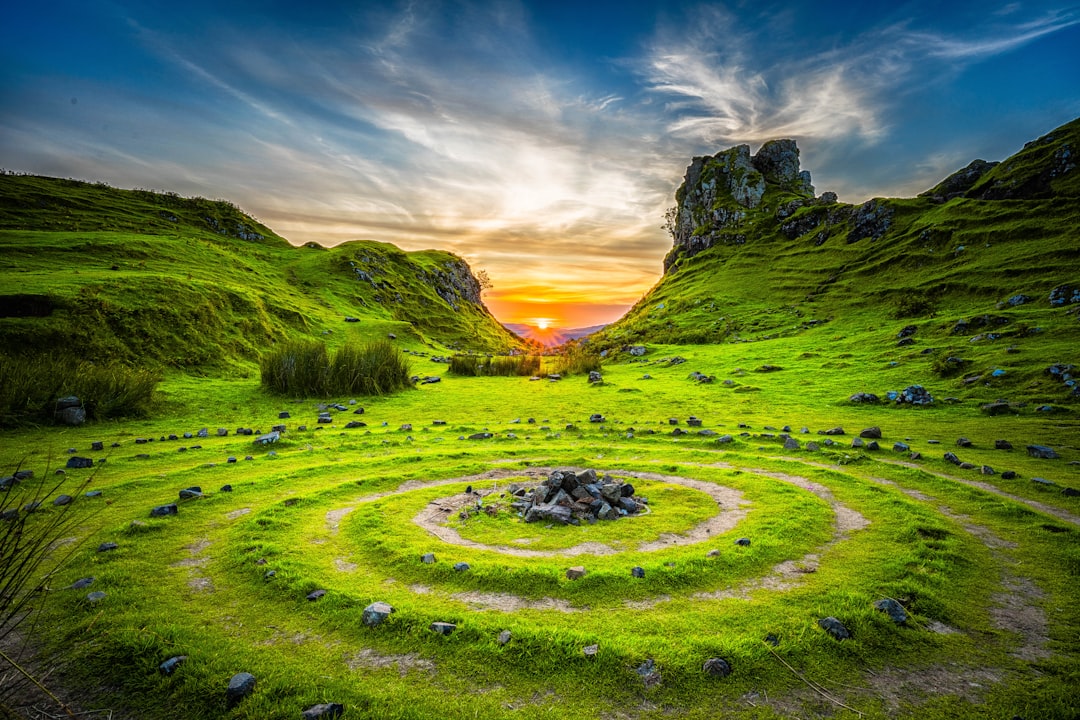
Photo by Robert Lukeman on Unsplash
Most of us think of flowers as creatures of sunlight. We picture gardens drenched in afternoon rays, bees buzzing from bloom to bloom, butterflies dancing across petals. But there's an entire parallel world of plants that have decided sunlight is overrated. These nocturnal bloomers emerge as darkness falls, revealing flowers that glow like tiny lanterns in the night, releasing fragrances that make daytime flowers smell like old gym socks by comparison.
The night-blooming cereus is perhaps the most dramatic example. Once a year—sometimes only once every two or three years—these sprawling desert plants produce flowers the size of dinner plates. They open at dusk and close by morning. People in neighborhoods where these plants grow actually plan gatherings around the blooming event. It's part botanical phenomenon, part community celebration.
The Logic Behind the Night Shift
Evolution doesn't do things for no reason. Every trait, every timing decision, every color and scent is the result of millions of years of trial and error. Nocturnal flowering isn't a mistake or an oddity—it's a calculated strategy.
For many night-blooming plants, the shift away from daylight hours is about pollinators. While day-blooming flowers rely on bees, butterflies, and hummingbirds, night bloomers have learned to romance an entirely different clientele: moths, bats, and various night-flying insects. A moonflower doesn't need to be showy and colorful because its primary pollinator—the sphinx moth—navigates the night world through smell as much as sight. The plant invests its energy into fragrance instead, releasing powerful scents that can travel hundreds of meters through cool night air.
The energy calculation is fascinating. Daytime blooming requires continuous nectar production to compete with thousands of other flowers vying for pollinator attention. A night bloomer? It has an almost captive audience. The bat looking for nectar at 2 a.m. isn't spoiled for choice. This efficiency matters when you're a plant trying to survive in harsh desert conditions or deep forests where direct sunlight is scarce.
Chemical Conversations in the Dark
Walk past a blooming night-jasmine in summer, and you might think someone has spilled expensive perfume into the night air. That intoxicating sweetness isn't marketing excess—it's molecular precision. Night-blooming plants have evolved to produce specific compounds that their nocturnal pollinators can detect with precision.
Consider the dama de noche (also called cestrum nocturnum). Its tiny, inconspicuous white flowers would be nearly invisible in daylight, yet once darkness falls, they release a fragrance so powerful it can fill an entire garden. The scent is primarily composed of indole and dimethyl disulfide—compounds that don't exist in particularly high concentrations in many daytime flowers. This chemical fingerprint is like a neon sign to the night insects and moths that depend on it.
Scientists studying the evening primrose discovered something remarkable: the plant doesn't just produce fragrance—it times the production. Volatile organic compounds peak in concentration around the hours when its primary pollinators are most active. It's not random release; it's scheduled perfumery. The plant is essentially saying: "I'll have what you want, exactly when you want it."
The Desert Night Advantage
Many of the most dramatic night bloomers are desert plants, and this makes perfect ecological sense. During the day, desert heat is merciless. Water evaporates rapidly. Opening flowers under the blazing sun would waste precious moisture through transpiration. But at night? Temperatures drop. Humidity rises. Evaporation slows dramatically.
The barrel cactus and various species of Epiphyllum have evolved to save their flowering energy for the cool hours. Some night-blooming cacti in the Sonoran Desert produce flowers so briefly—sometimes just four to six hours—that they've become events. Local populations know the approximate dates when specific plants will bloom and gather to witness it. For some plants, this entire annual reproductive strategy hinges on a single night of pollination.
Water conservation is only part of the advantage. Night temperatures also reduce the stress on pollen viability. Some research suggests that pollen from night-blooming plants remains viable longer because it hasn't been subjected to the desiccating stress of the daytime sun. This gives nocturnal flowers an edge in low-pollinator environments where you might wait several nights for the right insect to visit.
A Growing Phenomenon in Changing Times
Climate change is making night blooming increasingly advantageous. As daytime temperatures rise in many regions, plants are experiencing greater water stress during peak daylight hours. Some researchers have observed flowering shifts in traditionally daytime plants, with blooming times creeping later into evening as temperatures climb.
The evening primrose is now blooming earlier in the year in many locations—not necessarily because it wants to, but because the timing cues it evolved to respond to (day length, temperature thresholds, soil moisture) have shifted. Plants are essentially being pushed toward earlier seasons and, in some cases, toward cooler times of day.
If you want to explore more about how plants solve problems through unusual evolutionary strategies, check out how octopuses use similar problem-solving approaches across completely different kingdoms.
Finding Magic in the Darkness
The real beauty of nocturnal flowers isn't just their botanical cleverness—it's what they remind us about the natural world. We live in a species obsessed with sunlight, with brightness, with visibility. We've built our entire civilization around seeing clearly during daylight hours. But the living world is far more complex and nuanced.
Some of nature's most extraordinary solutions hide in darkness. Some of the most fragrant flowers produce their scent when we're asleep. Some of the most successful breeding strategies exploit the hours we've largely abandoned. There's an entire thriving ecosystem operating on a schedule completely different from ours, full of plants and pollinators engaged in ancient dances we're only beginning to understand.
Next time you're outside at dusk, pay attention to the changes. Watch which flowers are opening as the light fades. Breathe in the night air and notice the fragrances that weren't there an hour earlier. The night garden is just as alive as the day garden—just operating under completely different rules.
Comments (0)
No comments yet. Be the first to share your thoughts!
Sign in to join the conversation.