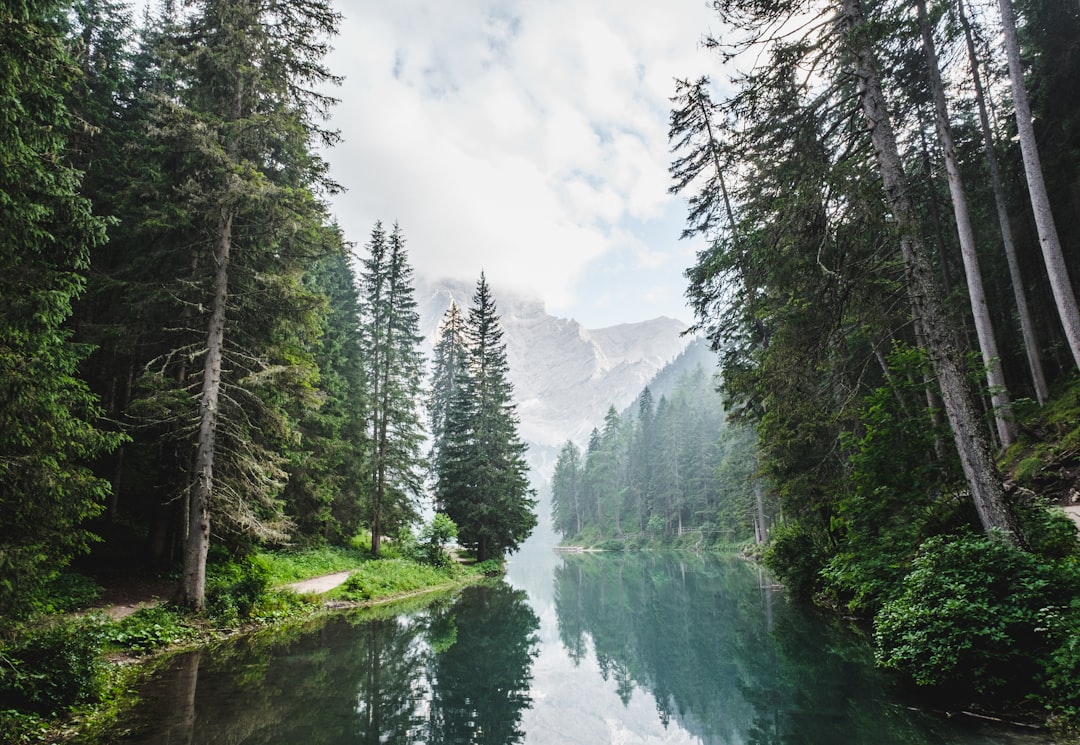
Photo by Luca Bravo on Unsplash
Picture yourself standing in an old-growth forest. The trees tower above you, their canopies filtering sunlight into a soft green glow. You're admiring their individual majesty, thinking about that massive Douglas fir or ancient spruce as a solitary giant. But here's what you're missing: that tree isn't alone. Not even close. It's actively conversing with dozens of other trees around it through an underground network so extensive and complex that scientists are still struggling to map it.
This is the mycorrhizal network—a fungal superhighway that connects the root systems of different plants and trees. And if you think that sounds like science fiction, you're not alone. When scientists first proposed that trees might be "talking" through fungal networks, many colleagues dismissed the idea as too fantastical. Now, the evidence is overwhelming.
How the Underground Internet Works
Let's start with the basics. Mycorrhizal fungi are neither plant nor animal—they're something entirely their own. These fungi form a symbiotic relationship with plant roots that's genuinely ancient. We're talking about partnerships that evolved over 450 million years ago. The fungi wrap around root tips or penetrate directly into root cells, extending their threadlike filaments (called hyphae) deep into the soil.
Here's where it gets fascinating: through these fungal threads, trees can exchange nutrients. A mother birch tree, heavy with excess carbon, can send sugars through the network to her seedlings growing in the shade. A dying tree can transfer its remaining nutrients to younger neighbors. A Douglas fir in difficulty can receive help from a healthier spruce next door. And perhaps most strikingly, trees under insect attack can send warning signals through the network, triggering defensive responses in neighboring trees that haven't yet been attacked.
Dr. Suzanne Simard, a forest ecologist at the University of British Columbia, documented one of the most famous examples of this phenomenon in 1997. In her experiments with paper birch, Douglas fir, and cedar trees, she showed that carbon moves through the fungal network from one tree to another. She used radioactive isotopes to trace the movement—essentially marking carbon atoms so she could follow where they traveled. The results showed that trees don't just compete for resources; they actively cooperate.
The Communication System Nobody Expected
But nutrient sharing is only part of the story. Trees also use the mycorrhizal network as an alarm system. When a tree is attacked by herbivores or succumbs to disease, it releases chemical signals into the fungal network. Neighboring trees, receiving this molecular warning, begin producing defensive compounds before they're even attacked.
A 2013 study published in the journal Functional Ecology showed that plants receiving chemical warnings through the mycorrhizal network produced stronger defensive responses to herbivory than plants that hadn't received the signal. It's like the forest equivalent of hearing about danger before it reaches your door—except trees are literally sharing information through fungal filaments that create a web potentially spanning acres.
The sheer scale of these networks is almost incomprehensible. A single gram of forest soil can contain several kilometers of fungal hyphae. In a study of an old-growth forest in British Columbia, researchers mapped the fungal connections and discovered that over 47 different tree species were linked through just a handful of mycorrhizal fungal species. These networks are sometimes called the "Wood Wide Web," a term that captures both the biological reality and the genuine analogy to the internet.
What This Means for Forests Under Stress
Understanding these networks has profound implications for forest management and conservation. Conventional forestry practices—clear-cutting, monoculture replanting, removing "non-commercial" species—essentially lobotomize these networks. When you remove all the trees in an area and replace them with a single species, you're not just changing what grows there. You're destroying centuries or millennia of established fungal connections.
This might explain why many replanted forests fail to develop the resilience of old-growth forests. They lack the network. They lack the ancient fungal partners. They lack the communication system that allows trees to support each other through drought, disease, and insect outbreaks.
Climate change adds another layer of urgency. As conditions become more volatile, forests need every advantage for survival. Trees connected through healthy mycorrhizal networks show better survival rates during droughts. They recover faster from disturbances. They're simply more resilient. A forest that's been fragmented, where trees are isolated from each other, faces a much bleaker future.
The Practical Revolution
Some forward-thinking forestry operations have started changing their practices. Instead of clear-cutting, they're using selective harvesting that maintains fungal network integrity. Instead of removing non-commercial species, they're preserving the biological diversity that supports robust fungal communities. Some researchers even advocate for leaving dead wood and logging debris on the forest floor, as these are critical for mycorrhizal fungal health.
For those interested in how other species are adapting to environmental challenges, the story of how nocturnal birds are rewriting survival rules in urban environments offers a fascinating parallel in a completely different context.
The implications extend beyond forestry. Understanding mycorrhizal networks is changing how scientists think about plant consciousness, intelligence, and community. Trees aren't the solitary competitors we imagined. They're part of an intricate, collaborative network that shares resources, information, and mutual support. They're not thinking in the way humans do, certainly, but the behavior patterns suggest something we might legitimately call cooperation.
Why This Matters Now
As we face climate change, biodiversity loss, and ecosystem degradation, these discoveries aren't just intellectually interesting—they're practically urgent. If we want forests to survive and thrive, we need to respect and protect these fungal networks. We need to stop treating forests as timber-producing machines and start treating them as the integrated, communicating systems they actually are.
The next time you walk through a forest, pay attention to what you can't see. Below your feet is one of nature's greatest engineering marvels—a system that's been perfecting cooperation and resilience for millions of years. We're only just beginning to understand it. And what we learn might be essential for keeping forests alive in an increasingly uncertain world.
Comments (0)
No comments yet. Be the first to share your thoughts!
Sign in to join the conversation.