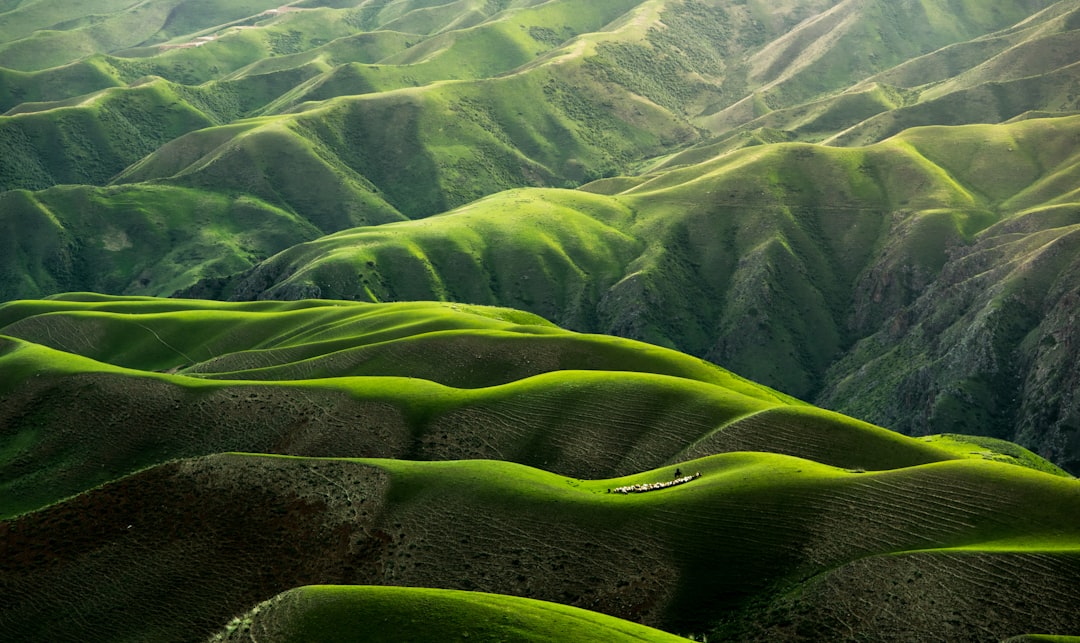
Photo by Qingbao Meng on Unsplash
Last year, researchers in the Amazon rainforest discovered a species of tree they'd never seen before. It was remarkable—tall, with crimson flowers that bloomed only at night. Within six months, the forest where it grew had been cleared for cattle grazing. The tree was gone. We don't even have a proper name for it.
This isn't a hypothetical scenario. It's happening right now, thousands of times over, across every continent. The hard truth is that we're experiencing a botanical extinction event so rapid, so profound, that we're losing species faster than we can identify them. And unlike charismatic megafauna—tigers, elephants, polar bears—dying trees don't make headlines.
The Numbers That Should Keep You Awake
Let's talk about the scale of this crisis. There are an estimated 391,000 tree species on Earth. Only about half have been formally named and catalogued by science. According to research published in 2022, approximately 14,000 tree species are now facing extinction risk. That's one in every thirty trees on the planet.
But here's what really matters: the extinction rate is accelerating. Scientists estimate that we're losing one tree species every single day. Every. Single. Day. Some researchers believe the number is even higher—potentially two or three species daily. To put this in perspective, before humans walked upright, the natural extinction rate for trees was roughly one species every thousand years.
The primary culprits? Deforestation claims about 10 billion trees annually. Agricultural expansion, logging, urban development, and climate change are working in concert, like a wrecking crew with multiple demolition teams. The Amazon alone has lost 17% of its original forest cover in the past fifty years.
Species We'll Never Know
Here's where the tragedy deepens. Many trees—particularly in tropical regions with the highest biodiversity—exist in areas that are nearly impossible for scientists to access regularly. A tree species might be growing in a remote section of the Congo Basin or deep in Southeast Asian jungle, unknown to science, containing unique properties that could revolutionize medicine or agriculture. And then one day, a developer's chainsaw solves the problem of documentation permanently.
Consider the Madagascar periwinkle. For centuries, local healers knew it could treat Hodgkin's lymphoma. Western science eventually took notice, and today, alkaloids derived from this plant have saved countless lives. But what if that tree had vanished before anyone bothered to investigate? What other undiscovered pharmaceutical miracles are we bulldozing right now?
The Pacific yew tree nearly suffered this fate. Indigenous peoples in the Pacific Northwest had used it medicinally for generations. Then, in the 1960s, scientists isolated paclitaxel from its bark—a compound that became one of the most important cancer drugs ever developed. The tree was nearly extinct by the time we recognized its value. We were lucky. We're not always lucky.
Climate Change: The Accelerant
If habitat destruction were the only threat, we might have time to mount a serious response. But climate change is supercharging the extinction timeline. Trees are struggling to adapt to rapidly shifting temperature and precipitation patterns. Species that evolved over millions of years to thrive in specific climatic conditions are finding their habitat moving faster than they can migrate.
Some trees are shifting their ranges toward cooler areas—typically northward or upward in elevation. But they can't move fast enough. A study tracking European forests found that trees are shifting northward at an average rate of 100 meters per year. Sounds significant until you realize that to keep pace with projected climate change, they'd need to move at roughly ten times that speed.
Mountain-dwelling species face an even grimmer situation. There's nowhere higher to go. Trees like the whitebark pine, already ravaged by bark beetles and disease, now face a warming climate that's shrinking their suitable habitat year after year. Some projections suggest it could be functionally extinct within decades.
The Ripple Effects Nobody's Talking About
When a tree species dies, we don't just lose one organism. We lose an entire world. Each tree supports hundreds, sometimes thousands of other species—insects, birds, fungi, lichens. The fungi that connect to tree roots in symbiotic relationships? Gone. The birds that nest in the canopy? Homeless. The insects that pollinate nearby plants? Vanished.
This matters for human survival in ways that aren't obvious until you really think about it. Trees regulate water cycles. They sequester carbon. They prevent soil erosion. They provide food security for billions of people who depend on forest products. We've already lost the genetic heritage of countless trees—variations and traits that might have helped surviving species adapt to future challenges.
If you're concerned about animal species facing extinction, you might want to check out The Midnight Singers: How Nocturnal Birds Are Rewriting the Rules of Urban Survival, which explores how animals are adapting to rapidly changing environments.
What Actually Needs to Happen
The solutions aren't mysterious. We need to protect remaining forests with real enforcement and real consequences for destruction. We need to fund botanical research, especially in biodiversity hotspots, to identify and document species before they vanish. We need to invest in seed banks and living plant collections as insurance policies against extinction.
Some progress is happening. Costa Rica, for instance, has expanded its forest coverage by 25% in recent decades through reforestation initiatives. But this is island hopscotching in an ocean of deforestation. Until protecting trees becomes economically rewarded rather than economically punished, until governments treat extinction as the existential threat it actually is, we'll keep losing species we never knew existed.
The painful irony is that we have the knowledge and technology to reverse this trend. We simply lack the collective will. Every tree species that vanishes represents millions of years of evolutionary development erased permanently. There's no recovery, no restoration, no second chance.
Comments (0)
No comments yet. Be the first to share your thoughts!
Sign in to join the conversation.