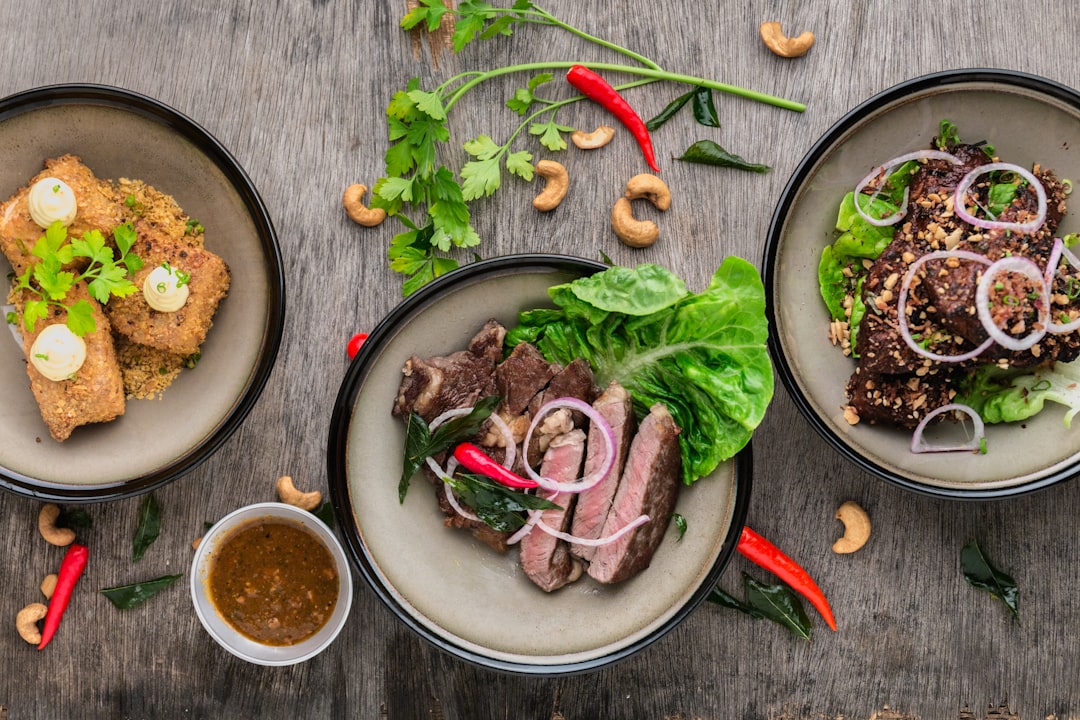
Photo by Lily Banse on Unsplash
You've experienced it a thousand times. You order pasta at your favorite restaurant and think, "This is incredible. How does it taste so good?" Then you go home, follow the exact same recipe, use similar ingredients, and somehow yours tastes... fine. Decent, even. But not transcendent. Not restaurant-grade.
The frustrating truth? You're not a bad cook. You're just playing by different rules than the professionals are.
Restaurants have weaponized a little-known flavor compound called umami, and once you understand how they do it, you'll never eat—or cook—the same way again.
The Fifth Taste Nobody Talks About
For decades, we learned about four basic tastes: sweet, salty, sour, and bitter. Umami—which means "pleasant taste" in Japanese—was discovered in 1908 by chemist Kikunae Ikeda, but it didn't crack Western culinary consciousness until much later. Today, neuroscientists confirm it's absolutely real, and it's arguably the most addictive taste sensation your tongue can experience.
Here's the science in plain terms: umami comes from glutamates and nucleotides, particularly something called monosodium glutamate (MSG). When these compounds hit your taste receptors, they trigger a cascade of signals to your brain that essentially says, "This is food. Good food. Protein-rich food. You should want more of this." It's an evolutionary hack—umami signals the presence of amino acids and protein, which kept our ancestors alive.
But restaurants know something home cooks often don't: umami is everywhere, hiding in plain sight. And they've learned to layer it like a spy hiding secrets in plain view.
How Restaurants Stack the Deck
Walk into the kitchen of a Michelin-starred restaurant or even a solid neighborhood Italian place, and you'll find the umami essentials in action. Aged parmesan cheese contains about 1,200 milligrams of glutamates per 100 grams. Tomato paste has around 400 milligrams per 100 grams. Soy sauce, fish sauce, anchovy paste, mushrooms, beef stock—they're all umami bombs.
The real magic happens when chefs combine these ingredients. A bowl of pasta with tomato sauce, anchovy, garlic, and a shower of parmesan isn't just delicious—it's a umami triple-threat. Your brain lights up like it's processing the most nutrient-dense meal imaginable. You feel satisfied after less food. You want to order it again next week.
Most casual cooks? They make the sauce with tomatoes and garlic, maybe a pinch of salt. No umami layering. No deliberate strategy. The food is fine, but it doesn't sing.
"But wait," you might think. "This sounds like restaurants are just using MSG, and isn't MSG bad for you?" This is where the conversation gets interesting.
The MSG Myth That Won't Die
Let's address the elephant in the room. For decades, MSG got a terrible reputation. "Chinese Restaurant Syndrome" became a cultural shorthand for headaches and numbness allegedly caused by MSG. Except here's the awkward truth: rigorous scientific studies haven't been able to reproduce these symptoms under controlled conditions. The FDA has classified MSG as "generally recognized as safe," the same category as salt and sugar.
In fact, your body produces MSG naturally. Parmesan cheese? That's naturally occurring MSG. Ripe tomatoes? MSG. Human breast milk contains free glutamates. You've been eating MSG your entire life, hiding inside foods you considered wholesome.
The difference is that restaurants sometimes use pure MSG as a seasoning—and they're unapologetic about it. A high-end kitchen might use a pinch of MSG powder the same way it uses sea salt, understanding that it enhances the savory notes of a dish. A home cook, hearing "MSG," often recoils in horror.
This is the trap. Because chefs have rebranded the same compounds under different names. "Umami seasoning" sounds sophisticated. "MSG" sounds dangerous. But they're often the same thing, delivered through different sources.
How to Play the Game at Home
The question isn't whether you should use umami-rich ingredients—you already are. The question is whether you'll do it deliberately.
Start by understanding which pantry staples are umami powerhouses: anchovies, soy sauce, miso paste, nutritional yeast, fish sauce, aged hard cheeses, tomato paste, and dried mushrooms. Keep these on hand the way a painter keeps primary colors.
Next, stop thinking about recipes as fixed formulas. That tomato sauce you make? A quarter-teaspoon of fish sauce won't make it taste fishy—it'll round out the umami so the tomato flavor actually pops. Can't do fish sauce? Use a tiny amount of soy sauce instead. Or a spoonful of miso. Or a handful of dried porcini mushrooms.
The real secret chefs won't tell you is that they taste constantly and adjust as they go. They're not following some mystical formula. They're chasing that moment when a dish suddenly transforms from "good" to "why does this taste like the restaurant version?"
If you're new to this, start small. Make your usual meatballs, but reduce the beef and add a small amount of anchovy paste to the mix. Make your regular Bolognese, but stir in a splash of soy sauce at the end. Keep the umami additions subtle—they should enhance, not dominate. You want people to eat your food and think, "This is amazing. What did you do differently?" not "Why does this taste like the ocean?"
If your sourdough starter has been struggling with achieving that restaurant-quality sour depth, you might be interested in why your sourdough starter keeps dying—and what bakers won't tell you. There are hidden factors beyond umami at play.
The Bottom Line
Restaurants don't have secret ingredients. They have strategy. They understand that umami isn't cheating—it's chemistry. It's evolution. It's human neurology.
The gap between your cooking and restaurant cooking isn't talent. It's knowledge. And now you have it.
Comments (0)
No comments yet. Be the first to share your thoughts!
Sign in to join the conversation.