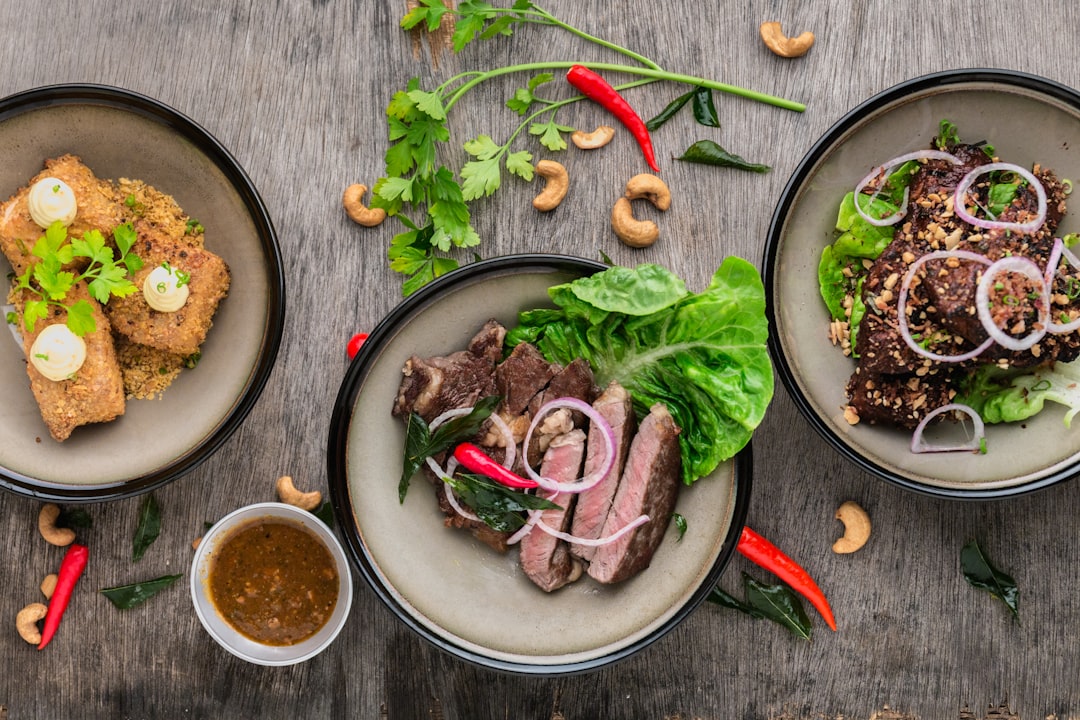
Photo by Lily Banse on Unsplash
My neighbor spent six months perfecting her sourdough starter. She named it. She talked about its "personality." I watched her feed it water and flour twice daily like it was a houseplant that might judge her. I thought she'd lost it. Then I tasted the bread, and suddenly I understood the obsession—but not in the way I expected. It wasn't just nostalgia or Instagram aesthetics. Something genuinely different was happening in that dough.
Why Sourdough Isn't Just Regular Bread's Fancier Cousin
Here's what most people don't realize: sourdough undergoes a completely different fermentation process than commercial bread. While your standard loaf from the grocery store uses commercial yeast that works fast and aggressive, sourdough relies on wild yeast and bacteria that ferment the dough slowly—often 12 to 48 hours or longer. This isn't arbitrary. It's the difference between flash-cooking something and slow-roasting it. The chemistry changes.
During fermentation, lactic acid bacteria break down starches and proteins in the flour. This process, called lactic acid fermentation, creates an acidic environment that literally restructures the gluten network. The dough becomes more elastic, more digestible, and the flavor develops complexity that's impossible to rush. A study published in Applied and Environmental Microbiology found that sourdough fermentation reduces the gluten content by up to 13%, making it legitimately easier to digest for many people—not just a placebo effect.
The bacteria doing this heavy lifting? Lactobacillus plantarum, Lactobacillus brevis, and Saccharomyces cerevisiae. These microorganisms aren't just flavor factories; they're biochemists working on your behalf while you sleep.
Your Gut and the Microbiome Connection
This is where it gets genuinely interesting. Those bacteria in your sourdough don't just disappear when the bread bakes. Many of them survive the oven's heat, and even the dead ones provide benefit. The dead bacteria cells contain compounds that feed your existing gut bacteria—specifically, they're a prebiotic food source for beneficial species like Bifidobacterium and Faecalibacterium prausnitzii.
A 2021 study from the University of Helsinki tracked what happened when people ate sourdough versus regular bread. They found that sourdough eaters showed measurable improvements in their gut microbiome diversity within just two weeks. The bread literally changed who was living in their digestive system, and the changes were toward the good guys. More diverse microbiota is linked to better immune function, improved mental health, and even weight management.
Compare this to conventional bread. Most commercial loaves use commercial yeast (usually Saccharomyces cerevisiae alone), dough conditioners, and sometimes dough improvers like ascorbic acid or enzymes. The whole process takes three to four hours. The result? Bread that's softer, faster, but microbiologically dead. You're essentially eating a food void of the beneficial bacteria that make fermentation special.
Regular bread also causes sharper blood sugar spikes. That's because the extended fermentation in sourdough actually lowers the bread's glycemic index. A study from Nutrition & Metabolism showed that sourdough triggers a 20% lower blood sugar response compared to whole wheat bread, even though both have similar macronutrients. The fermentation process itself is doing the work of breaking down starches your body would otherwise have to process.
The Phytic Acid Problem Nobody Talks About
Whole grains are supposed to be healthy, right? They're packed with minerals. But here's the catch: those minerals are bound up in phytic acid, a compound that prevents your body from absorbing zinc, iron, magnesium, and calcium. Your body literally can't access them without help. Commercial bread manufacturers don't address this. Sourdough fermentation does.
The lactic acid bacteria produce phytase, an enzyme that actively breaks down phytic acid. A loaf of sourdough wheat bread can have 50% less phytic acid than the same flour made into regular bread. This means the minerals are actually bioavailable—your body can absorb them. You're not just eating whole grain bread; you're eating whole grain bread that your digestive system can actually use.
For people dealing with mineral deficiencies, digestive issues, or anyone interested in actually getting nutrition from their carbohydrates, sourdough isn't just better. It's mechanistically different. The fermentation is doing the pre-digestion work your gut would otherwise struggle with.
Why Your Starter Matters More Than You Think
That's why my neighbor's obsessive starter care actually makes sense. The microbial community in a sourdough starter is living and evolving. It develops characteristics based on your kitchen's ambient temperature, humidity, and the specific wild yeasts and bacteria in your local environment. A starter in San Francisco produces genuinely different bread than one in Copenhagen—not just in flavor, but in fermentation speed and bacterial composition.
The longer you maintain a starter, the more stable and specialized its microbial community becomes. After six months or six years, you've selected for the species and strains that thrive in your specific conditions. You're literally cultivating a personalized ecosystem. No wonder people get attached.
If you're curious about the broader food science around fermentation and how manufacturers try to replicate these benefits artificially, The Umami Trap: Why Your Grocery Store Is Weaponizing Your Taste Buds Against Your Health explores how food companies use scientific understanding to manipulate what we eat.
The Bottom Line: It's Not Just Trendy
Sourdough has been around for roughly 5,000 years. The Egyptians were fermenting bread before anyone understood microbiology. But they understood something essential: slow fermentation made bread taste better and perform better in the body. Modern science is finally catching up to what humans have known instinctively for millennia.
So yes, sourdough is having a moment. Instagram is full of beautiful loaves with perfect scoring and open crumb structures. But underneath the aesthetic, there's actual biochemistry at work. Your neighbor's obsessive starter care isn't quaint. It's her maintaining a living culture that's genuinely better for her digestive health than a supermarket sandwich will ever be.
Maybe that's worth getting a little obsessive about.
Comments (0)
No comments yet. Be the first to share your thoughts!
Sign in to join the conversation.