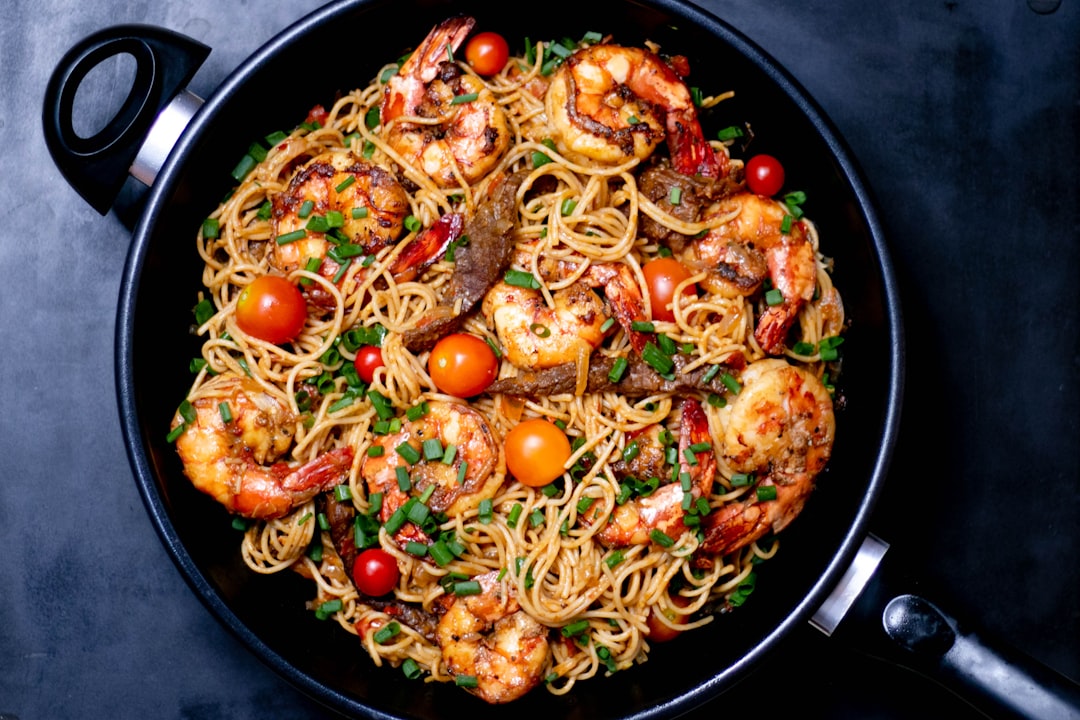
Photo by Olayinka Babalola on Unsplash
My grandmother used to whisper "MSG" like it was a curse word, the same way she'd mention her neighbor's divorce. She'd read the ingredients on a packet of instant ramen, spot those three letters, and shake her head with the certainty of someone who'd read a forwarded email from a cousin's friend who "worked in food science." For decades, I believed her. I avoided MSG like it was actually poisonous, ordered from restaurants that bragged about being "MSG-free," and felt vaguely virtuous about it.
Then I started cooking seriously. And everything changed.
The Origin Story of a Perfect Scapegoat
MSG didn't always carry this stigma. In 1908, Kikunae Ikeda, a Japanese chemist, isolated glutamate from kombu seaweed broth and called the taste "umami"—the fifth taste alongside sweet, salty, sour, and bitter. It was a genuine scientific breakthrough. Ajinomoto, the company that commercialized MSG, spent decades helping home cooks across Asia create more delicious food without any controversy whatsoever.
Then came 1968.
A doctor named Robert Ho Man Kwok ate at a Chinese restaurant in New Jersey and experienced some mild symptoms—a headache, numbness, heart palpitations. He wrote a letter to the New England Journal of Medicine blaming the food and specifically mentioning MSG. The letter sparked what became known as "Chinese Restaurant Syndrome," a condition that would haunt MSG's reputation for the next fifty years.
Here's the problem: it was never properly proven. Subsequent scientific studies found that when people didn't know they were consuming MSG, they experienced no symptoms. When they knew, they often reported symptoms matching whatever they'd read online. The FDA investigated thoroughly. The National Institutes of Health investigated. Independent researchers around the world investigated. None of them found credible evidence that MSG causes harm in normal amounts.
But the damage was done. MSG became a bogeyman, especially in Western cuisine. Chinese restaurants started advertising "No MSG!" like it was a health certification. Home cooks avoided it. Meanwhile, chefs were quietly adding umami-rich ingredients—Parmesan cheese, tomato paste, soy sauce, fish sauce, mushrooms—to create that same savory depth. They just didn't call it MSG.
Why Your Favorite Restaurants Have Been Tricking You
The irony is hilarious once you see it. That fancy farm-to-table restaurant bragging about using "no additives" and natural ingredients? They're absolutely selling you umami. That Parmesan crust they lovingly explain is "aged to concentrate the natural flavors"? Concentrated glutamate. The slow-roasted beef stock that took twelve hours? Loaded with glutamates released through the cooking process.
Chef David Chang, who runs the Momofuku empire, has been one of the most vocal defenders of MSG in recent years. He doesn't hide it. In his restaurants, in his cookbooks, in his interviews—he talks openly about using MSG because it works. A 2019 survey of professional chefs found that 72% used MSG regularly, yet many wouldn't mention it on their menus because they knew their customers had been conditioned to fear it.
This is where it gets frustrating. You're paying premium prices for the expertise of professional cooks while simultaneously preventing them from using one of their most effective tools. It's like hiring a carpenter and telling him he can't use screws.
The numbers are genuinely staggering when you look at how much umami the average person already consumes. A single large tomato contains about 150 mg of free glutamate. A serving of Parmigiano-Reggiano has around 1,200 mg. An ounce of aged cheddar has about 500 mg. A bowl of mushroom soup? Could be anywhere from 600-1,200 mg depending on the recipe. The FDA's general consensus is that a "safe" daily amount is up to 120 mg per kilogram of body weight. A 150-pound person can safely consume about 8,000 mg. Most of us are nowhere near that.
How MSG Actually Works (The Science Isn't Scary)
Glutamate is an amino acid that naturally occurs in your body. It's literally in your muscles, your brain, your organs. Your body produces and uses glutamate constantly for basic functioning. When you consume MSG, your digestive system breaks it down like any other food, and it enters your bloodstream as glutamate—chemically identical to the glutamate that was already there.
The reason chefs obsess over umami is because humans evolved to crave it. Glutamate signals protein content in food, which is why we find it satisfying. A mother's breast milk is rich in free glutamate. We're literally programmed to seek it out. MSG simply amplifies a signal our taste buds already recognize—it makes food taste more like food, more like the savory richness of a well-made stock or aged cheese.
Consider trying this experiment at home. Make two versions of a simple dish—maybe a basic tomato sauce or a beef soup. Make one traditionally. Make the other identical except add 1/4 teaspoon of MSG per serving. The MSG version will taste noticeably richer, more satisfying, deeper. It won't taste fake or artificial unless you've convinced yourself it will. It just tastes better.
Rehabilitating Your Kitchen (Practically Speaking)
If you're ready to actually use MSG, start small. You can buy it online or increasingly at regular grocery stores under the brand name "Accent" or just as pure MSG. You don't need much—maybe 1/4 teaspoon per pot of soup or sauce. Add it to your stocks, your stews, your braised meats. Add it to that cast iron skillet where you're cooking your vegetables and proteins (and if you don't have one, here's why your grandmother's cast iron is worth more than your KitchenAid).
The real trick is subtlety. You're not trying to make food taste "MSG-y"—that's not a taste. You're trying to enhance the flavors that are already there. It's like salt, but for savory depth. Use it thoughtfully and no one will say "wow, what's that taste?" They'll just say the food is delicious.
Your grandmother was wrong about this one. And that's okay. We were all wrong about it together. The good news? Now you can cook better.
Comments (0)
No comments yet. Be the first to share your thoughts!
Sign in to join the conversation.