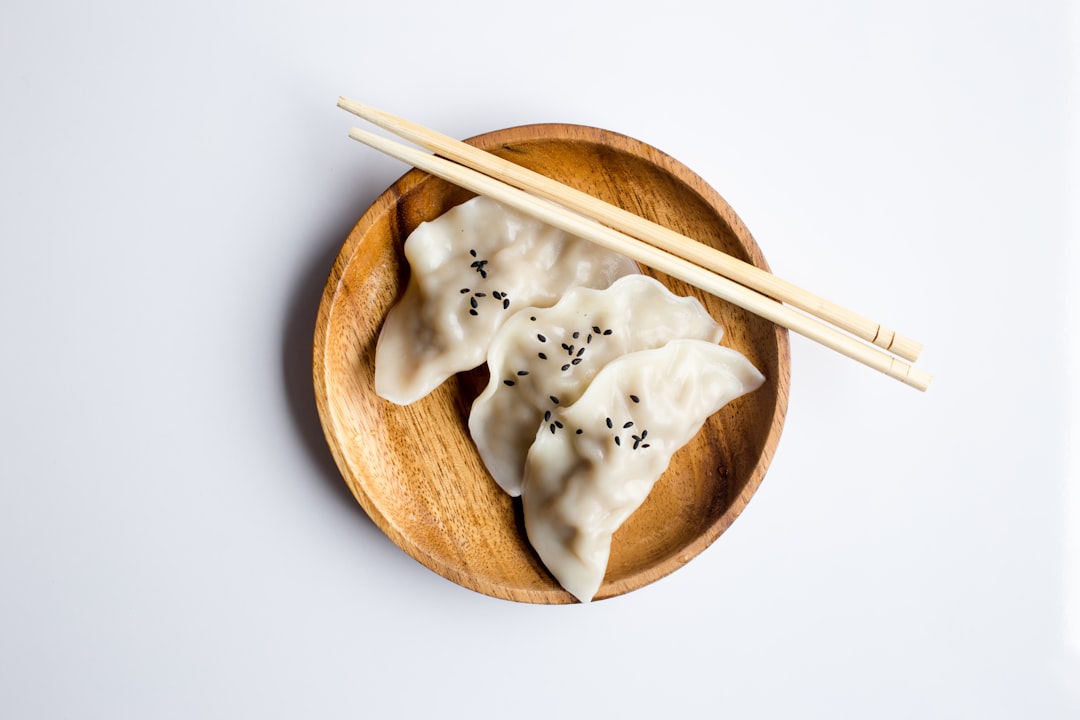
Photo by charlesdeluvio on Unsplash
It was 1968 when Robert Ho Man Kwok, a Chinese-American physician, published a letter to the New England Journal of Medicine describing a strange cluster of symptoms he'd experienced after eating at Chinese restaurants: numbness, heart palpitations, weakness. He didn't identify the culprit, but he mentioned that monosodium glutamate—MSG—seemed like a likely suspect. Within months, "Chinese Restaurant Syndrome" became part of the popular lexicon, and a half-century of misconception was born.
Here's the thing nobody wants to talk about: that letter was the scientific equivalent of a shrug. Kwok didn't actually prove anything. He just threw out a hypothesis. Yet it stuck around like a food stain on a white shirt, because it fit perfectly into existing stereotypes about Asian food being somehow dangerous, artificial, less wholesome than "real" Western cooking.
The Science We Ignored
Fast forward to today, and we have mountains of peer-reviewed research showing that MSG is perfectly safe. The FDA classified it as "generally recognized as safe" (GRAS) in 1959—before the Kwok letter even existed. The American Chemical Society, the World Health Organization, and virtually every legitimate scientific body have confirmed this. Yet walk into almost any American grocery store, and you'll see products proudly labeled "No MSG Added" as though they're warning you they've excluded a neurotoxin.
The irony? Your body produces glutamate naturally. Parmesan cheese contains about 1200 mg of free glutamate per 100 grams. Tomatoes have around 140 mg per 100 grams. Chicken broth? Roughly 380 mg per cup. Nobody's panicking about those, because they don't carry the baggage of being associated with "foreign" food.
MSG is literally just the sodium salt of glutamate, one of the most common amino acids in nature. When you eat protein—any protein—your digestive system breaks it down into amino acids, including glutamate. Your taste buds have specific receptors for glutamic acid, which is why we call umami the fifth taste. It's the savory, mouth-filling sensation you get from aged cheese, slow-cooked meat, ripe tomatoes, and mushrooms. MSG simply provides that same sensation in concentrated form.
How Racism Became Nutritional "Science"
The real story here is less about chemistry and more about how fear, xenophobia, and lazy journalism created a scientific urban legend that refused to die. In the late 1960s and 1970s, Chinese restaurants were exploding in popularity across America. White Americans were eating Chinese food in unprecedented numbers, and there was anxiety about what this meant. Was it authentic? Was it sanitary? And crucially: was it safe?
Food writer and historian Jennifer 8. Lee has documented how MSG became a convenient scapegoat for these anxieties. It was foreign, it was chemical, it had an intimidating name, and—most importantly—it was associated with Asian restaurants. Suddenly, Chinese food went from "exotic and exciting" to "exotic and potentially dangerous." The scientific community, whether intentionally or through sheer laziness, allowed this narrative to persist.
Dozens of controlled studies have attempted to prove MSG causes adverse reactions. Researchers have given people MSG in blind taste tests, comparing it against placebos. What they've found, consistently, is that MSG doesn't cause the symptoms Kwok described any more often than a placebo does. In 2021, a systematic review published in the journal Nutrients concluded that there's no credible evidence linking MSG to adverse health effects in the general population.
The Culinary Reality Check
Meanwhile, professional chefs have never stopped using MSG. French chefs use it. Italian chefs use it. High-end restaurants around the world rely on it because it amplifies savory flavors in a way that's impossible to replicate without more salt, fat, or cooking time. The difference is they don't label it; they just call it cooking.
Interestingly, the pushback against MSG is almost exclusively an American phenomenon. Japan uses MSG casually and abundantly. Korea uses it constantly. Southeast Asian cuisines lean on it heavily. These countries have no epidemics of mystery illnesses caused by the ingredient. Instead, they just have delicious food.
If you want to understand why this myth persists so stubbornly, consider how food marketing actually works. If you can label your product as "MSG-free" or "No Added MSG," you can imply that competitors' products are somehow inferior or risky. It's fearmongering disguised as consumer protection. And it's been remarkably effective.
What Actually Happens When You Eat MSG
Here's the biochemistry: when you consume MSG, your digestive system breaks it down just like it does any other amino acid. Some glutamate enters your bloodstream, some is metabolized locally. Your body then uses that glutamate for various functions—it's an important neurotransmitter, sure, but it's not doing anything sinister. The idea that MSG can cause some special kind of brain damage has no scientific basis whatsoever.
The people who report feeling ill after eating MSG-containing foods? That's likely a nocebo effect—the opposite of a placebo. When you believe something will make you sick, your body can actually produce those symptoms through stress and expectation alone. It's a real phenomenon, but it's not the MSG causing it; it's your brain.
For a deeper look at how traditional knowledge can guide modern cooking, check out our article on what your grandmother knew about fermentation and flavor—because understanding the science of taste means appreciating both old wisdom and new discoveries.
The Path Forward
So what now? Start using MSG if you want better-tasting food. Add a quarter teaspoon to your next pot of soup or stew. Sprinkle it on roasted vegetables. Use it to amplify the savory notes in sauces. It will make your food taste better because that's literally what umami does—it enhances savory flavors.
Or don't. Your choice. But make it an informed choice, not one based on something a doctor casually mentioned in 1968 without any real evidence. The scientific consensus is clear: MSG is safe. The myth persists because it's convenient, because it plays into existing fears, and because nobody in marketing wants to tell you that the "natural" food you're eating has been engineered to trigger your umami receptors just as much as a pinch of MSG would.
Next time someone warns you about MSG at a restaurant, smile and enjoy your food. Your body will thank you for it.
Comments (0)
No comments yet. Be the first to share your thoughts!
Sign in to join the conversation.