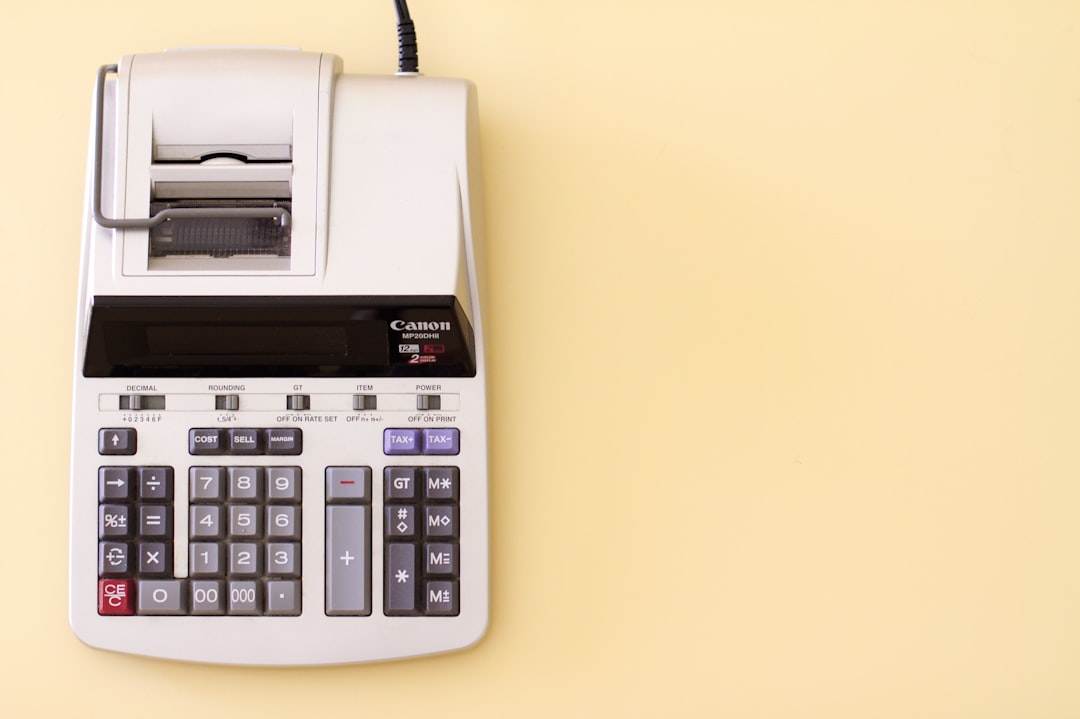
Photo by StellrWeb on Unsplash
Sarah made $47,000 from her freelance design work last year. She felt proud, energized, maybe even unstoppable. What she didn't realize was that she'd created a financial liability that would cost her roughly $380,000 by retirement.
The problem wasn't the money itself. It was what she did—or rather, didn't do—with it.
The Side Hustle Illusion
There's something intoxicating about side income. Unlike your salary, which gets automatically deposited and already feels "assigned" to bills and obligations, side hustle money feels like bonus wealth. Discretionary. Yours in a way that regular paychecks never feel.
This psychological trick is exactly why side hustles often fail to move the needle on actual wealth building. Research from the Bureau of Labor Statistics shows that 27% of Americans have some form of side gig, yet only 8% of them increase their retirement contributions when their side income kicks in. They're essentially treating the extra cash as consumption money rather than wealth-building capital.
Sarah's case is textbook. She earned $47,000 but spent $41,000 of it on things that disappeared: nicer dinners, a vacation to Portugal, a renovation of her kitchen. The remaining $6,000 went into a savings account earning 0.01% interest. Meanwhile, she was contributing the same amount to her 401(k) as she had before—$7,500 annually, the bare minimum to get her employer match.
The Tax Efficiency Trap
Here's where side hustlers really stumble, and it's genuinely easy to miss if you're not paying attention.
When you earn W-2 income from an employer, taxes are automatically deducted. You see the hit directly on your paycheck. This painful visibility makes you acutely aware of your tax burden. You might even get a refund and feel like you "won" something.
Side hustle income? It's a completely different animal. You receive the full amount, which triggers what behavioral economists call the "endowment effect." Your brain catalogues that $47,000 as money you own, not money partially owned by the IRS.
But here's the reality: if Sarah's side income puts her in the 24% federal tax bracket, plus state taxes, she's looking at closer to 30-35% going to taxes. She should have set aside roughly $14,000-$16,000 immediately. Instead, she spent freely and will face a surprise tax bill come April.
Even more importantly, she missed an opportunity. That $47,000 in self-employment income qualifies her for something far more valuable: the ability to contribute to a Solo 401(k) or SEP IRA. Sarah could have stashed an additional $20,000+ into tax-advantaged retirement accounts, but she didn't know about it. And frankly, most side hustlers don't.
The Compounding Catastrophe
Let's do the math on what Sarah actually lost.
If Sarah had invested that extra $41,000 annually (the amount she spent) into a diversified portfolio earning 7% average annual returns over 25 years until retirement, she'd have approximately $2.8 million. Instead, she has $0. The dinners are forgotten. The Portugal trip is a blurry memory. The renovated kitchen will need renovating again.
Now compound that with the missed tax optimization. If she'd contributed an additional $20,000 annually to tax-advantaged retirement accounts instead of spending it, at 7% returns over 25 years, that's another $1.4 million.
Total cost of her "bonus income approach": roughly $4.2 million in retirement wealth.
The scary part? Sarah isn't an outlier. She's the norm. Most side hustlers have no formal plan for their extra income. They certainly don't have a tax strategy. And they definitely don't run the numbers on what that casual spending is actually costing them.
The Fix: Three Rules for Side Hustle Money
If you're earning side income, you need a system. Not a suggestion. A system.
Rule One: Separate Accounts. Open a dedicated bank account for all side income. Don't mix it with your primary checking. This simple friction point forces you to confront the money's existence. Many people use online banks with slightly higher savings rates, creating automatic psychological distance between side hustle earnings and spending money.
Rule Two: Automatic Tax Withholding. Calculate your effective tax rate (likely 30-35%), then set up an automatic transfer of that percentage to a separate savings account each time you receive payment. Treat it like it doesn't exist. This prevents the April surprise and creates a clear mental accounting system.
Rule Three: Funnel the Remainder to Retirement. After taxes are set aside, the rest should go directly into tax-advantaged accounts. For self-employed income, max out a Solo 401(k) first (up to $69,000 in 2024), then a SEP IRA or Solo Roth 401(k). Only after those accounts are maxed should any side income go to taxable investments or—rarely—discretionary spending.
This isn't deprivation. It's strategy. If your side hustle truly nets $6,000 after taxes and maximum retirement contributions, then yes, enjoy $2,000 of it guilt-free. You've already handled the wealth-building part.
What Changes When You Get This Right
The math is staggering. Take someone earning $30,000 annually from side work. Using the three-rule system:
- $9,000 goes to taxes (30% rate)
- $15,000 goes to retirement accounts
- $6,000 is actually available for discretionary use
Over 25 years at 7% returns, that $15,000 annual retirement contribution becomes $1.4 million. The person who doesn't optimize that same $30,000? They'll have spent roughly $70,000 of it and saved $5,000 in a regular savings account earning nothing.
The difference in retirement lifestyle isn't marginal. It's generational.
If you're already deep into a side hustle without a system, it's not too late. Start today. Open the separate accounts. Calculate your tax liability for this year immediately. Adjust your tax withholding if you're behind. And going forward, treat side income like the wealth-building opportunity it actually is, rather than the spending opportunity it feels like.
Your future self will have a very strong opinion about the choice you make right now.
For more insights on optimizing your income across multiple sources, check out how early retirees strategically manage their income streams to minimize tax burden and maximize wealth accumulation.
Comments (0)
No comments yet. Be the first to share your thoughts!
Sign in to join the conversation.