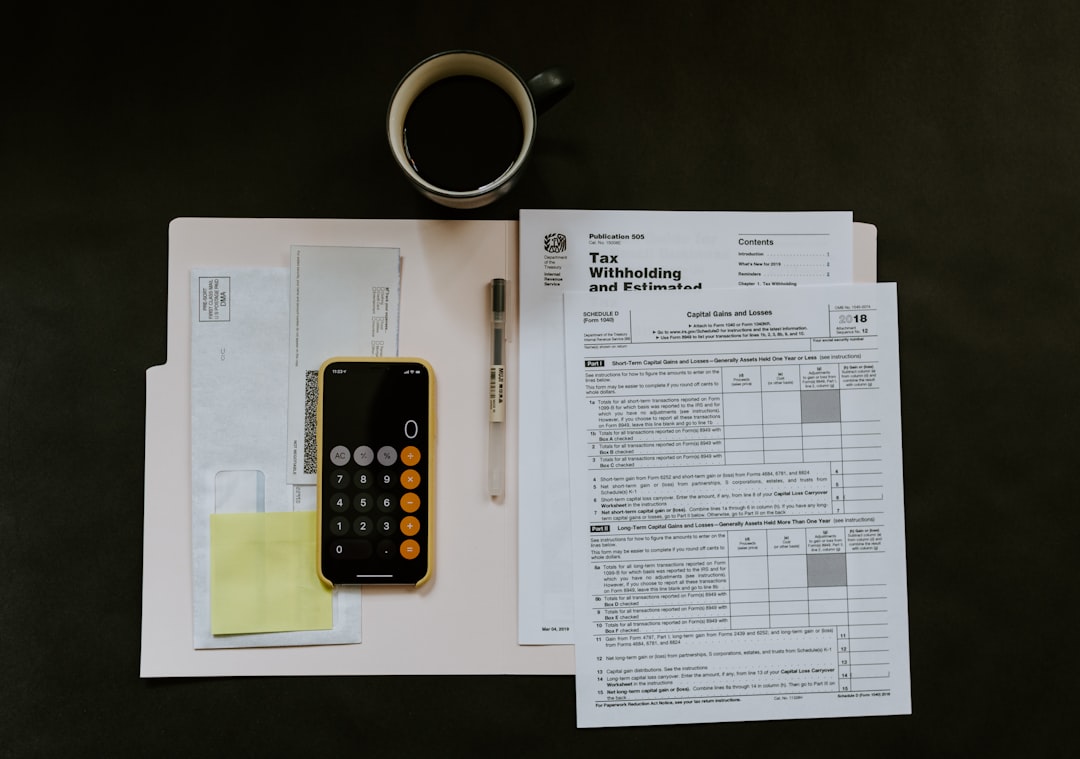
Photo by Kelly Sikkema on Unsplash
Sarah quit her job three years ago to pursue her passion for freelance writing. She was making decent money—sometimes $4,000 a month, occasionally more. She felt free, independent, genuinely excited about her work. Then one Tuesday afternoon, she sat down with a spreadsheet and had a moment of brutal honesty. After accounting for everything, her take-home wasn't $4,000. It was barely $2,100.
She wasn't alone in this discovery. This is the side hustle paradox that millions of entrepreneurs stumble into, usually too late: the business that looks profitable on paper is hemorrhaging money in ways that feel invisible until you actually measure them.
The Cost Categories Nobody Counts
Most people starting a side business focus on one metric: revenue. Did I make $5,000 this month? Yes? Success. Except revenue is just the starting point, not the finish line. The real question is what you get to keep, and that number is usually shockingly smaller.
Let's start with the obvious ones. Software subscriptions. Sarah was paying for project management tools ($29/month), accounting software ($40/month), a scheduling platform ($15/month), and email marketing ($65/month). That's $1,176 annually before we've even counted her website hosting ($15/month) or the business phone line ($25/month) she thought was essential. We're already at $1,656 a year, or about 5% of annual revenue, just for the digital infrastructure.
Then came the less-obvious costs. Yes, she had a dedicated workspace, and she wrote it off as a home office deduction. But she also had the upgraded internet plan ($89/month vs. standard), the better lighting that came with electrical work ($400 upfront), and the ergonomic chair that her back desperately needed ($350). Healthcare costs went up because she lost employer coverage—an additional $3,800 annually for a plan that's worse than what her previous company offered.
Don't forget taxes. Self-employment tax alone is 15.3% of your net income. If you're making $50,000 from your side hustle, you're sending the IRS approximately $7,650 that you need to set aside quarterly. Many people don't account for this until April, then panic.
The Opportunity Cost Nobody Mentions
Here's where most side hustle analyses completely fall apart: they ignore what economists call "opportunity cost." This is the value of what you're giving up by spending time on your side business instead of something else.
If you're working 20 hours a week on your side gig and netting $2,100 monthly, that's about $24.50 per hour. Could you work overtime at your day job for more? Could you pick up a shift somewhere that pays better? Could you spend that time developing skills that would lead to a $10,000 annual raise at your current job? These aren't hypothetical questions—they're the real trade-offs you're making.
This becomes even sharper when you consider stress and recovery time. Working 40 hours at your day job plus 20 hours on your side hustle isn't 60 hours of productivity. It's often 60+ hours of grind followed by a weekend where you're too exhausted to do anything except recover. That's not just a financial cost—it's a life cost. But it absolutely has financial implications when you factor in reduced decision-making ability, worse food choices due to time pressure, and higher stress-related health costs.
The Numbers Everyone Gets Wrong
Let's calculate what Sarah's side hustle actually paid, in real dollars-per-hour terms. Monthly gross revenue: $3,500 (her average). Monthly software costs: $138. Monthly utilities increase and internet: $104. Portion of health insurance increase: $317. Monthly tax set-aside: $432. That brings us to actual monthly profit: $2,409. Over a year, that's $28,908.
She was working 20 hours weekly. That's roughly 1,040 hours annually. So her actual hourly rate was $27.79 per hour. Not bad, right? Except she hadn't accounted for time spent invoicing, chasing late payments, updating her website, learning new software, or dealing with the one client who always had "just one more small revision." Once she included administrative work, her real hourly rate dropped to $21.34.
Her day job, which she sometimes resented, paid her $35 an hour base, plus benefits worth about $15,000 annually (healthcare, retirement, paid time off). When you include those benefits divided by her hours worked, her "real" hourly rate at her main job was closer to $42 per hour. She was working 20 additional hours per week at significantly lower pay while simultaneously degrading her performance at the higher-paying job.
This is why small recurring expenses are so dangerous—they compound invisibly. The same principle applies to side hustles. The seemingly high revenue gets eroded by dozens of small costs plus the invisible opportunity cost of your time.
When Side Hustles Actually Make Sense
This isn't an argument that side hustles are universally bad. Some genuinely work. The difference is usually in the math. A side hustle makes financial sense when:
It pays significantly more than your primary income's hourly rate (accounting for benefits). It has a clear pathway to scaling without proportionally scaling your hours (passive income, productized services, affiliate revenue). It requires minimal recurring expenses or uses tools you already pay for. It has genuine learning value that increases your primary income capacity.
Sarah ultimately made a different choice. She negotiated a raise at her day job (using her freelance rate as leverage), kept a small client list for genuine passion projects, and accepted that "following her dreams" was costing her money she didn't actually have to lose.
The uncomfortable truth is that most side hustles are financially inefficient. They feel productive and virtuous, but the math rarely supports them. Before you commit the next thousand hours to yours, sit down and actually calculate what you're making per hour, what you're giving up, and what you're spending. The real number might surprise you—and not in the way you hope.
Comments (0)
No comments yet. Be the first to share your thoughts!
Sign in to join the conversation.