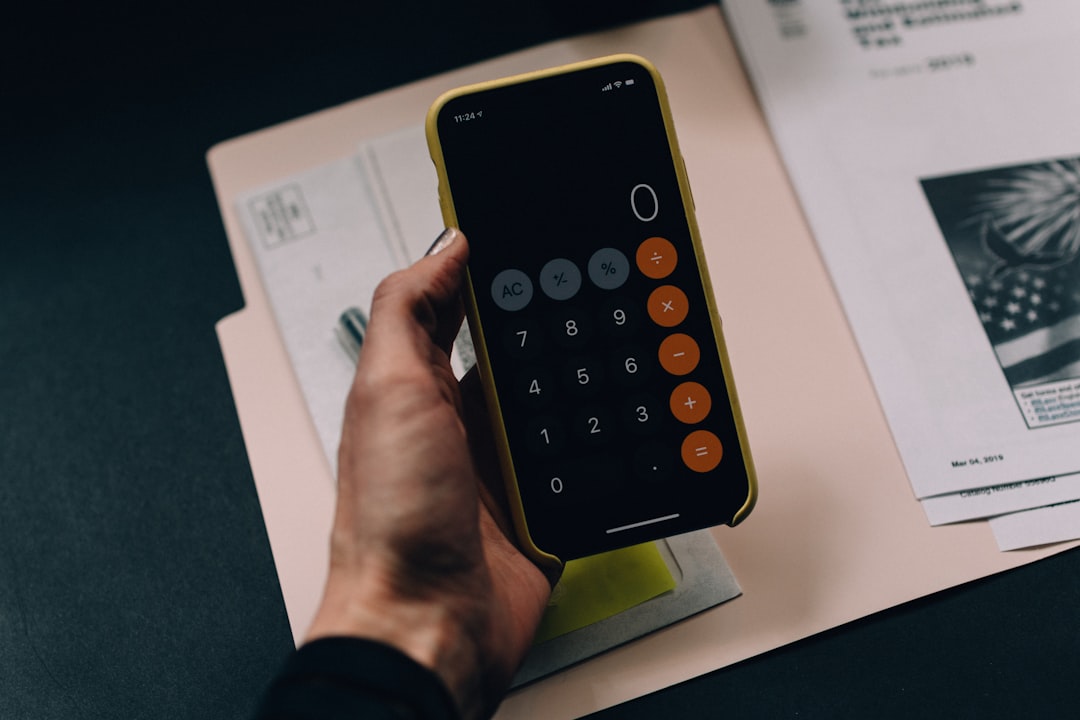
Photo by Kelly Sikkema on Unsplash
Last year, my friend Marcus spent six months building a freelance writing business on top of his full-time job. He was thrilled when he finally hit $200 per month in consistent income. "I'm making an extra $2,400 a year!" he announced proudly. What he hadn't calculated was the actual cost of that income. When we sat down with a spreadsheet, the numbers told a very different story.
This is the conversation nobody has about side hustles. We celebrate the gross revenue—the headline number that makes us feel entrepreneurial and ambitious. But the net reality? That's where things get messy, and it's where most people stop thinking clearly about their finances.
The Hidden Tax Bite That Destroys Your Math
Let's start with what actually happened to Marcus's $200 per month. As a freelancer, he's responsible for self-employment taxes. That's 15.3% right off the top—Social Security and Medicare contributions that employees normally split with their employers. On $2,400 annually, that's $367 vanishing before he even files taxes.
But wait, there's more. Because his household income increased, he might lose certain tax credits. Maybe he was getting a child tax credit that phases out. Perhaps he qualifies for fewer education-related deductions. In Marcus's case, his actual federal tax liability increased by another $280 on that $2,400 in side income. So now we're down to roughly $1,750. That's a 27% effective tax rate on side hustle income—significantly higher than many people anticipate.
The real punch in the gut? Marcus was thinking about this as pure profit. He wasn't setting anything aside for taxes. Come April, he either had to write a check to the IRS or scramble to find the money.
The Time Calculation That Changes Everything
Marcus estimated he spent 8-10 hours per week building his writing business. Some weeks were lighter—maybe 5 hours. Other weeks, when he was chasing down new clients or revising work, it stretched to 15. Let's call it an average of 9 hours weekly.
That's 468 hours per year. At $1,750 in actual take-home income after taxes, he was earning roughly $3.74 per hour.
His regular job pays $28 per hour. If he'd worked those 468 hours at his day job instead—assuming his employer permitted it, which they didn't—he'd have earned $13,104. Even accounting for additional taxes on that income, he'd come out dramatically ahead.
But here's where it gets even more insidious: he wasn't actually working 468 hours productively. Side hustles involve a tremendous amount of non-billable time. He spent hours learning WordPress. He experimented with different pitching strategies. He read blogs about SEO and content marketing. He attended a online course that promised to "unlock" freelance writing secrets (spoiler: it didn't). Maybe 60% of his effort actually generated income.
Now we're looking at $6.23 per hour on billable work, with a massive chunk of his personal time consumed.
The Real Opportunity Cost Nobody Mentions
This is the part that really matters, and it's the part most people avoid thinking about. When Marcus was writing client articles on Sunday nights, he wasn't sleeping enough before his Monday morning commute. When he was managing email pitches during his lunch break, he was eating a rushed meal at his desk. When he was thinking about his freelance strategy while playing with his kids, he wasn't actually present.
Those aren't just "lifestyle" costs. They have real financial consequences. His reduced sleep quality eventually caught up with him—he got sick for a week, missed some work, and lost actual income from his primary job. His rushed lunches and stress probably contributed to the $3,600 he spent on health issues that year that he might not have incurred otherwise.
More importantly, he wasn't learning new skills at his day job that could have earned him a promotion. His manager noticed his energy and focus weren't what they used to be. That performance review didn't include the raise he'd been counting on. There's another $2,000 annually, gone.
The combined cost of his side hustle—the taxes, the low hourly rate, the health consequences, and the opportunity cost at his primary job—totaled roughly $800. His net benefit from that $200/month side income? Negative $600 annually.
When Side Hustles Actually Make Sense
This isn't an argument against all side income. Some situations genuinely warrant the effort. If you're building something with genuine scalability—something that might eventually generate passive income or lead to a business that doesn't require your ongoing hourly effort—the math changes. If you're acquiring skills that improve your primary career, the calculation shifts. If you have genuinely abundant time and energy that wouldn't otherwise be productively used, it might pencil out.
But most side hustles don't fit these categories. Most are just low-margin, time-intensive activities that feel productive because they generate an income number on a spreadsheet.
If you're serious about increasing your income, consider whether building a scalable income stream is possible, or whether your time might be better invested in your primary career, your education, or something that doesn't require your ongoing personal effort.
The hardest financial lesson is that just because something generates money doesn't mean it's worth your time. Marcus eventually stepped back from his freelance writing. Instead, he focused on getting a promotion at his day job and actually being present with his family on evenings and weekends. His effective hourly rate? Back to $28, without the tax complications or opportunity costs.
The $200 per month that felt like a victory turned out to be expensive. But recognizing that cost? That was the real win.
Comments (0)
No comments yet. Be the first to share your thoughts!
Sign in to join the conversation.