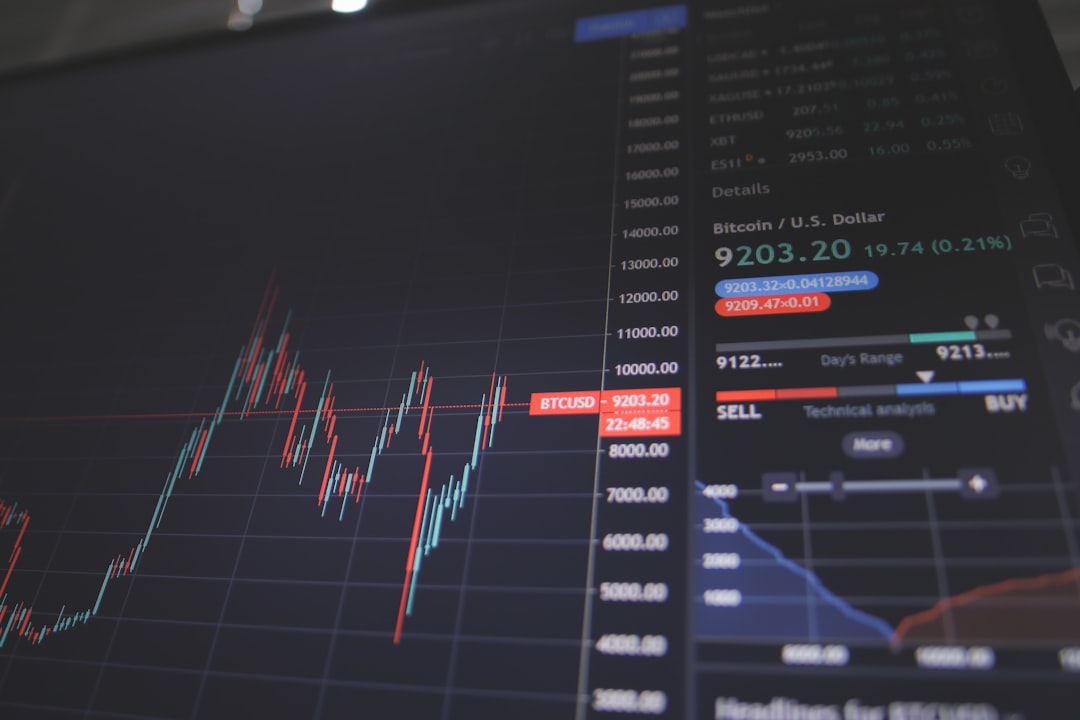
Photo by Nick Chong on Unsplash
Sarah downloaded three investment apps during her lunch break. Acorns would round up her coffee purchases. Another platform let her buy fractional shares of Tesla for $2. A third gamified the stock market with cartoon graphics. Within six months, she'd invested roughly $800 across these platforms. When she calculated her actual returns, subtracting fees and tracking expenses, she'd netted about $12. She'd spent more time managing accounts than she would have earned back.
She's not alone. Micro-investing apps have exploded in popularity over the last five years, attracting millions of users with the seductive promise that small amounts compound into real wealth. But what looks simple on a smartphone screen obscures mathematical realities that should concern anyone serious about building actual financial security.
The Fractional Share Fantasy
The technology is undeniably slick. Before 2020, you needed around $100 to buy a single share of some stocks. Fractional investing removed that barrier. Now you can own 0.015 shares of Berkshire Hathaway for $10. Revolutionary, right?
Not quite. The apps have successfully solved a problem that wasn't actually preventing wealth-building. The real obstacle to investing for most people isn't access to fractional shares. It's discipline, capital accumulation, and understanding basic financial principles. But the apps market themselves as solutions to access, not behavior.
Consider the mathematics. If you invest $5 per week through a micro-investing app charging a 1% annual fee, after 30 years at 8% market returns, you'll have approximately $11,200. Without the fee, that same investment grows to roughly $11,500. The fee cost you $300—pocket change. But here's what actually matters: you contributed only $7,800 of your own money. The market added roughly $3,700. That's a 47% return on your capital. Strong, but not because of the app. Any index fund would deliver the same result.
The app's real value proposition crumbles when you examine what it actually changed about your behavior. Would you have invested that $5 per week without the round-up feature? If yes, using a traditional brokerage with $0 trading fees would have saved you money. If no, then the app sold you something important: a behavioral nudge. That's fine, and possibly worth paying for, but it's not the same as solving an access problem.
The Psychological Engineering You're Paying For
Micro-investing apps are fundamentally behavioral products dressed in financial clothing. They use game theory mechanics—streak counters, achievement badges, social sharing, notifications—that feel delightfully innocuous while steering your money into their ecosystem.
Acorns' round-up feature is a masterclass in psychological manipulation. You don't feel like you're investing. You're just… rounding. The $0.63 from your coffee purchase seems negligible. Insignificant. Painless. Except multiplied across thousands of transactions, you're now automatically channeling money into an investment account with a 0.25% annual fee. Over 40 years, that 0.25% compounds into roughly 10% of your total returns. For the privilege of not thinking about your investments, you've paid a real financial price.
The apps also create an illusion of control that might be worse than helpful. You can see your portfolio constantly. You receive notifications about market movements. You can move money between accounts with three taps. This accessibility feels empowering. Research shows it often makes people trade more frequently, incurring more costs and chasing performance they would have beaten by staying still.
Where Fees Hide Like Dust Under a Rug
Most micro-investing apps are transparent about their direct fees. They'll show you the 0.25% annual charge right in the app. But fees have evolved like bacteria developing antibiotic resistance.
Many of these platforms use robo-advisors that rebalance your portfolio quarterly, which triggers tiny internal costs you never see separately. They charge for premium features you might accidentally enable. They make money on cash holdings in your account—your uninvested dollars earn near-zero interest while the company invests that cash float at market rates. Some platforms accept payment for order flow from market makers, meaning the execution of your tiny trades has invisible costs built into the bid-ask spread.
Add it all together, and a 0.25% fee advertised on the main screen might actually cost you 0.40% to 0.50% annually once you account for the hidden fees. That's not unreasonable for active management, but it's absolutely devastating when compared against a passive index fund charging 0.03%.
The Real Question: What Actually Builds Wealth
Micro-investing apps succeed brilliantly at one thing: converting non-investors into investors. If you genuinely wouldn't have invested without the round-up feature, that's valuable. Getting started is half the battle. But starting small and staying engaged with fees eating your returns is worse than starting slowly with low-cost index funds.
Wealth compounds from three variables: how much you invest, how consistently you invest it, and how much it costs to invest. Apps excel at addressing variable two. They don't materially help with variables one and three. You still need to accumulate capital—no app changes that reality. And they actively worsen variable three through fees.
If you're genuinely building long-term wealth, you'll eventually need to graduate from micro-investing. You'll need to understand asset allocation, tax-loss harvesting, and rebalancing. You'll need accounts that don't gamify your portfolio or remind you to check your balance. You'll need low-cost index funds more than you need gamification.
The micro-investing app isn't evil. It's just limited. It solves the problem of initial behavioral resistance, not the problem of wealth-building. For someone starting from zero, it's a reasonable ramp. But staying there, paying fees to play with fractional shares, is like paying a gym membership to use the treadmill once monthly. Eventually, you need to commit or move on.
If you're serious about investing, these apps can serve as training wheels. But understand what you're training toward: a transition to lower-cost vehicles that scale with your actual wealth as it builds. The five-dollar investments matter less than the knowledge that compound growth requires time, consistency, and ruthless cost management.
Comments (0)
No comments yet. Be the first to share your thoughts!
Sign in to join the conversation.