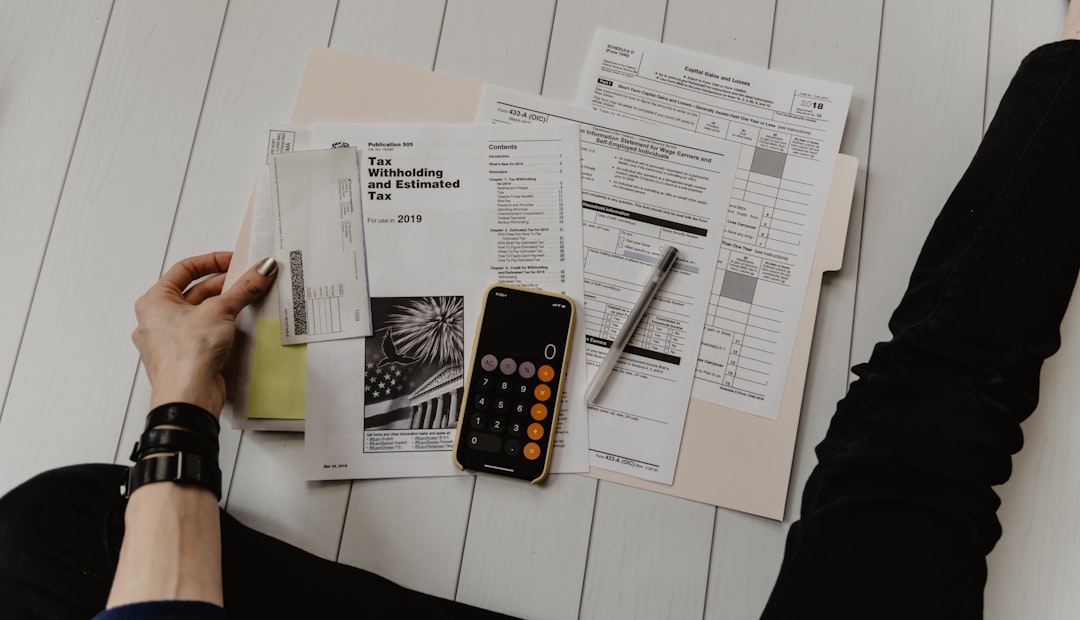
Photo by Kelly Sikkema on Unsplash
Last month, I discovered something that made my stomach drop. I'd been paying $12 a month for the privilege of keeping my money in a checking account that earned 0.01% interest. That's right: one-hundredth of one percent. Meanwhile, the bank was charging me a monthly maintenance fee just for the honor of letting them hold my cash.
When I finally sat down with a calculator, I realized I'd been throwing away roughly $144 per year on that single account alone. Multiply that across millions of customers, and you understand why banks are some of the most profitable institutions on the planet.
The really insidious part? This isn't fraud. It's not technically illegal. It's just the way the system works—and most people never notice because these small amounts seem insignificant. But here's the uncomfortable truth: this "invisible tax" is one of the biggest wealth killers for ordinary people, and it compounds over decades.
The Architecture of Banking Fees: A System Designed to Drain Small Accounts
When you look at a typical checking account from a major bank, the fee structure looks something like this: $12 monthly maintenance fee, $35 per overdraft, $2.50 per ATM transaction outside their network, and $25 for a wire transfer. Then there's the real kicker—they pay you virtually nothing on your balance.
The Federal Reserve has been keeping interest rates historically low for years. Even as rates have climbed recently, most traditional banks still offer checking account rates under 0.1%. Meanwhile, they're lending out your money at 5%, 6%, or higher. They pocket the difference—the "spread," as financial professionals call it.
JPMorgan Chase, one of America's largest banks, collected over $2 billion in overdraft fees in a single year. Bank of America brought in roughly $1.5 billion. These numbers aren't coming from corporate customers with sophisticated financial teams. They're coming from regular people like you and me who occasionally miscalculated a balance or forgot about a pending charge.
The system is deliberately confusing. Banks make their money on complexity. The more transactions you make, the more fees they collect. The less you understand your account, the more likely you are to trigger penalties.
The High-Yield Savings Alternative: Your Money Can Actually Grow
Here's what changed my financial life: discovering high-yield savings accounts. Not as an investment strategy, but as a no-brainer replacement for traditional checking accounts.
Online banks like Marcus, Ally, and Discover have revolutionized what's possible with savings accounts. Right now, you can open an account and earn 4.5% to 5.35% annual percentage yield (APY) with no monthly fees. Zero. Zilch. Nothing.
Let me show you the math because it's staggering. If you keep $10,000 in a traditional bank earning 0.01%, you'll make $1 per year. The same $10,000 in a high-yield savings account earning 5% makes $500 per year. That's not a typo. The difference is $499 annually on a single account.
For someone with $50,000 saved? That's the difference between earning $5 per year and $2,500 per year. Over a decade, you're looking at the difference between $50 in interest and $25,000 in interest. The only thing that changed was where your money sits.
But Wait, There's More: The Overdraft Fee Trap
Banks make money on your mistakes, and overdraft fees are their most profitable mistake—literally. When you spend $1.50 more than you have in your account, the bank charges you $35. That's a 2,333% annual interest rate on that $1.50.
Studies show that the poorest Americans pay disproportionately more in overdraft fees because they live paycheck to paycheck with little buffer. A family earning $30,000 annually might pay $300+ per year in overdraft fees, while a wealthy customer with $100,000 in the account rarely triggers them.
The good news? You have options. Many online banks don't charge overdraft fees at all. If you overspend, they simply decline the transaction. Radical, right?
The Hidden Cost of Convenience: Why Location Matters Less Than You Think
Many people stick with traditional banks because they like having a physical branch nearby. There's something comforting about walking into a building and talking to a human. I get it.
But here's the reality: when was the last time you actually went into your bank branch? Most of us handle everything online or through mobile apps now. The convenience of a physical location isn't worth $144+ per year in fees.
For the rare occasions when you need to deposit cash, most online banks partner with convenience store networks. You can deposit cash at 30,000+ locations across the country. No physical branch necessary.
Making the Switch: A Practical Guide to Reclaiming Your Money
Moving to a high-yield savings account is easier than most people think. Here's the process:
First, open an account at an online bank. The application takes 10 minutes, and they verify your identity electronically. There's no hard credit pull.
Second, set up automatic transfers from your old account. Move your direct deposit to the new bank. Start paying bills from the new account.
Third, close your old account once everything has transferred smoothly. Send a final check to close it out, or let the balance dwindle to zero naturally.
The entire process takes maybe two weeks. And suddenly, you're in the 5% club instead of the 0.01% club.
Now, I know what you're thinking: "What about investment returns? Shouldn't I be putting this money to work in the stock market?" Fair point. But high-yield savings accounts serve a specific purpose—they're for your emergency fund, your short-term savings, and the money you need to access quickly. This money shouldn't be in stocks anyway.
If you're looking to optimize every dollar and eliminate other financial drains, you might also want to examine subscription services that might be silently draining your wealth.
The Bigger Picture: Your Money, Your Rules
The invisible tax of low-yield savings accounts is one of those financial issues that makes you angry once you understand it. Banks have spent decades normalizing the idea that depositors should earn nothing while the banks profit enormously.
You don't have to accept that arrangement anymore. The financial system has changed, and ordinary people finally have access to tools that actually work in their favor. High-yield savings accounts aren't a complex investment strategy or a get-rich-quick scheme. They're just accounts that pay you what your money is actually worth.
The question isn't whether you should switch—it's how much money you've already left on the table by not switching sooner. My answer: $144 per year, and growing.
Comments (0)
No comments yet. Be the first to share your thoughts!
Sign in to join the conversation.