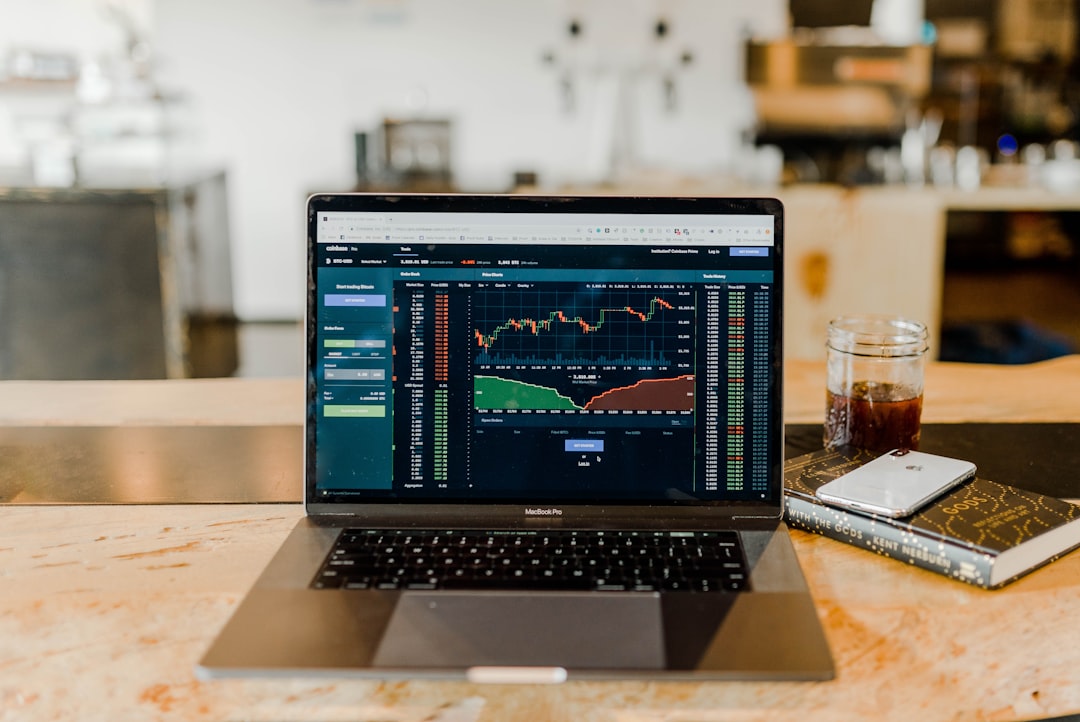
Photo by Austin Distel on Unsplash
Sarah, a 42-year-old accountant from Ohio, has never owned a single bitcoin. She's never day-traded. She doesn't have a Robinhood notification sending her dopamine hits every time a stock moves 2%. Yet her net worth has crossed $1.2 million, and she's on track to retire at 55.
Meanwhile, her neighbor—a software engineer making nearly double her salary—is stressed about his portfolio. He's been chasing hot stocks, watched cryptocurrency investments evaporate, and somehow has less to show for his higher income. The difference between them isn't luck, insider knowledge, or complex financial strategies. It's something far more mundane: boring investing fundamentals that actually work.
The Unsexy Truth About Building Wealth
Let's start with the uncomfortable reality: nobody gets excited talking about index funds at parties. There's no thrill in automatic monthly contributions to a Roth IRA. Nobody writes Medium posts celebrating their 7% annual returns. But this is precisely why boring investing works.
Consider the data. Between 1926 and 2023, the S&P 500 delivered an average annual return of approximately 10.7%. That sounds modest until you run the math over 30 years with compound growth. Someone who invested $500 monthly starting at age 35 would have roughly $890,000 by age 65, assuming consistent market returns and zero active trading.
Now compare that to the average active trader. Studies show that 90% of day traders lose money. The remaining 10% who profit typically make less than if they'd simply invested in index funds and forgotten about it. This isn't new research—it's been consistent across multiple studies over decades. Yet people still believe they'll be the exception.
The psychological trick that boring investments exploit is working in your favor, not against you. When you're not checking your portfolio daily, you don't panic during downturns. You don't sell low and buy high—the investing equivalent of financial self-sabotage. You simply stay the course.
Three Strategies That Quietly Build Wealth
The wealthy people nobody notices share three common practices. None require a business degree, advanced mathematics, or access to exclusive investment opportunities.
Automatic investing is the first pillar. Sarah sets up automatic transfers from her checking account to her investment accounts the same day her paycheck deposits. She doesn't see it. She doesn't think about it. Money moves before she has a chance to spend it. This removes the willpower equation entirely. You're not constantly deciding whether to invest—the decision is already made. Most people drastically underestimate how powerful this is because it feels too simple.
The second strategy involves ruthless fee awareness. Here's something that genuinely infuriates financial advisors: most people don't know what they're paying. A 1% annual fee might sound tiny. It's devastating over time. On a $500,000 portfolio, that's $5,000 annually. Over 30 years, with compound growth, that seemingly small percentage costs you approximately $150,000 to $200,000. Low-cost index funds charge 0.03% to 0.20%. The difference adds up to transformational wealth.
The third principle is time in the market over timing the market. Every financial advisor cites this phrase, yet people still try to time market cycles. Markets have pulled back more than 10% roughly once per year on average. Someone constantly trying to time these pullbacks misses recovery rallies. Missing just the 10 best days in the market over a 20-year period cuts returns roughly in half. The person boring enough to stay invested wins every single time.
The Behavioral Psychology Nobody Discusses
The real reason boring investing works relates to how our brains are wired. We're pattern-seeking creatures who evolved to be alert to immediate threats. Stock market volatility triggers our threat-detection system, even when the threat isn't real. Over a 30-year timeline, market drops are irrelevant. Over a one-day timeline, they feel catastrophic.
Social media amplified this problem exponentially. You see screenshots of someone's 300% gain in some speculative stock, and your brain doesn't calculate probabilities—it just feels envy. You don't see the 10,000 accounts that lost everything on similar bets.
Boring investors benefit from what behavioral economists call "commitment and consistency." Once you've established your investment system, your brain actually works to reinforce it. You become the type of person who invests automatically. Your identity supports the behavior. It becomes easier than stopping would be.
If you're getting serious about building real wealth and want to understand how taxes complicate this further, read our article on side hustle tax mistakes that could cost you hundreds of thousands. Many people build investments intelligently but sabotage themselves through tax inefficiency.
The Compounding Effect: Your Secret Weapon
Albert Einstein allegedly called compound interest the eighth wonder of the world. Whether or not he actually said it, he was right about why it matters.
Here's the actual magic: your money earns returns. Those returns earn returns. This grows exponentially. The longer the timeline, the more dramatic the effect. Someone starting at 25 will see roughly 10x the wealth-building benefit compared to someone starting at 45, even if both invest identically for their remaining working years. Time is the most valuable asset you have.
This is why your teenage self made a financial decision that will echo through your entire life, even though you didn't realize it. Starting early, then staying consistent, breaks the game wide open. A 25-year-old investing $300 monthly in index funds will accumulate more than a 45-year-old investing $1,500 monthly, assuming 30-year timelines.
What Actually Separates the Wealthy From Everyone Else
It's not that wealthy people know something you don't. It's that they're boring in very specific ways. They don't need the excitement of risky investments because they've already won the game through consistency. They care more about the endpoint than the journey. They understand that every dollar invested today becomes five dollars tomorrow if given sufficient time.
This article won't go viral. Nobody will share it because it doesn't promise moonshots or secret hacks. But if you actually implement these strategies—automatic investing, low-cost index funds, and a commitment to stay invested—you'll likely accumulate more wealth than 75% of Americans without ever breaking a sweat or checking your portfolio more than quarterly.
That's the real story nobody wants to hear. The path to wealth is boring. Deliberately, frustratingly boring. And that's exactly why it actually works.
Comments (0)
No comments yet. Be the first to share your thoughts!
Sign in to join the conversation.