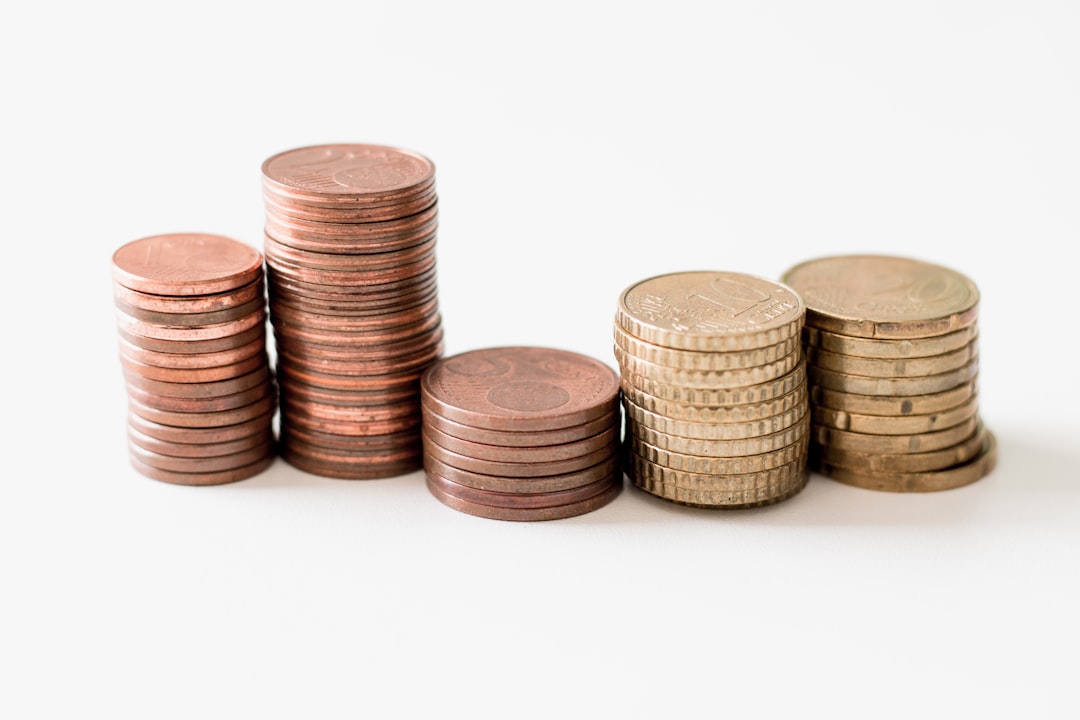
Photo by Ibrahim Rifath on Unsplash
My Uncle Jerry doesn't know what a blockchain is. He's never downloaded a trading app. He can barely figure out Netflix, and his idea of financial excitement is comparing CD rates at different banks. Yet somehow, this 58-year-old tire shop manager has accumulated $1.2 million in investments while his neighbor—a self-proclaimed "active trader" who spends three hours daily analyzing stock charts—has nearly identical net worth despite earning $40,000 more per year.
The difference? Jerry invests in index funds. Boring, predictable, utterly unsexy index funds.
The Underdog Story Nobody Wants to Hear
When Jerry turned 35, he was making $32,000 annually. A financial advisor—honestly, more of a friend offering casual advice over beer—suggested he throw $200 monthly into a total stock market index fund. Nothing fancy. No stock picking. No trying to time the market. Just automatic contributions, year after year, to a fund that tracks the entire U.S. stock market.
That was 1998. The Dot-com bubble was inflating. Everyone was getting rich quick (or so they thought). Jerry's coworkers mocked him for being "boring." Then 2000 came. The bubble burst. Tech stocks plummeted 80% or more. Jerry's index funds dropped too—about 50% overall. He watched his $27,000 investment shrink to $13,500. His coworkers? Many had lost everything and learned a harsh lesson about concentration risk.
But here's the thing: Jerry didn't panic. He kept contributing his $200 monthly. He actually accelerated his investments when prices were low. Over the next 23 years, that boring discipline compounded into something extraordinary.
The Math That Actually Works
Jerry's strategy was almost insultingly simple. He invested in three index funds:
The Portfolio: 60% total U.S. stock market (VTSAX), 30% international developed markets (VTIAX), 10% U.S. bonds (VBTLX). Every single month, $200 went in automatically. When the market crashed, he invested more. When it soared, he invested the same amount anyway.
From 1998 through 2024, the average annual return of a similar portfolio was approximately 9.8% annually. Not 25%. Not 50%. Just steady, boring 9.8%.
Here's what that looks like: $200 per month for 312 months = $62,400 in total contributions. Those contributions became $1.2 million because of compound growth. The difference—roughly $1.14 million—came entirely from earnings on earnings on earnings.
His "active trader" neighbor earned 11.5% annually through careful stock selection. Sounds better, right? Except he spent thousands on trading commissions, paid capital gains taxes constantly through active selling, suffered massive psychological stress during downturns (causing him to sell at exactly the wrong times), and ultimately his superior returns were completely negated by higher fees and taxes.
Why Smart People Keep Failing At This
The psychologist Daniel Kahneman won a Nobel Prize partly for explaining why investors are terrible at investing. We're pattern-seeking creatures. Our brains desperately want to find the edge, the secret, the special insight that gives us an advantage. Buying and holding three index funds doesn't feel smart. It feels lazy.
The evidence, however, is absolutely brutal to active investors. Academic research consistently shows that 80-90% of professional fund managers underperform basic index funds over 15-year periods. When you factor in fees and taxes, it gets worse. Vanguard analyzed their own investors and found that active traders underperformed passive index investors by 1.5% to 4% annually.
That doesn't sound like much. But over 23 years, that's the difference between $1.2 million and $450,000.
Jerry's secret wasn't brilliance. It was apathy. He didn't read financial news. He didn't tinker with his portfolio. He didn't try to buy low and sell high. He just set it and forgot it. His investment account statements arrived quarterly, and honestly, he threw most of them away without looking.
The Subscription Problem That Actually Matters
One reason Jerry's strategy worked so well is that he understood fees matter. His index funds charged 0.03% annually. His bonds charged 0.05%. Many actively managed funds charge 0.75% to 1.5% annually. Seems trivial until you realize that's roughly $1,500 to $3,000 yearly on a $200,000 portfolio. Over 23 years, that's hundreds of thousands of dollars in wealth transferred from your pocket to the fund company's.
Jerry also never fell into the subscription trap—that corrosive habit of accumulating small recurring charges. No premium financial newsletters ($15/month). No stock-picking services ($50/month). No financial advisor fees (1% annually on assets under management). The $12 monthly charges that turn into $3,000 annual debt robbed countless investors of returns while they obsessed over individual stock picks.
What Actually Matters
Jerry proved something inconvenient: you don't need to be smart to build wealth. You need to be consistent, patient, and emotionally disciplined enough to ignore every instinct telling you to tinker.
Start early. Invest automatically. Increase contributions whenever possible. Keep fees below 0.10%. Ignore headlines. Don't sell during crashes. Wait 20+ years. Become a millionaire through sheer, boring repetition.
Jerry never got rich quick. He got rich slow. And it worked better than every shortcut, every hot tip, every "sure thing" anyone ever pitched him.
That's not a sexy financial story. But it's the only one that actually works.
Comments (0)
No comments yet. Be the first to share your thoughts!
Sign in to join the conversation.