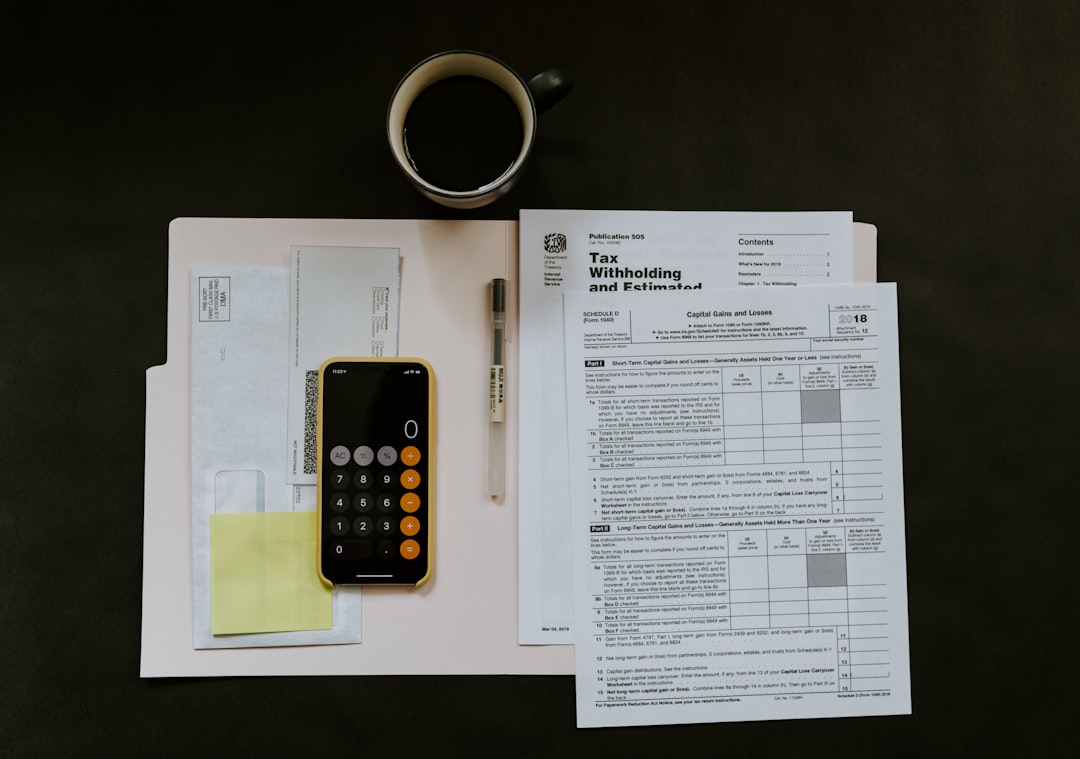
Photo by Kelly Sikkema on Unsplash
Sarah thought she was crushing it. Between her day job and freelance design work, she was pulling in an extra $30,000 a year. By year two, she'd grown it to $60,000 annually. She was going to buy that house, finally take a real vacation, maybe even retire early. Then tax season hit, and her accountant delivered the news that made her stomach drop: she owed $18,500 in taxes and penalties.
The problem wasn't that she made money. It was that nobody had told her how side income actually works from a tax perspective.
The Self-Employment Tax Surprise Nobody Sees Coming
Most people understand that W-2 employees have taxes withheld from their paychecks. What they don't realize is that when you're self-employed—whether you're freelancing, running a small business, or doing gig work—you're responsible for something called self-employment tax, which is basically Social Security and Medicare taxes that your employer would normally pay on your behalf.
Here's the math that catches people off guard: as a self-employed person, you pay 15.3% in self-employment taxes alone. That's on top of your regular income tax, which could be anywhere from 10% to 37% depending on your tax bracket. So if you're making $60,000 from side work, you're looking at roughly $9,180 in self-employment taxes plus your income tax liability. For someone in the 24% federal bracket, that's another $14,400. Total: about $23,600 in taxes on that $60,000 in income.
Most side hustlers don't set this money aside. They spend it. They get excited about the gross number and forget that the IRS is waiting at the end of the year with its hand out.
How the Numbers Spiral Out of Control
Let's say you start a side business in January. By April, you should theoretically be making quarterly estimated tax payments to the IRS. Most people don't know this is even a requirement. So they skip April, July, October, and January. Then April of the following year arrives, and they owe everything at once—plus penalties for underpayment.
The IRS doesn't mess around with estimated tax penalties. If you should have paid quarterly and didn't, you're looking at additional penalties ranging from 3% to 10% of the unpaid amount, depending on how late you are. That's on top of interest that accrues daily.
One Reddit user documented his experience starting a YouTube channel that generated $45,000 in his first year. He assumed he'd owe roughly 30% in taxes, so he set aside $13,500. Reasonable, right? Wrong. When his accountant finished the calculation, he owed $21,300 total. The difference? Self-employment tax, state income tax (he lived in California), and penalties for not making quarterly payments. He was short by almost $8,000.
The Business Expense Game-Changer
Here's where it gets interesting, though. This is actually one of the few legitimate ways to reduce what you owe, and most side hustlers completely miss it.
Expenses reduce your taxable income. If you made $60,000 in side income but had $15,000 in legitimate business expenses—equipment, software subscriptions, advertising, professional development, office supplies—your taxable income drops to $45,000. That $15,000 reduction saves you roughly $4,590 in self-employment taxes plus $3,600 in income tax (at 24%). That's $8,190 in savings just by tracking your actual expenses.
The catch? You need to actually track them. Not in a shoebox. Not in your head. You need to keep receipts, maintain a ledger, and be able to prove every single expense if you get audited. Many people either don't bother or claim expenses they can't substantiate, which is where the IRS gets interested.
The home office deduction alone can be significant. If you use 200 square feet of your 2,000 square foot home exclusively for business, you can deduct 10% of your rent (or mortgage interest and property tax), utilities, and internet. That could be $200-400 per month in deductions.
What Actually Works: A Real-World Strategy
The successful side hustlers aren't the ones trying to hide income or claim questionable deductions. They're the ones who treat it like a business from day one.
Here's what they do: first, they open a separate business bank account. This automatically separates business income from personal income and makes tracking infinitely easier. Second, they calculate their expected tax liability monthly and set aside 30-35% of net income into a separate savings account. This isn't money they touch. Ever. It's already spoken for by April 15th.
Third, they use accounting software like QuickBooks Self-Employed or Wave (which is free) to track income and expenses in real-time. Fourth, they either hire a CPA or use a service like TurboTax Self-Employed, which costs $200-400 and is worth every penny if it saves you from penalties.
Finally, and this is crucial, they make quarterly estimated tax payments. The IRS has a schedule, and if you make the payments on time, you avoid penalties even if you owe a bit extra at tax time. It's a simple way to get the government off your back about underpayment penalties.
If you want to dig deeper into optimizing your tax situation, particularly if you're thinking long-term, check out The Roth Conversion Loophole That Could Add $500K to Your Retirement—understanding these strategies now could compound into significant savings later.
The Real Lesson
The side hustle isn't the problem. Ignorance about how side income is taxed is the problem. Your side income is genuinely exciting, and it can genuinely change your financial situation. But only if you approach it with the same professionalism that your customers or clients expect from you.
Set aside 30-35% of what you earn. Keep receipts. Open a business account. Make quarterly payments. Get professional help if you're making more than $10,000 annually from side work. It sounds boring compared to imagining that extra vacation, but trust me: avoiding a $20,000 tax surprise is way more exciting than any getaway.
Comments (0)
No comments yet. Be the first to share your thoughts!
Sign in to join the conversation.