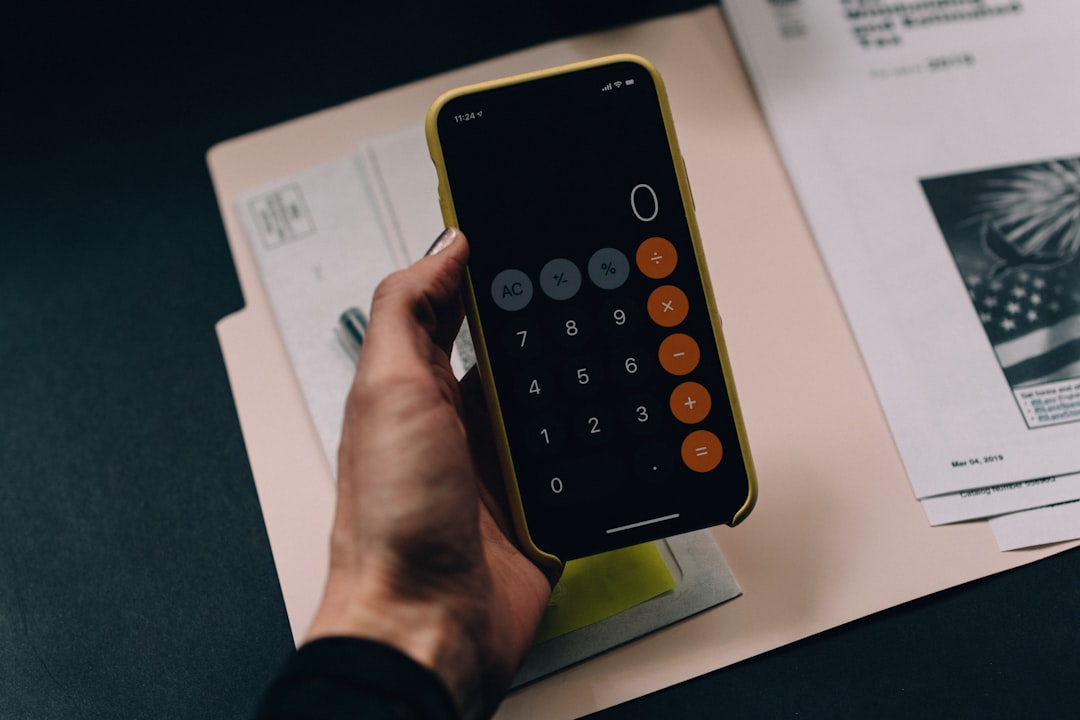
Photo by Kelly Sikkema on Unsplash
The Side Hustle Tax Wake-Up Call Nobody Expects
Sarah launched her freelance graphic design business on a Tuesday night. By Friday, she'd landed her first client and earned $800. She was thrilled—until April rolled around and her accountant delivered the verdict: she owed $2,400 in taxes on those eight months of side income.
"But I only made $7,000 total," Sarah protested. "How do I owe that much?"
What Sarah discovered is a lesson that catches roughly 44% of side hustlers off guard every single year. When you earn money outside your primary job, the IRS doesn't just want income tax—they want self-employment tax too. That's 15.3% of your net income going straight to Social Security and Medicare, on top of federal and state taxes that could push your effective tax rate to 40% or higher.
The worst part? Most people don't set aside money for this. They spend it. Then tax season arrives like a surprise raid on their bank account.
Understanding the Hidden Tax Trap
Here's what happens when you work a traditional job: your employer withholds taxes from your paycheck. You might not like it, but the math is done for you. The IRS gets paid throughout the year instead of all at once.
Side hustles don't work that way. Nobody's withholding anything. The entire tax burden lands on your shoulders, and the IRS expects payment four times a year through estimated quarterly taxes.
Let's do the math with a real example. Imagine you make $500 per week from a side business—that's roughly $26,000 annually. After legitimate business expenses (equipment, software, supplies), you clear about $20,000 in net profit. Here's what you actually owe:
Self-employment tax alone: $2,830. Add 22% federal income tax (assuming you're in that bracket): $4,400. Throw in state taxes, and you're looking at roughly $7,500 in annual taxes. That means you're really earning about $18,500 after taxes, not the $26,000 you thought.
Most side hustlers I've spoken with were shocked when they realized they needed to set aside 30-40% of their gross income just to break even with the IRS. One contractor told me he'd spent his entire year's side income on a car down payment before realizing he owed $8,000 in taxes. He had to take out a personal loan to cover it.
The Quarterly Payment System That Everyone Forgets
The IRS requires self-employed individuals to pay estimated quarterly taxes on April 15, June 15, September 15, and January 15. Miss these deadlines, and you'll face penalties and interest charges on top of your already-large bill.
The sneaky part? These aren't optional suggestions. The IRS can penalize you about 0.5% per month for underpayment. On an $8,000 tax bill you didn't expect, that's an extra $400+ in penalties before you've even paid the original amount.
Then there's the underpayment interest, which compounds. By the time you file your full tax return months later, you might owe an extra $1,200 in penalties and interest alone.
I know a freelance writer who earned $35,000 from side work over three years and paid absolutely nothing in quarterly taxes. When she finally filed, she owed $10,500 in taxes, penalties, and interest. What should have been a roughly $7,500 tax bill turned into $10,500 because of her late payments.
Three Actions to Protect Yourself Right Now
First, open a separate savings account for taxes. This is non-negotiable. Every single dollar you earn from your side hustle shouldn't be trusted in your regular checking account. The moment money hits your business account, transfer 30-40% to a tax savings account and pretend it doesn't exist. This creates a psychological barrier that actually works. You won't be tempted to spend it on that lunch or weekend trip.
Second, track absolutely everything. Business supplies, software subscriptions, internet costs, even your home office—these are all deductible. A CPA I interviewed told me that the average side hustler misses $3,000-5,000 in deductions every year. That's money that reduces your taxable income. If you're in the 30% tax bracket, missing $4,000 in deductions costs you $1,200 in unnecessary taxes. Get a simple accounting app like Wave (free) or FreshBooks ($15/month) and log expenses as they happen, not three months later when you've forgotten everything.
Third, calculate your quarterly payment amount accurately. Use the IRS Form 1040-ES or work with an accountant. Don't guess. A $300 quarterly payment today beats a $1,200 penalty later.
The Long-Term Wealth Killer Nobody Discusses
The real tragedy isn't just the one-time shock of owing thousands in taxes. It's what happens to your side hustle ambitions when you get crushed by an unexpected bill.
Many people abandon their side businesses after their first tax shock. They got excited, earned some money, then felt betrayed when the government wanted 35% of it. Instead of seeing their side hustle as a path to wealth-building, they see it as a money-losing venture. They quit.
Others, like I mentioned earlier, end up taking on debt. That $8,000 tax bill becomes a $10,000 loan with 12% interest, which means they'll actually pay $12,000+ in total before it's paid off. That destroys the entire financial benefit of their side work.
The solution isn't to avoid side hustles. It's to approach them with the same financial discipline you'd bring to any serious venture. Set up the tax account from day one. Know your numbers. If you're serious about building wealth through side work, understand how lifestyle creep can destroy your progress even when you're earning more money.
The difference between someone who turns a side hustle into genuine wealth and someone who abandons it after year one usually comes down to one thing: did they plan for taxes, or did they let taxes blindside them?
Make the right choice from the start. Your future self will thank you.
Comments (0)
No comments yet. Be the first to share your thoughts!
Sign in to join the conversation.