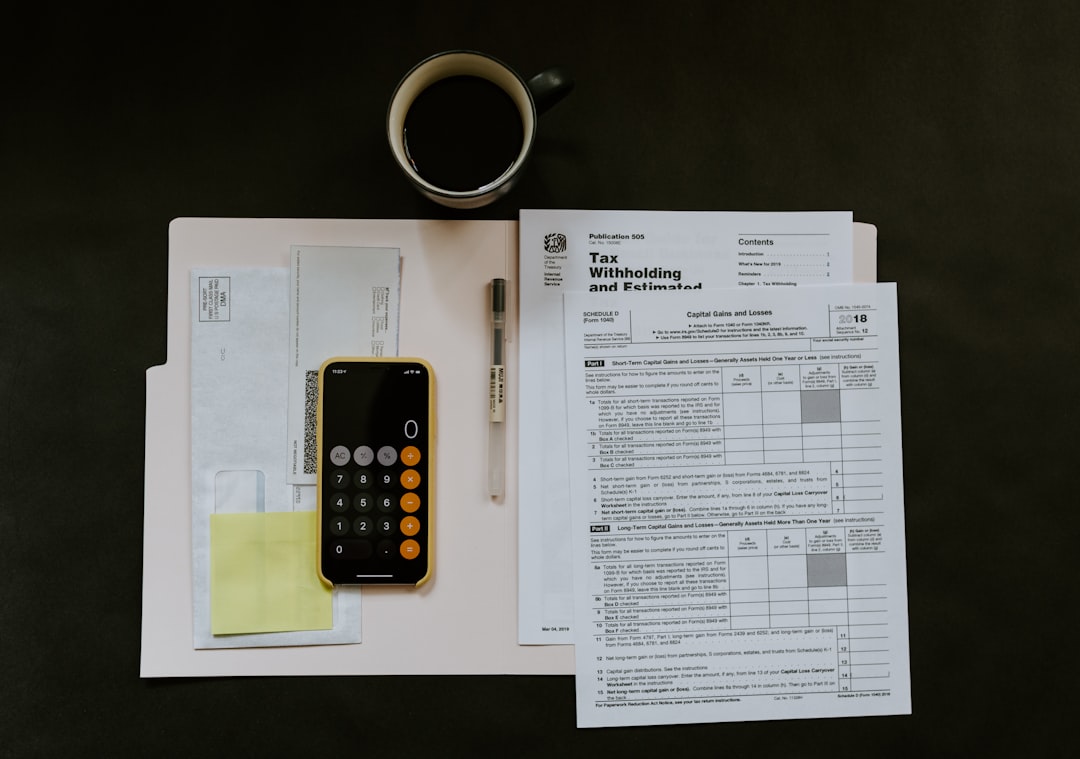
Photo by Kelly Sikkema on Unsplash
Sarah had $35,000 sitting in her savings account. She called it her emergency fund, and she was proud of it. When unexpected car repairs cost her $4,200, she was grateful to have the money there. But when I asked her what interest rate she was earning, she looked confused. "About 0.01 percent?" she guessed.
I did the math for her. Over the past five years, her $35,000 should have grown to roughly $37,400 if it had been earning even a modest 1.3 percent annual return. Instead, it had grown to just $35,018. The difference? About $2,400 she'd essentially given away to inflation and missed opportunity. And that's just one person's story.
The Emergency Fund Paradox Nobody Talks About
Here's the uncomfortable truth that personal finance advisors rarely emphasize: keeping too much money in a traditional savings account is a form of financial self-sabotage. We've been conditioned to believe that emergency funds must sit in the most liquid, accessible, "safe" place possible. And technically, that advice isn't wrong. But it's incomplete.
The average American savings account earns between 0.01 and 0.50 percent annually. Meanwhile, inflation has averaged 3.4 percent over the past decade. Do the math yourself. Money sitting in a traditional savings account is slowly evaporating.
Let me put this in perspective. If you have a $40,000 emergency fund earning 0.25 percent while inflation runs at 3.5 percent, you're losing roughly $1,320 per year in purchasing power. Over ten years, that compounds to approximately $13,200. That's not a small rounding error. That's a semester of college. That's a decent used car. That's real money disappearing.
And yet millions of people maintain their emergency funds this way—not because they've carefully evaluated the trade-offs, but because they've never considered that there might be alternatives.
The False Choice Between Safety and Growth
The objection I hear most often is legitimate: "But what if I need the money quickly?" Emergency funds exist for a reason. You can't invest your emergency savings in the stock market and hope the market cooperates when your water heater explodes on a Tuesday.
But here's what most people don't realize: there are middle-ground options that nearly everyone ignores.
High-yield savings accounts, for instance, currently offer rates between 4 and 5.3 percent. Yes, really. These accounts are FDIC-insured, which means your money is protected up to $250,000. The money is still accessible within 24-48 hours—fast enough for virtually any emergency. The difference between keeping $40,000 in a traditional savings account at 0.25 percent versus a high-yield account at 4.5 percent is roughly $1,700 per year. That's not a fortune, but it's not nothing either.
Some people take an even more strategic approach: keeping three months of expenses in a high-yield savings account for true emergencies, and then stashing the remaining emergency fund cushion in something that generates real returns. A short-term bond fund or a money market fund might earn 4-5 percent and remain accessible within a few business days.
The point isn't that you should take unnecessary risks. The point is that "keeping it safe" shouldn't mean "letting it rot."
Why We Make This Mistake (And How to Stop)
Behavioral economics has a clear explanation for why people keep emergency funds in low-yield accounts. It's called "mental accounting." We create separate mental buckets for different types of money, and we have different rules for each bucket. Emergency money goes in the "absolutely untouchable" bucket, which in our minds means it should be in the most boring, least tempting place possible.
There's something psychologically reassuring about knowing your emergency fund is sitting in a place where you're barely tempted to touch it. If it were earning 5 percent, maybe you'd think about dipping into it for a vacation. (You wouldn't, probably. But maybe.)
This fear is understandable, but it's costing you real money based on a hypothetical risk that most people never actually face.
The solution is simple: move your emergency fund to a high-yield savings account and then mentally lock it away. Tell yourself it's off-limits for non-emergencies, just as you would with a traditional savings account. But you'll be earning actual returns while you wait for an emergency that you hope never comes.
The Compounding Cost of Inaction
Here's what keeps me up at night about this issue: the cost of doing nothing increases every year. If you're 30 years old with a $50,000 emergency fund in a 0.25 percent account, you'll lose roughly $68,000 in purchasing power by retirement—assuming inflation stays at historical averages and you never add another dollar to it.
That's not theoretical. That's money that will be gone. And for what? The security of knowing your money isn't working hard enough?
One more thing worth considering: this problem gets exponentially worse if you're not just sitting on an emergency fund but also sitting on other cash reserves you're keeping "safe." Maybe you have money earmarked for a down payment in five years. Maybe you're saving for a specific goal that's three or four years away. The principle is identical. Every dollar sitting in a suboptimal account is losing value.
The good news is that fixing this requires almost no effort. It takes maybe thirty minutes to open a high-yield savings account, transfer your money, and set it and forget it. The returns might seem modest—an extra $1,500 or $2,000 per year—but they're essentially free money for doing absolutely nothing differently except choosing a better home for your cash.
If you're interested in understanding more about how small financial decisions compound over time, check out The 'Lifestyle Creep' Trap: Why Your Raises Are Vanishing Before You Can Spend Them, which explores how our financial choices have lasting impacts on our wealth.
The bottom line: your emergency fund should protect you from emergencies. It shouldn't protect your money from inflation and opportunity cost. Make the switch. Your future self will thank you.
Comments (0)
No comments yet. Be the first to share your thoughts!
Sign in to join the conversation.