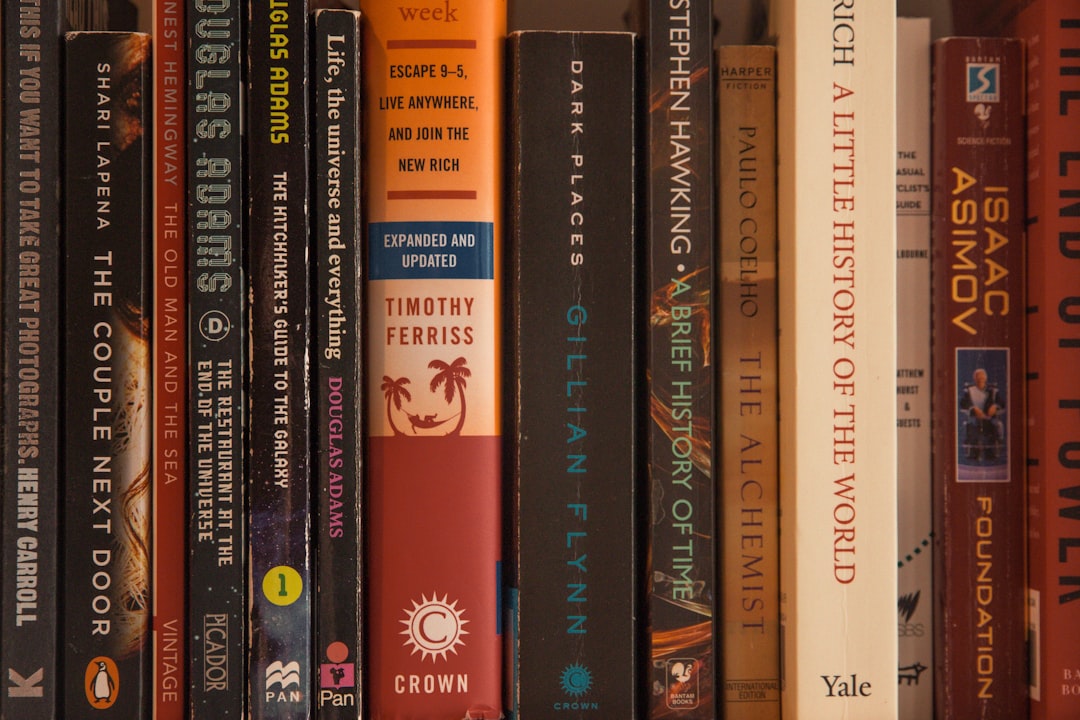
Photo by Stephen Phillips - Hostreviews.co.uk on Unsplash
There's a moment in every great story when the villain stops being evil and starts being understandable. Maybe it's when you learn they poisoned the kingdom because their daughter was denied medicine by the royal family. Maybe it's discovering they're not actually wrong—just approaching the problem from a morally grey angle that the hero refuses to acknowledge. Whatever the trigger, something shifts. The antagonist becomes human. And suddenly, you're rooting for someone you were supposed to hate.
This isn't a new phenomenon, but it's reached a fever pitch in contemporary fiction. Walk into any bookstore, browse any bestseller list, and you'll find stories that give as much oxygen to their villains as their heroes. Sometimes more. Publishers are betting serious money that readers would rather spend 300 pages understanding Cersei Lannister's ruthlessness than watch another farmboy learn he's destined to save the world.
Why We're Obsessed with Broken Antagonists
The shift happened gradually, but it accelerated around the mid-2010s. Patrick Rothfuss's Kvothe isn't purely heroic—he's vain, impulsive, and sometimes cruel. Naomi Novik's "Uprooted" flips the script entirely: the Corrupted King is a sympathetic figure whose love literally warped reality. Even in young adult fiction, where clear moral lines supposedly matter most, authors like V.E. Schwab create villains like Lila Bard who are so magnetic that readers debate whether they're actually the protagonist.
Why the obsession? Partly because modern readers are exhausted by simplicity. We live in an era where political affiliations are complicated, where people we admired turn out to have done terrible things, where moral clarity is a luxury most of us can't afford. When a story presents pure good versus pure evil, it feels dishonest. It feels naive.
But there's something else happening too. Antagonists with depth are interesting in a way that straightforward heroes often aren't. A character motivated by love, revenge, survival, or ideology is inherently more dynamic than one motivated by "I'm the good guy, so I must win." The villain gets to have reasons. Real, comprehensible reasons. And readers find that compelling.
The Anatomy of a Villain Readers Can't Stop Thinking About
The most effective modern antagonists share certain characteristics. First, they operate from a philosophy, not just malice. They believe they're right. This is crucial. A villain who thinks they're the hero of their own story is infinitely more interesting than one who twirls a metaphorical mustache and cackles about their evil plans.
Take Killmonger from Marvel fiction (yes, cinema counts—it influences novels). His plan to invade Wakanda isn't random villainy; it stems from legitimate rage about colonialism and inequality. He's wrong in his methods, but not in his diagnosis of the problem. That complexity makes him stick with audiences in a way a generic tyrant never could.
Second, they suffer consequences for their choices. The best antagonists aren't untouchable. They bleed. They lose. They sacrifice things they love for their goals, and sometimes they realize too late that the sacrifice wasn't worth it. In Sally Rooney's "Intermezzo," neither Peter nor Ivan is purely villainous, but both experience genuine pain and loss that makes their antagonism feel earned rather than assigned.
Third—and this is where contemporary fiction really shines—they're often created by the systems around them. They didn't emerge from a void of pure evil. Something or someone made them this way. A mentor betrayed them. A society rejected them. A love interest died. A dream was stolen. When readers understand the chain of cause and effect that produced the villain, sympathy becomes almost involuntary.
The Commercial Reality: Antagonists Sell Books
Publishers noticed something: marketing materials built around villains outperform traditional hero-centric campaigns. "She's not the villain of this story—she's the protagonist" became a genuine marketing hook. Books like "Wilder Girls" by Rory Power and "The Shadows Between Us" by Tricia Levenseller sold partly on the promise that readers would get inside a villain's head.
There's data supporting this. According to surveys by the American Booksellers Association, readers aged 18-35 are significantly more likely to purchase books with morally ambiguous protagonists than their older counterparts. These readers grew up on stories like "Harry Potter," where even the supposed good guys do questionable things. They're primed to appreciate complexity.
The formula is simple: give the villain a genuine goal, show the audience why they want it, reveal what cost they've paid to pursue it, and suddenly you've created someone readers will argue about for years. Fan communities online are filled with people defending antagonists with almost religious fervor. They create theories about redemption arcs. They write fan fiction where the villain wins. They analyze every line of dialogue searching for hidden depth.
When the Villain Outshines the Hero
Sometimes, an antagonist becomes so compelling that they completely overshadow the protagonist. This isn't always a flaw—sometimes it's intentional. Unreliable narrators often are antagonists themselves, telling their own story in a way that manipulates reader sympathies.
The danger comes when writers accidentally create a villain more sympathetic than their hero. This happened with Dolores Umbridge in "Harry Potter and the Order of the Phoenix"—not because readers liked her, but because her actions had more logical consistency than some of Harry's choices. It's happened in countless fantasy epics where the Dark Lord's grievances against the kingdom feel more justified than the resistance movement's.
Skilled authors navigate this tightrope by giving their protagonists equally compelling motivations, just different ones. The hero and villain don't fight because one is good and one is bad; they fight because they want incompatible things, or they disagree about how to achieve the same goal.
The Future of Storytelling
This trend shows no signs of slowing down. Readers have developed a taste for moral complexity, and they're not going back to simpler narratives. The next generation of bestselling fiction will almost certainly continue this tradition—crafting antagonists so rich, so understandable, so heartbreakingly human that the line between villain and hero becomes meaningless.
Maybe that's the real shift happening in fiction. Not that we suddenly like villains, but that we've stopped believing in pure villainy. We understand that people become what circumstances force them to become. We recognize that the villain's origin story is just another person's tragedy told from the wrong perspective.
And that, perhaps more than any plot twist or narrative trick, is what keeps readers coming back—the promise that if they look hard enough, even the darkest character contains something worth understanding.
Comments (0)
No comments yet. Be the first to share your thoughts!
Sign in to join the conversation.