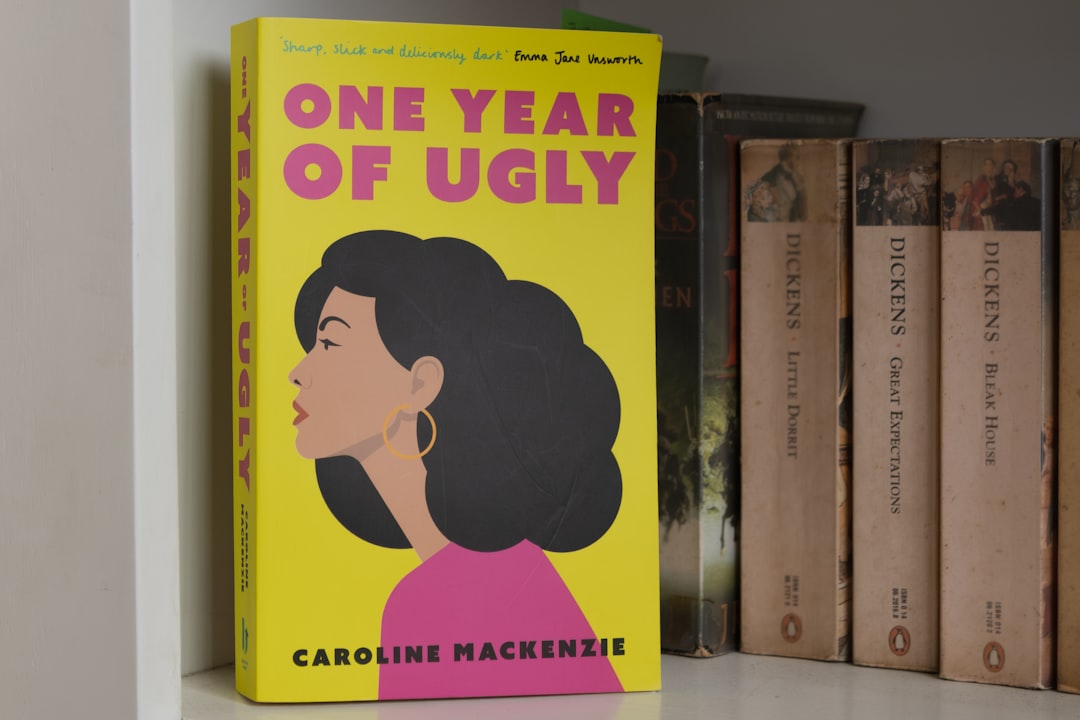
I finished reading a book last week where I found myself genuinely hoping the protagonist would fail. Not because the author had written them poorly, but because I was completely, irrevocably invested in the villain's survival. This wasn't supposed to happen. I'm supposed to root for the good guy. That's how stories work. Except somewhere between Hannibal Lecter's first appearance and Cersei Lannister's coronation, fiction completely rewrote its moral rulebook.
The shift isn't subtle anymore. Walk into any bookstore or scroll through trending reads online, and you'll find entire sections dedicated to villain origin stories, dark romance narratives, and what publishers call "morally gray protagonists." We're living through a golden age of fictional corruption, and honestly, it's fascinating.
When Did We Start Rooting for the Bad Guys?
The turn probably began in earnest during the late 1990s and early 2000s, though the seeds were planted earlier. Yes, we had anti-heroes before—think of Richard III in Shakespeare's play, or Pip's moral compromises in Great Expectations. But there's a difference between a character who makes bad choices and a character who is fundamentally, unapologetically evil, yet still gets our sympathy.
Consider the data. Publishing reports from 2022-2023 show that "dark romance" sales have increased by nearly 40% over five years. BookTok—yes, the TikTok community dedicated to books—has made villains into celebrities. Characters like Rhysand from Sarah J. Maas's "A Court of Thorns and Roses" series have millions of devotees, despite the character's questionable consent issues and controlling behavior. Meanwhile, traditional heroes often get labeled "boring" in the comments.
So what changed? Why did we collectively decide that morality was negotiable?
Part of it is pure storytelling evolution. Authors realized that complexity is more interesting than virtue. A character who is entirely good has limited options for growth. But a character who is ruthless, selfish, possibly even cruel, yet occasionally reveals a shred of humanity? That's a character who can surprise us. That's a character worth following.
The Psychology of Loving the Unlovable
There's actual psychological research here that goes beyond the typical "everyone likes a bad boy" stereotype. Dr. Paul Bloom, a Yale psychologist, has studied our attraction to morally compromised characters. One finding: we're more likely to empathize with characters when we understand their motivations, even if those motivations are selfish or destructive. When an author shows us why a villain became villainous—the trauma, the circumstance, the choice—suddenly they're not an obstacle in the plot. They're someone we understand.
Take Severus Snape from the Harry Potter series. For most of the books, he's presented as cruel, unfair, possibly dangerous. But J.K. Rowling didn't make us root for him through propaganda. She made us understand him. We learned about Lily, about his loneliness, about his actual heroism operating beneath all that bitterness. The revelation didn't erase his years of being awful to children, but it made him real.
That's the formula modern fiction keeps using. Show us the hurt person beneath the harmful person. Not to excuse the harm—that's where the moral gray area gets interesting—but to explain it.
There's also something about control. When we watch a villain operate, they're making choices. They're not passive. They're not waiting for someone else to fix their life. In an era where many readers feel increasingly powerless, there's something intoxicating about a character who seizes power, even if we'd never endorse their methods. The villain is often the most active, most decisive character in the room.
The Dark Romance Explosion: When Villains Get Love Stories
The most explosive trend within this shift is dark romance. Publishers like Wicked Reads Press and independent authors have built entire careers on stories where the love interest is a mafia boss, a serial killer, a demon, or some combination of the three. These aren't subtle books. They're explicitly marketing the "danger" as the appeal.
One of the most successful dark romance authors is Elsie Silver, whose "Flawless" series has sold hundreds of thousands of copies. Her characters aren't reformed bad guys—they're actively bad guys who happen to fall in love. The tension isn't whether they'll change. The tension is whether the reader will admit how attracted they are to someone whose life choices are objectively terrible.
This creates an interesting space for examining what we value in fiction versus real life. Nobody—and I mean nobody sane—wants to date an actual villain. But reading about one? Getting inside their head? That's safely transgressive. It's a form of controlled danger. You can experience the thrill of moral chaos without any actual consequences.
That said, there's criticism worth considering. Some argue that romanticizing villainous behavior, particularly in intimate contexts, normalizes the idea that love can fix a fundamentally harmful person. That toxic partners just need the right person to see their "true self." These concerns aren't baseless. The line between compelling moral complexity and dangerous fantasy can get blurry.
What This Says About Us as Readers
Here's what I think matters most: our investment in villains and morally corrupt characters reveals something about what we crave from stories. We want nuance. We're tired of characters who are simply good or simply bad. We want people who make us uncomfortable, who challenge our sympathies, who force us to sit with contradictions.
This might also reflect our real world. We live in a time of widespread moral ambiguity. Politicians, corporations, celebrities—the people in power are rarely purely evil or purely good. They're mixed. Corrupt. Occasionally noble. We've learned to navigate shades of gray in reality, and fiction is catching up to that complexity.
There's also something about agency. If you explore how authors weaponize deception in unreliable narrators, you'll notice that many of these morally compromised characters are telling their own stories, controlling the narrative. We're not being told about them. We're being told by them. That shifts the power dynamic entirely.
The Future of Moral Complexity in Fiction
This trend isn't going anywhere. If anything, it will deepen. Publishers have noticed that moral ambiguity sells. TikTok has made it possible for niche audiences to find each other and amplify their preferences. The next generation of writers are growing up reading morally complex characters, so naturally, they'll write more of them.
But I suspect we'll also see a correction of sorts—not away from complexity, but toward more intentional exploration of it. Authors will get better at writing villains and morally gray characters who challenge readers without simply catering to them. The difference between a character who is complex and a character who is just badly written with villainous traits is significant.
The villain era isn't a sign that readers have lost their moral compass. It's a sign that we want fiction to reflect the actual complexity of human motivation and behavior. We're not rooting for evil. We're rooting for honesty—even when that honesty looks like darkness.
Comments (0)
No comments yet. Be the first to share your thoughts!
Sign in to join the conversation.