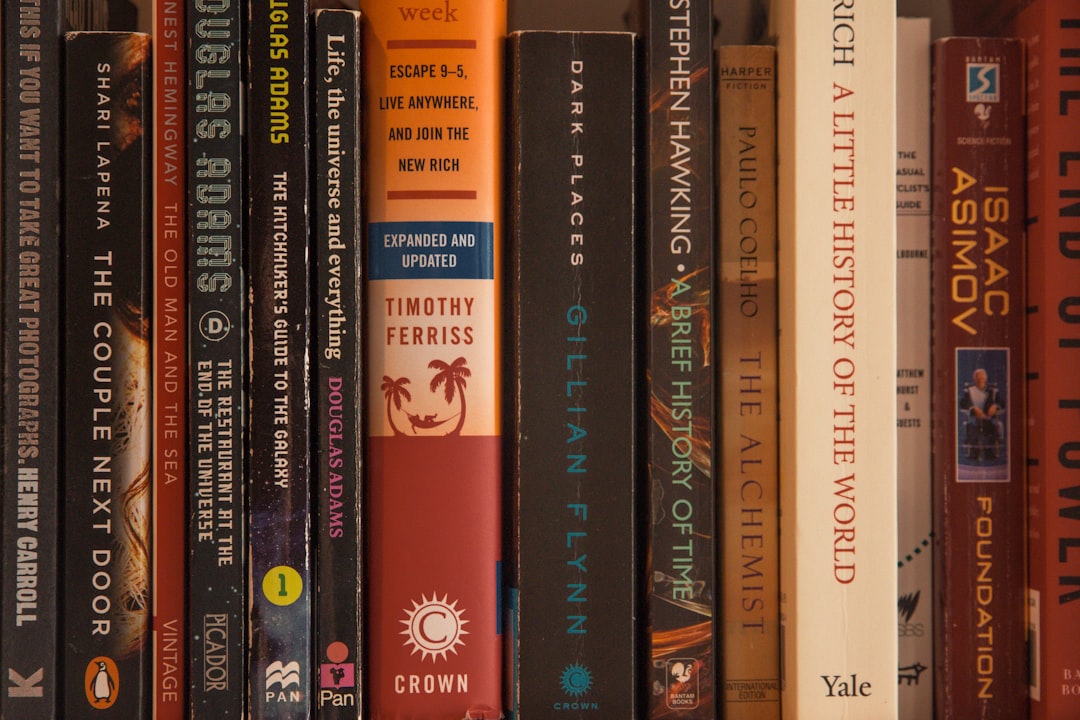
Photo by Stephen Phillips - Hostreviews.co.uk on Unsplash
There's a moment early in Patrick Rothfuss's "The Name of the Wind" where Kvothe sits before a roaring fire and begins to tell his story—not as a triumphant hero, but as someone explaining how he became a wanted criminal. The innkeeper listening asks why Kvothe became known as a villain. And that question, so deceptively simple, has become the central obsession of modern fiction.
The villain origin story isn't new, exactly. We've always had complex antagonists. But something shifted in the last decade. Readers stopped being satisfied with villains who simply oppose heroes for mysterious or shallow reasons. We demanded their version of events. We wanted their justifications, their childhood wounds, their moment of no return. And publishers noticed. They started buying these stories by the dozens.
When Did We Stop Cheering for the Hero?
Consider the box office dominance of films like "Joker" (2019), which made $1 billion worldwide by essentially asking audiences to sympathize with a man descending into violence. Or the cultural phenomenon around "Wicked," which reframed the Wicked Witch of the West not as evil, but as a activist crushed by political corruption. Broadway saw the show break records because audiences were hungry for that perspective shift.
The numbers tell the story. A 2022 survey by Goodreads found that among the top 100 most-rated books of that year, over 40% featured either an unreliable protagonist, a morally gray protagonist, or an outright villain as the main character. Ten years earlier, that number hovered around 12%. This isn't a statistical fluke—it's a seismic shift in what readers actually want.
What changed? Partly, we grew cynical about traditional heroism. Real life didn't provide us with clear-cut good guys and bad guys. Our politicians disappointed us. Our celebrities fell from grace. Our institutions failed us. Why should our fiction pretend the world works differently?
The Psychology of Understanding Evil
Here's the thing about villain origin stories: they satisfy a deep human need to understand. Understanding isn't the same as forgiving, but it's psychologically closer than pure condemnation. When we read Sylvia Moreno-Garcia's "Mexican Gothic" or V.E. Schwab's "Vicious," we're not rooting for evil. We're rooting for comprehension.
Schwab's approach is instructive. In "Vicious," she introduces us to Victor Vale and Eli Ever as college roommates. They're not born evil. They make choices—sometimes small ones, sometimes cataclysmic ones. Victor poisons someone. Eli becomes convinced he's a god. But Schwab shows us the chain of events, the logical progression, the moment where each character could have chosen differently but didn't. It's dangerously empathetic.
The villain origin story works because it asks readers to sit inside another person's head, even when that person is making terrible decisions. It's harder to hate someone whose motivations you understand. This is what psychologists call the "fundamental attribution error"—our tendency to blame people's character rather than their circumstances. Villain origin stories correct that bias by forcing us to confront circumstance.
From Misunderstood to Genuinely Monstrous (And Everything In Between)
Not all villain origins are created equal, though. Some lean toward redemption. Some lean toward tragic inevitability. The best ones refuse to be reductive.
Take Tamsyn Muir's "Gideon the Ninth," where the protagonist is a lesbian necromancer raised as a servant by a woman she despises. She's violent, traumatized, and funny. Readers fell desperately in love with her despite—or because of—her monstrosity. Or consider the protagonist of "Mexican Gothic," Catalina, who becomes increasingly complicit in horrors around her, not because she's evil, but because isolation, dependence, and manipulation are powerful forces.
The spectrum matters. Some villain origins end with genuine redemption (see: Jaime Lannister's arc, at least before season 8). Some end with the character doubling down on their villainy with full self-awareness (see: every Lesley S. Moore character ever). Some end with tragic inevitability where the character couldn't escape their own nature even if they desperately wanted to.
What unites them is the refusal to simplify. As unreliable narrators have become central to modern fiction, villain origin stories use that same trick: they make us complicit in the character's perspective, even when that perspective is warped.
The Publishing Gold Rush
Publishers saw this trend and responded with predictable enthusiasm. Imprints started actively seeking "morally complex protagonist" stories. "Villain's daughter" stories flooded the market. Some were brilliant. Many were mediocre, banking on the assumption that readers would be fascinated by any story told from the antagonist's point of view.
The saturation has already begun. Walk into any bookstore and you'll find shelves labeled "Dark Academia," "Morally Gray Protagonists," or "Villain Origin Stories." This is when you know a trend has become mainstream—when bookstores need new shelf labels.
But the trend persists because it satisfies something fundamental about human nature. We want to understand each other. We want to believe that even terrible people have reasons. And in a fractured world where we barely understand people who share our basic values, fiction offers a laboratory for empathy. Even if that empathy is directed at someone who should be irredeemable.
Why This Matters Beyond Entertainment
There's something quietly radical about villain origin stories becoming the literary mainstream. They suggest a cultural shift away from judgment and toward curiosity. They ask: what broke this person? When did they choose wrong? Could I have made different choices in their situation?
These aren't comfortable questions. A truly excellent villain origin story won't let you off the hook with easy answers. It will make you uncomfortable. It will force you to recognize how contingent morality is, how dependent on circumstances and resources and luck.
That's the real addiction. Not the plot twist that the villain was right all along, but the slow realization that villainy isn't a state of being—it's a series of choices made by people who had reasons, even if those reasons don't ultimately justify what they did.
That's the villain origin story that will stick with you. Not the one that redeems the character, but the one that refuses to let you hate them.
Comments (0)
No comments yet. Be the first to share your thoughts!
Sign in to join the conversation.